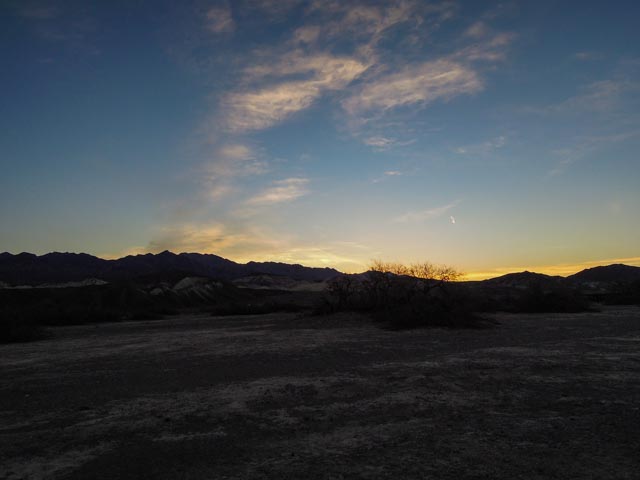
We are up and ready to go marathon morning. This is sunrise from our camp at Furnace Creek
A quick check of the camp elevation ! We actually had to walk up to -120 feet for the start and the race turnaround was at -260 feet! What a climb! ha ha but we did not have to worry about lack of oxygen.

Fresh and “perky”? at the start. Water stops were few and far between and it was recommended that you carry extra water. Temperatures were pleasant in the morning but it did heat up during the race, especially on the climb out of the low point. There were not a lot of trees to furnish shade (none on the route, actually).

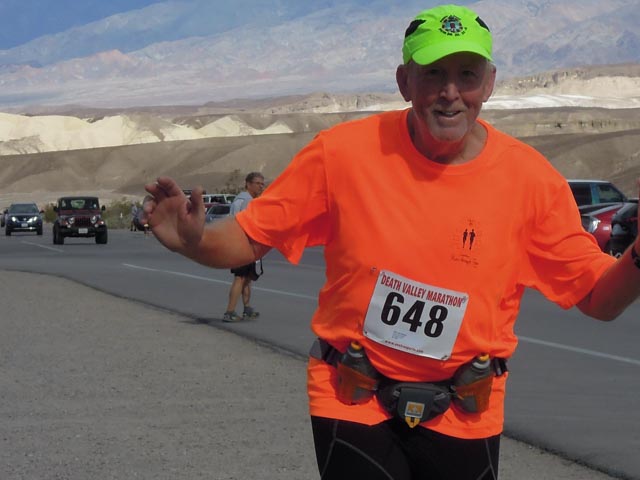
Finishing with Mike, a local celebrity. He was about one mile ahead of me at the turn but I reeled him in during the last seven miles, which were mostly on a very slight uphill. The desert was beautiful and when running you have time to take it all in. Judging distance in the desert can be very deceiving, you can see the aid stations miles before actually reaching them and the same for the finish area.
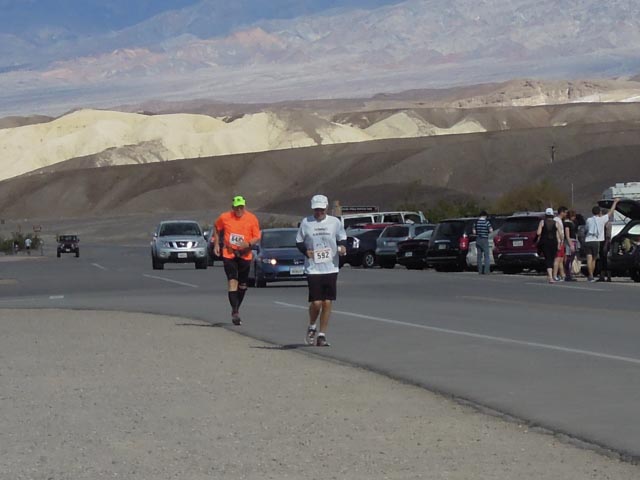
Finished the half marathon, and placed third in my division!
Resting after the run, we went walking and hiking for the remainder of the day. We drove to Stovepipe Wells for lunch and had the best chili that we have ever tasted, made with ground beef, pulled pork, sausage and a bunch of other stuff, but it was good. After lunch we stopped at “burned Wagons Camp” where a group of 125 wagons left the established trail to the California goldfields and took a shortcut across Death Valley. After being lost for more the two months, they burned their wagons, converted most of their oxen into jerky and headed out on foot to find civilization, which they finally did near present day Walker Pass in the Sierra Nevada range. In retrospect, it would not be a good idea to get lost in Death Valley?
On the way back we walked through the Harmony Borax Works, founded by SF businessman William T. Coleman in 1886. Due to the high cost of transportation (165 miles to the nearest railhead near Mojave) they decided to refine the “cottonball” borax found in the salt flats nearby. This eliminated the transportation of waste. These large wagons were pulled by the famous “twenty mule teams” (Remember the television show “Death Valley Days”?) and could carry about 36 tons including 1,200 gallons of water for the teams. Not bad considering, 20 mulepower pulling 72,000 lbs across the desert?

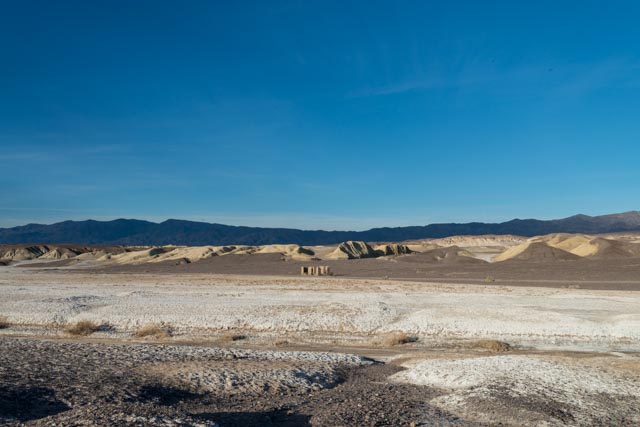
This is what is left of the processing plant on the hillside.

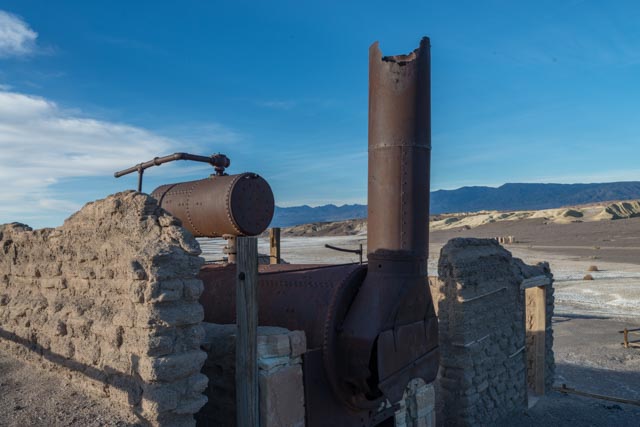
The workers resided in makeshift cabins and tents across the valley from the plant. The white is the salt flats from which the borax was manually shovelled into carts and delivered to the plant for processing. Most of the real, backbreaking work was done by Chinese workers.
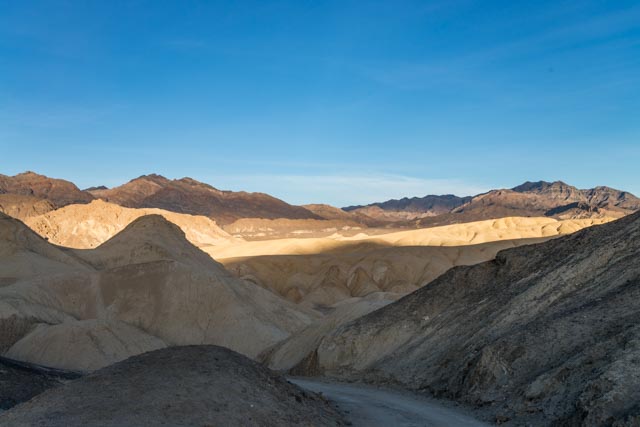
Next, we drove a pretty narrow “Jeep” designated road through 20 Mule Team Canyon. This is a shot of the sunset on the hills in the background and the road descending in the canyon. Driving up to the top of this grade we were unable to see the road ahead of us as it descended sharply from the crest. We got out to make sure we had roadway before descending.
A photo across the canyon near the exit back on the main paved road. This is near the area that we saw the Big Horn sheep previously.

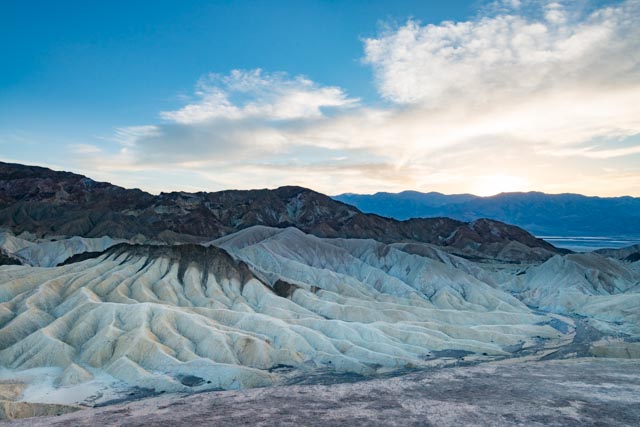
On the way back to camp we stopped at the famous Zabriskie Point, named after Christian Brevoort Zabriskie, vice-president and general manager of the Pacific Coast Borax Company in the early 20th century, for the standard photo of the badlands. The sun was setting so lighting was not optimum but we, still having a little energy to burn, hiked to the top of the nearby knoll and shot some photos anyway.

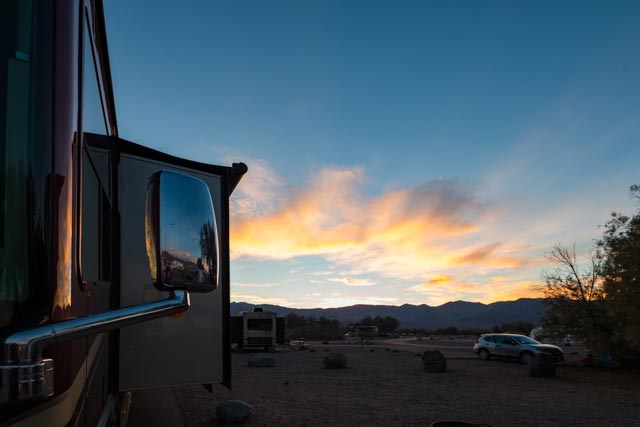
Back in camp for the evening as the sun set.


Looking good Steve. Safe travels.
LikeLike
Thanks Dave . . . check out our latest . . we found Mike Owen (Cousins Shop Manager) . . !
LikeLike
Congratulations on your run!
LikeLike