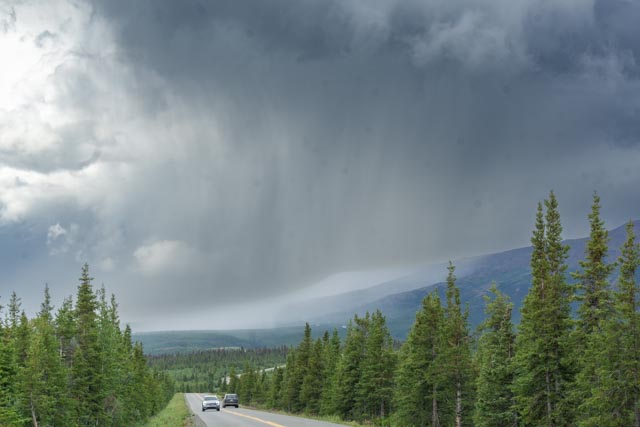
Leaving Anchorage, we headed up the Parks Highway towards Denali. The rain was starting to fall rather heavily ahead of us.

It was storming fairly heavily as we approached Nenana, at the confluence of the Nenana and the Tanana Rivers, about halfway between Fairbanks and Denali National Park. Nenana started as a trading post in 1903 to service river traffic due the 1902 gold discovery in Fairbanks. Nenana’s population grew dramatically with the building of the Alaska Railroad, extending service to Fairbanks. President Harding drove the golden spike just north of the Nenana rail bridge in 1923, signaling the completion of the line. Nenana grew to a population of 5,000 during the construction, but an economic slump soon followed, resulting in just a little less than 300 residents in 1930.
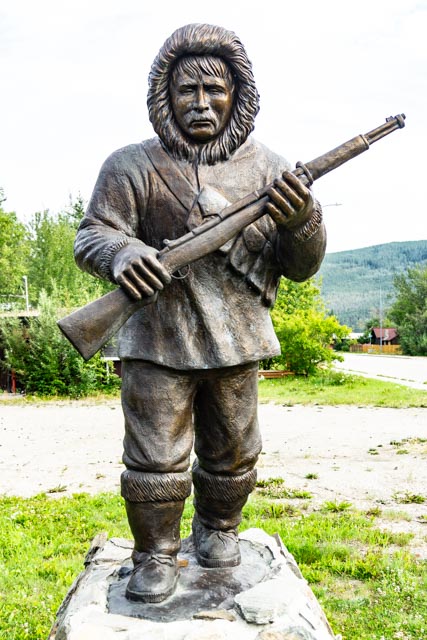
During World War II, under the leadership of Major “Mucktuk” Manston and 21 paid staff, 6,368 volunteers from seven native ethnic groups and European-Americans watched the northern shoreline of Alaska. Their ages ranged from 12 to 80 years of age, including women. They watched for enemy movement and were instrumental in the Battle of Attu, where Japan attacked the US on domestic soil. This statue commemorates the sacrifices these volunteers made from 1942 -1947.
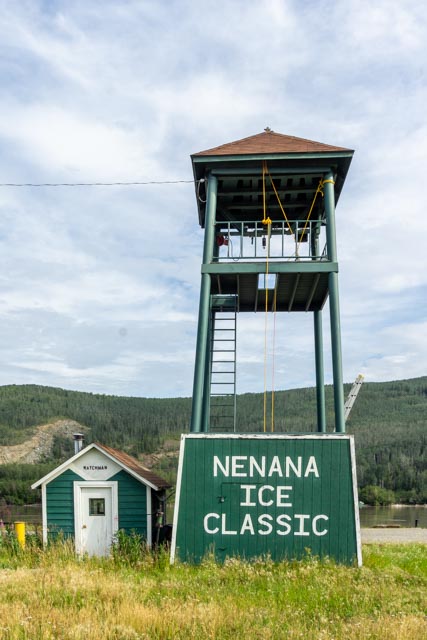
Nenana is famous for its Ice Classic, a lottery, based on guessing when the ice in the Tanana river will break up in April or May of each year, a tradition since 1917.
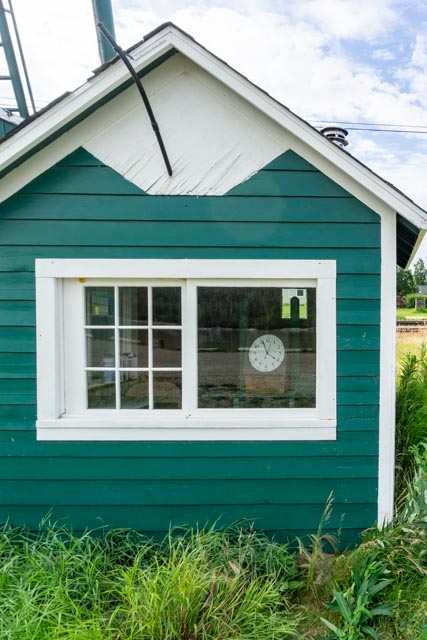
Inside this heated hut is the official clock and the sleeping facilities for a lone person to watch for the moment of breakup. This was replaced by installing a standard (see below) on the ice.
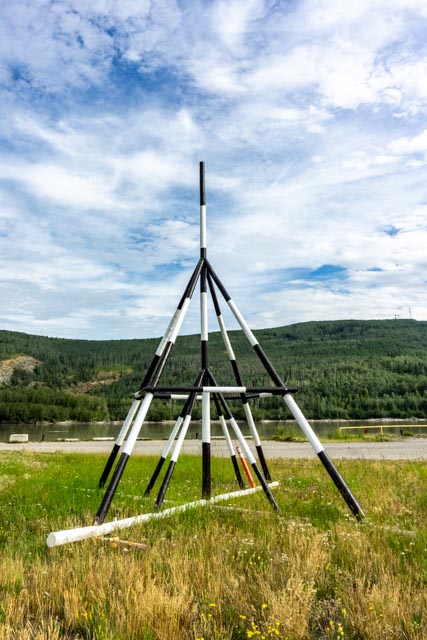
This standard, after being placed on the ice is electronically connected to the hut shown above. A wire is attached to the standard and when the standard starts to move, the wire signals the official time of breakup. The winner of the lottery this winter will receive almost a quarter million dollars. We entered a few years back and just missed it (by JUST a few days). The winner must be the closest to the day, hour and minute of breakup.
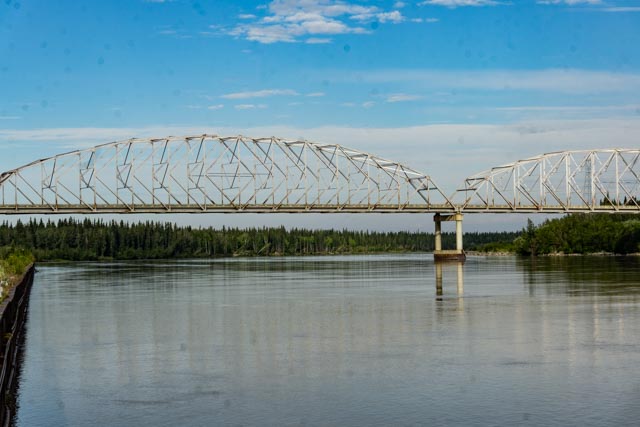
This is looking downstream from the hut, showing the newer automobile bridge spanning the Tanana River, with the railroad bridge just upstream.
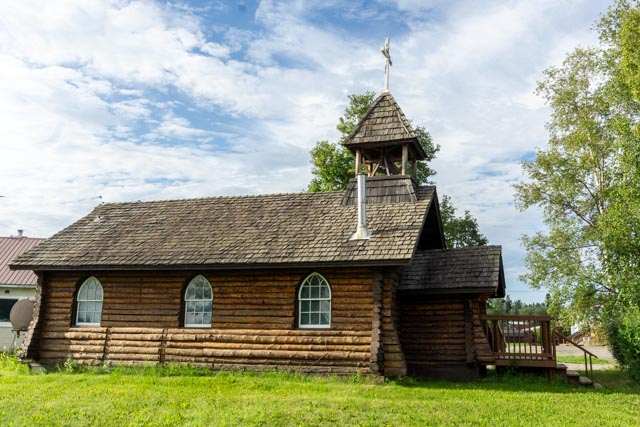
This is St. Mark’s Episcopal Church, built in 1905, near the center of town.
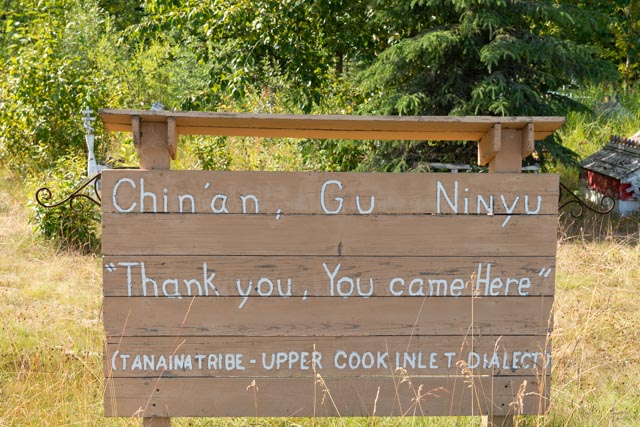
Signage outside the church is written by the Tanaina tribe in their Upper Cook Inlet dialect.
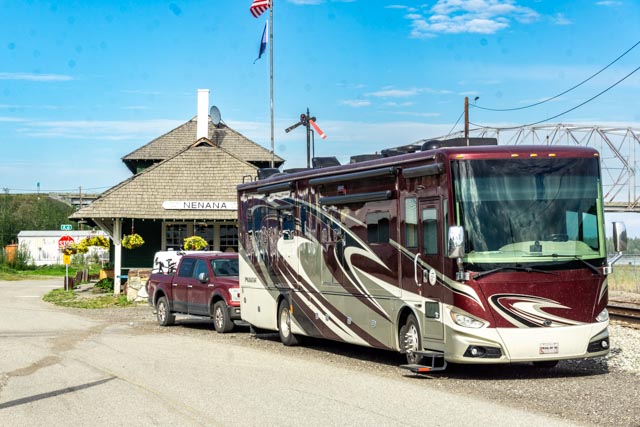
We took the only place to park near the standard. The Visitor Center is located behind us in the original railroad station.
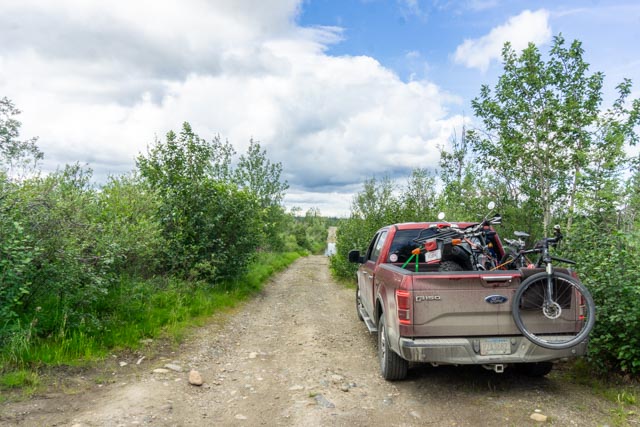
After setting up camp just west of Denali, we drove to this large body of water on Stampede Road and decided to turn around, as I did not want to risk getting stuck this far from civilization. The brush was scraping both sides of our truck getting to this point and appeared to further narrow into an ATV trail ahead. This was as good a spot as any to turn around.
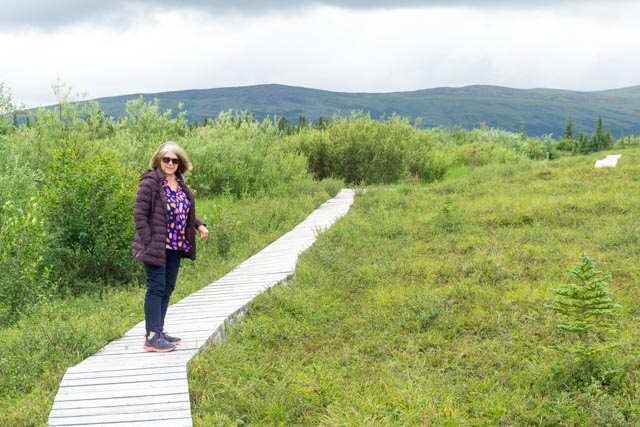
We took a walk out to the National Ecological Observation Network site, which works with the National Science Foundation and the Alaska Department of Natural Resources. This NEON site collects data on soil, water, vegetation and the atmosphere to help determine how warming climates affect the Alaskan taiga and tundra. We spent some time here on a previous trip and continue to be intrigued at the level of research being done. We also spotted two young women whom we thought were researchers or scientists and wanted to hear from them what they were seeking. It turns out it was two locals picking blueberries. Oh well, now at least we know the blueberries are ripe!
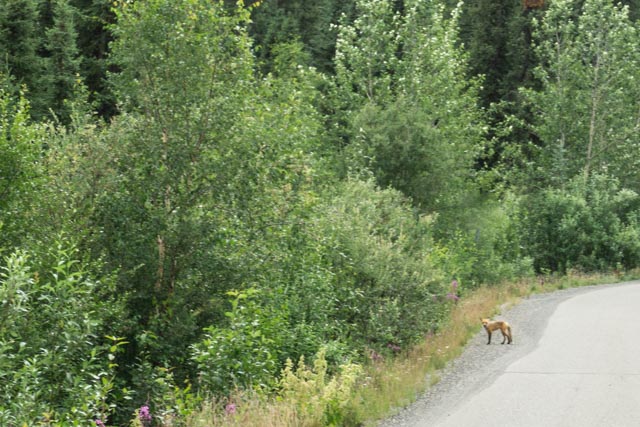
I followed this fox for a while. She appeared to run through a culvert under the road so I went down to see, and after returning to the car, I spotted her looking down the road (the other way) at me, I felt like she was saying, “hey stupid, I’m over here!”
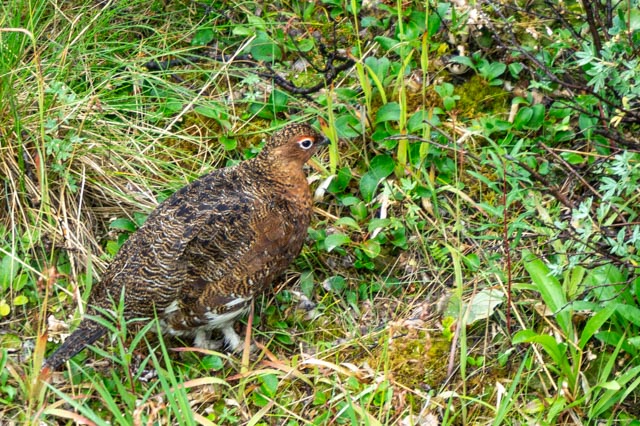
We spotted this Willow Grouse running along the side of Stampede Road with her six babies. They all flew into the brush when I approached. You could hear them but they were pretty well camouflaged!
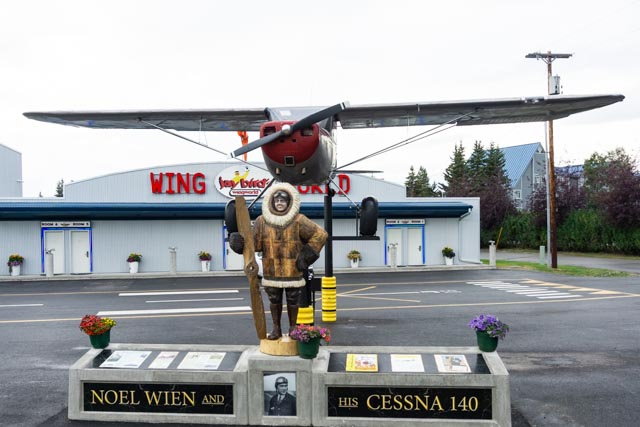
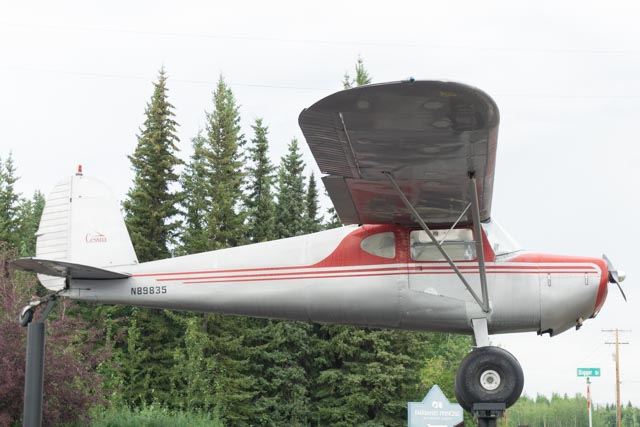
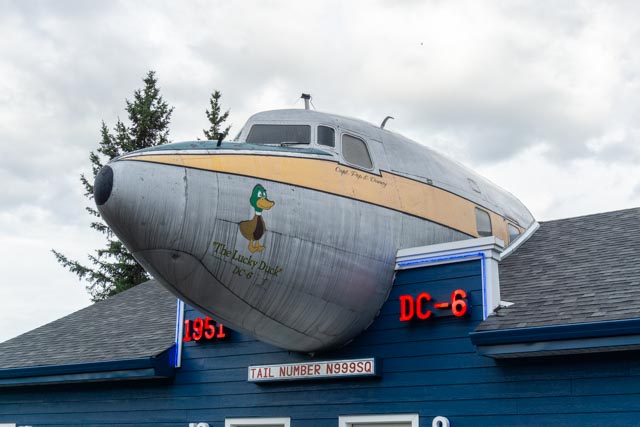
On to Fairbanks, we saw this is a monument to Noel Wien. Noel was Alaska’s first bush pilot, who learned to fly in Minnesota in 1921. He soloed after only eight hours of instruction. The monument is located at Pike’s Landing No. 50215.C., the favored seaplane base for heavy loads in Fairbanks in the 1920s. Noel went on to become a Cessna dealer and start Wien Air Alaska Airlines. The second photo is of one of the Cessna airplanes that Noel sold within the territory of Alaska during the 1940s. The third photo is that of the front of a DC3 that Cliff Everts flew in 1945. Cliff was a pilot, learning to fly before he could drive a car, and started his 35 year carrier with Wien Airlines in 1945. After retiring from Wien Air Alaska in 1980, at the age of 61, he purchased his first C-46 from Wien Air Alaska and began his second career. He received his certificate and began hauling fuel in his DC3 and C-46 aircraft. On display here is the nose of his DC-3 aircraft. His primary business was hauling air fuel but he also hauled cargo, including a herd of reindeer from Nome to Colorado.
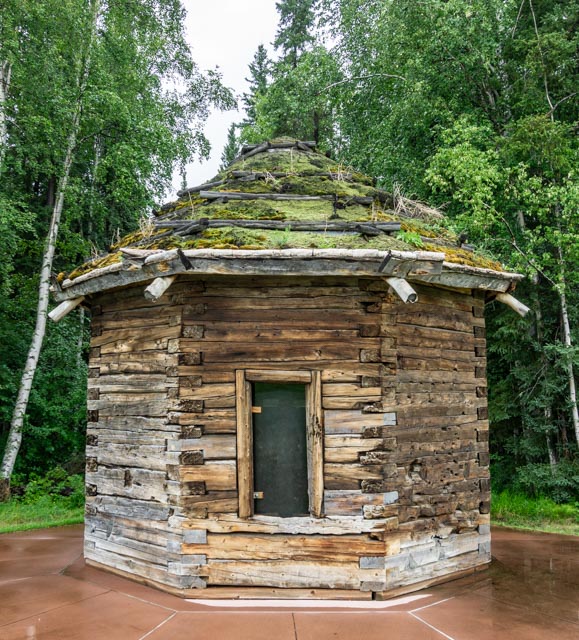
Michael and Jason arrived in Fairbanks in the evening, and we were disappointed that it began raining in the morning. We took a drive to the University of Alaska in Fairbanks to go through their museum, the Museum of the North. This blockhouse was reassembled and restored by the U A Fairbanks and is one of many restorations they are in the process completing in an an effort to preserve Alaskan history.
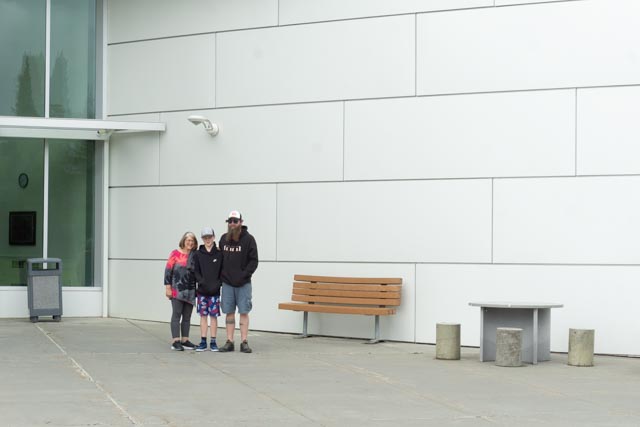
The group at the entrance to the museum. (I am taking the picture!)
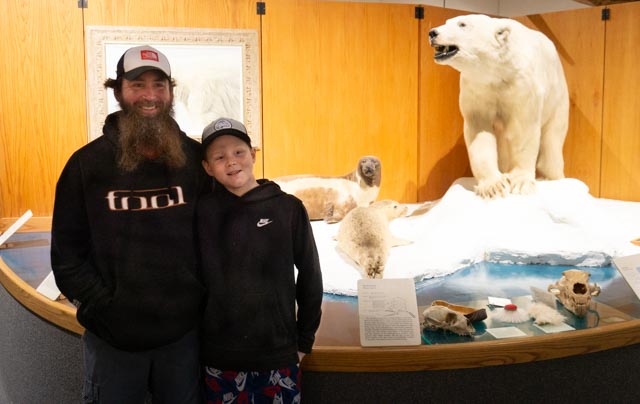
Michael and Jason posed with a big fella looking over their shoulder.
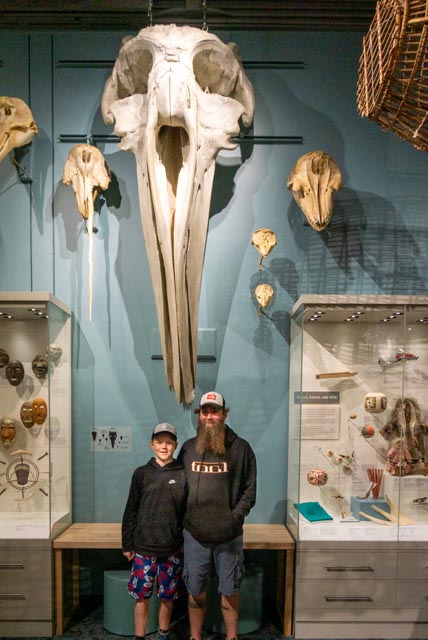
That’s a whale skull behind the boys.
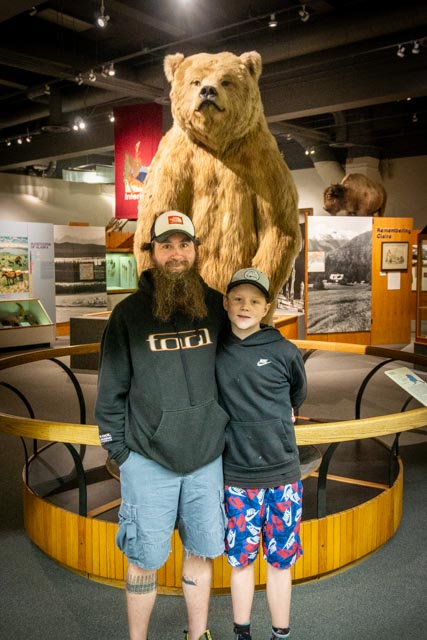
Always watch your backs, the big guys are very, very quiet!
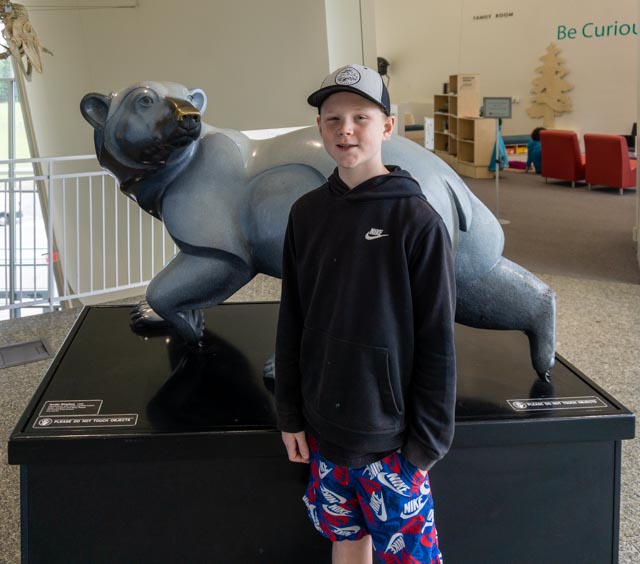
Jason with a stylized bear sculpture.
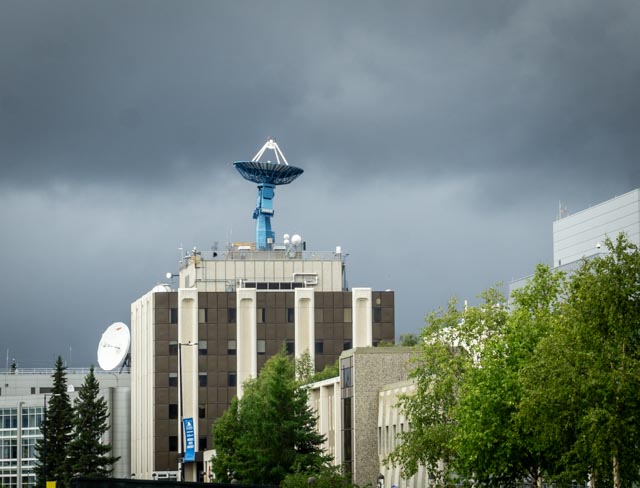
I had to take this photo from the museum parking lot. The telescope really stood out against the darkened sky.
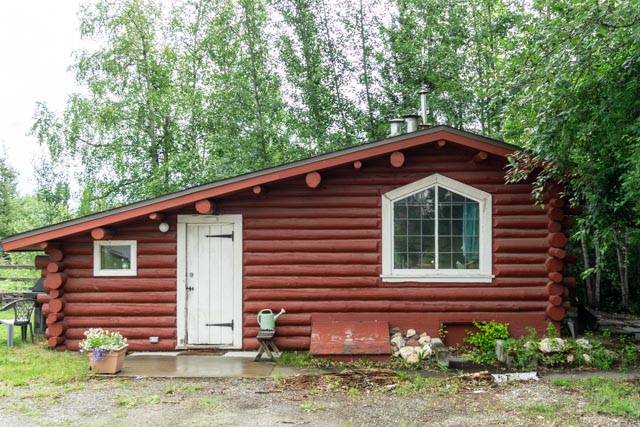
We searched for and found the original cabin of the U A F researcher Dan O’Neill, who spent time researching and documenting Beringia. I have read the story and was determined to find his University-furnished home.
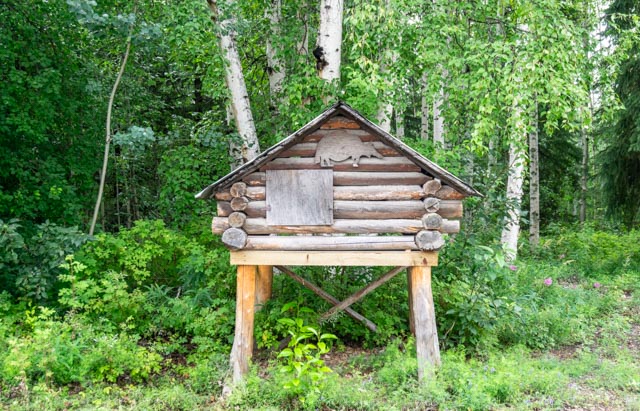
The cabin included a food storage area (cache), of course.

 Travelling with the Schinglers