


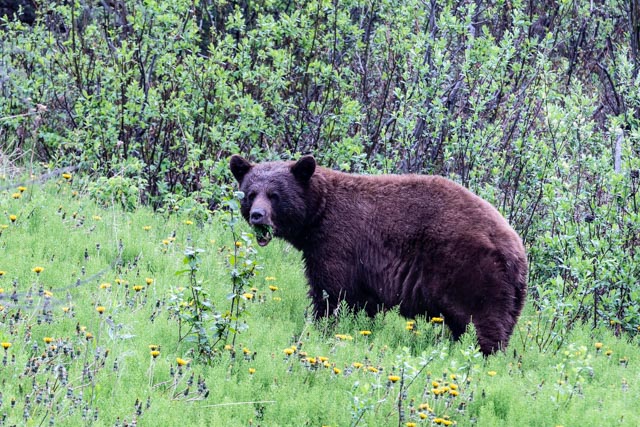
We spotted this bear and pulled off the roadway. As I rounded the corner to get a shot of the guy, he was just sitting and watching me. He quickly got up, munched a little and gave me that “keep away” look as he ambled off.
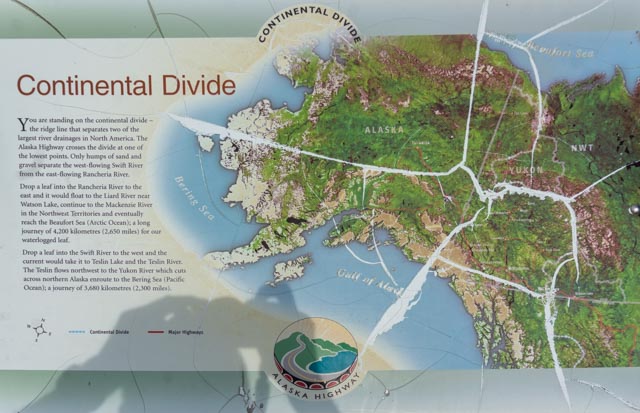
We reached the Continental Divide just before Teslin.
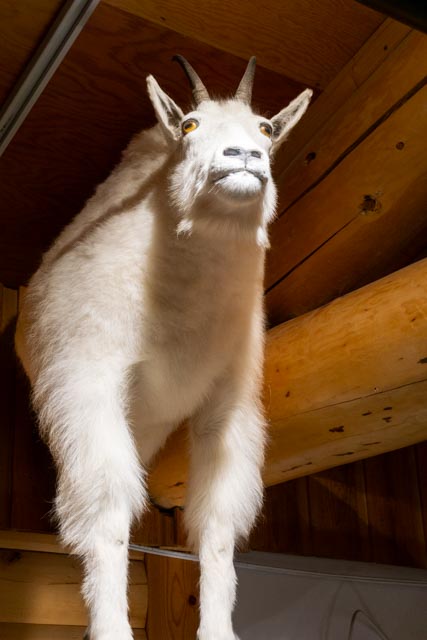
We visited the George Johnston Museum to learn more about the history and culture of the Teslin Tlingit. George Johnston was a photographer, adventurer and entrepreneur.
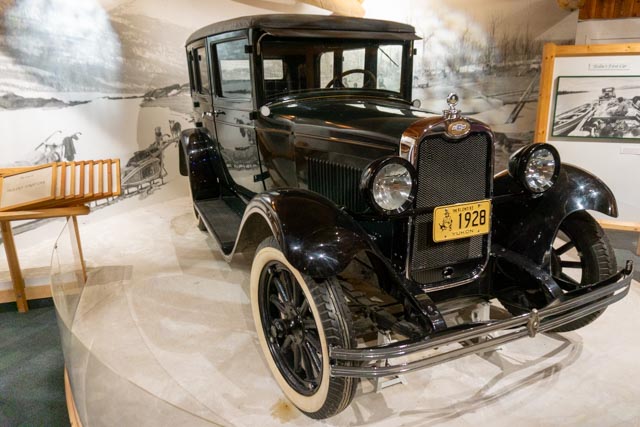
The is George Johnston’s original car. It was refurbished by the Territory and returned to Teslin for exhibit in the museum. George brought the first automobile (a 1928 Chevrolet) to Teslin by paddle-wheeler as there were no roads in Teslin. As the Alcan was being built, he convinced others to hand build a four mile stretch of road to connect to the highway. He used the road in the summer and the frozen lake in the winter to taxi townsfolk around. He also used this car, painted white to match the landscape, to hunt moose on the frozen lake.

I took this shot using the “long, wrap-around-the-corner arm technique” to see what kind of books George read. Amazingly he read some of the same authors as I on Alaska.
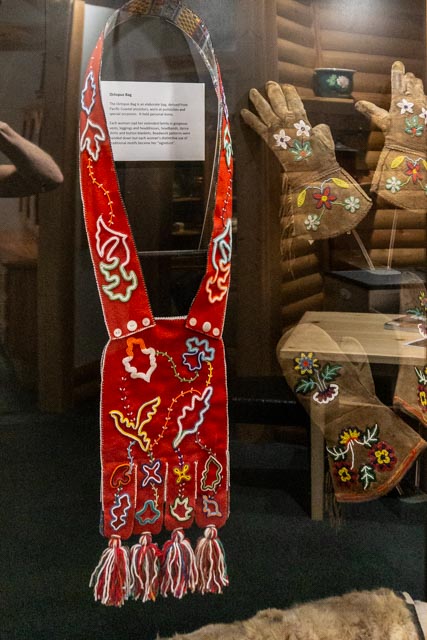
This is an octopus bag. The design of this elaborate bag was derived from Pacific Coastal ancestors. It was worn at potlatches and special occasions, holding personal items.

This is a Button Blanket Learning Strip. The demonstration piece is used to teach a sewer how to space, split, or combine four basic shapes to control negative space and how to add “pearl” (shell) buttons to deepen the effect. Together circles, ovoids, U and S shapes tell the “story” that the artist wishes to impart on a blanket or vest.

This is a Button Blanket. For generations these robes have served as insignia of family and clan histories, duties, rights and privileges. They are powerful statements of identity.
This button blanket, made from the typical dark blue wool with the red applique and pearl-white buttons was made for the purpose of display at the museum and has never been worn on ceremonial occasions.
The design of the button blanket captures the legend of Crow giving the light to Mother Earth.

The Teslin bridge was built in the 1950s. The original wooden bridge, built in 1942 was subject to icing problems and was repeatedly damaged by flowing ice and was replaced with this steel truss bridge. There is a new, modern bridge being built just upstream from this and I assume this will be used for southbound traffic and the new bridge for northbound traffic.

Cathy reviewing some of the Tlingit and area history at a rest stop just north of town.
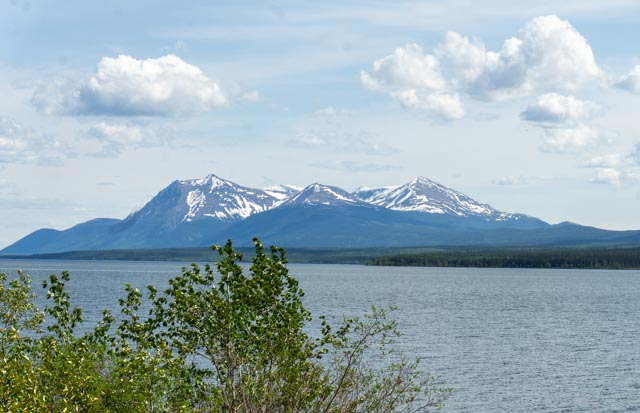
From this platform, you can see the Dawson Peaks across 50 mile long Lake Teslin. Lake trout here average 19 inches.

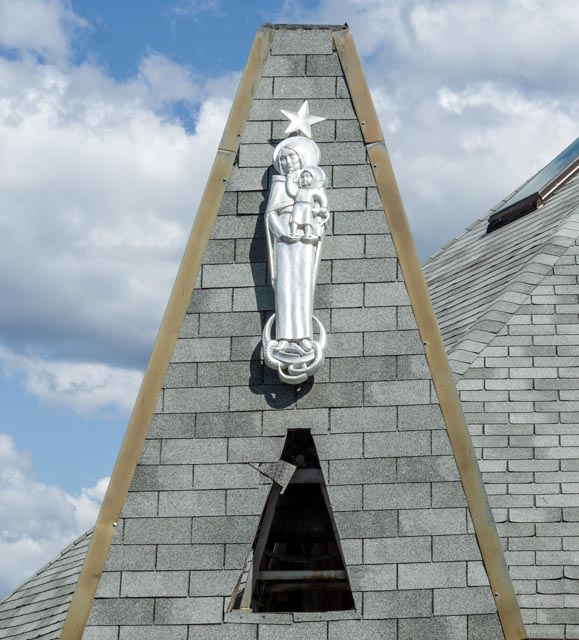
This is the Immaculate Heart of Mary Catholic church in Teslin. It had a pretty unique statue of the Holy Mother and Son on the bell tower.
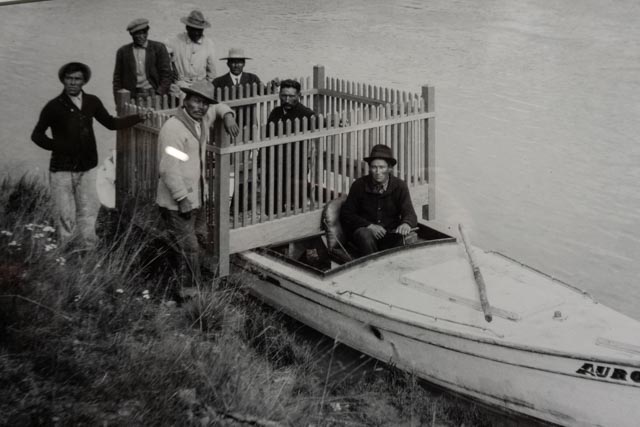
Since the Tlinkit believed that their spirits would be reborn, Tlinkit elders did not fear death. Traditionally the dead were cremated and their ashes placed in containers left high in trees or under shelters known as “spirit houses”.


While looking at the old Teslin and the new Teslin bridge, we noticed that this Tlingit burial ground was in the brush behind us.
Later, burial replaced cremation. More elaborate spirit houses covered the graves, with the dead person’s possessions and gifts placed inside or hung on the fence enclosing the grave. Members of the deceased person’s opposite clan were responsible for the funeral ceremonies. A year later an additional ceremony was held the the deceased’s family at their expense.

 Travelling with the Schinglers