We traveled for two days before reaching our first stop; the Columbus Zoo in Ohio. Cathy has been watching Jack Hanna and his Saturday morning program for quite some time. Mr. Hanna has been a major supporter of this research zoo over the years. To reach Ohio, we drove through Georgia (of course stopping a Buckees), then on to Tennessee, Kentucky and then Galena, Ohio about fifteen miles from the zoo.
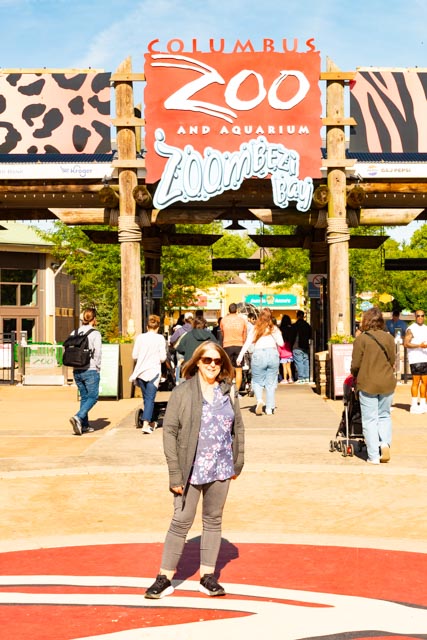
The day we arrived in Columbus the zoo was closed. Since we actually knew that we “scouted” it out and Cathy bought the tickets for parking and entrance online, saving us quite a bit of time.
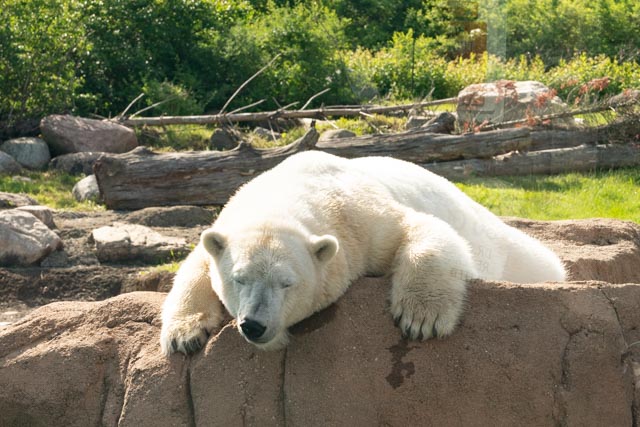
The zoo is set up with several different areas based on geographical areas. We walked to the “Northern and Alaska” area first, where polar bears actually do roam the streets in our final destination, Prudhoe Bay. After see the size of this guy, I think I will stay in the car if one approaches.

Grizzlies are bears that we have encountered hiking and fishing in Alaska, but they seem to be more “comfortable” behind barriers! Or is that just us?

This guy was getting some relief from the sunshine.

Cathy found the courage to mosey on up to this fella. He was very statuesque.

After spending some time in the Northern Arctic and Antarctic sections we went to the African section to see the cats.

This guy just wanted to scratch an itch. I think he may be pretty fast (they say up to 60 MPH).

The Hyennas were fun to watch, they ran back and forth in their expansive setting. They were a lot larger than we expected and ran pretty fast.
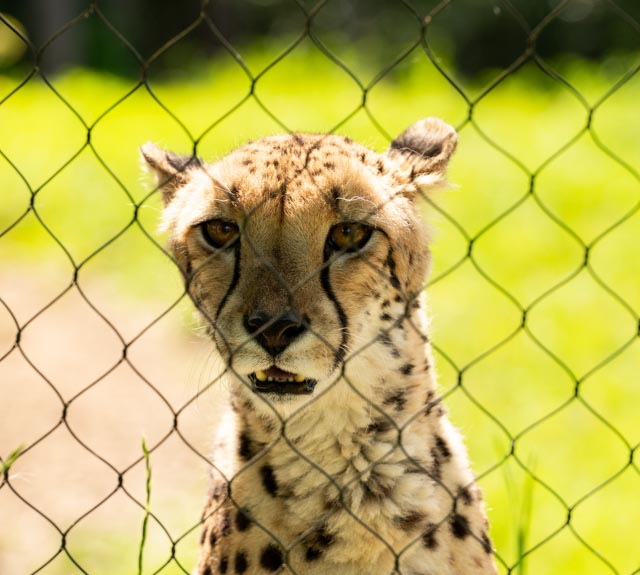
This guy just wanted to be petted (or eat us)

This lion climbed up on the rock and went to sleep. The rock, being in the direct sunlight, was pretty warm. All of the animals we saw have very large enclosures, giving them plenty of room to roam.

It was getting a little warm for the tiger. We could not get him to get out from under the tree.
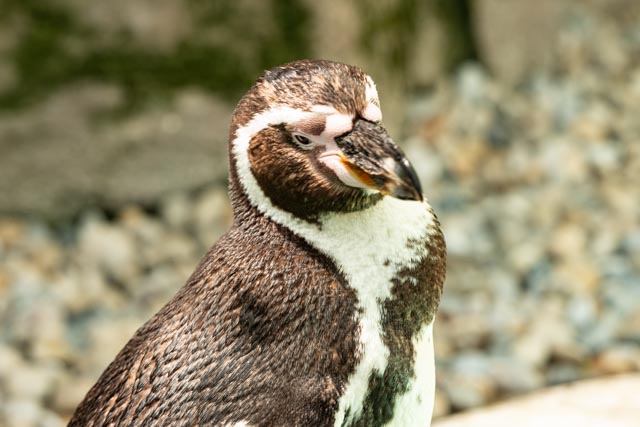
We managed to get pretty close to the penguins. This one was keeping an eye on us . . .

This was my favorite animal at the zoo. I had never seen one before. This a an okapi, which is a shy, solitary mammal, native to the Democratic Republic of Congo’s Ituri rainforest. Even though it looks like a cross between a horse and a zebra, it’s closest living relative is the giraffe.
After visiting the zoo, sore and very tired, we made our way north in the morning, through Ohio, Indiana, Illinois, finally spending the night in Wisconsin. In the morning, we continued on, through Wisconsin and into Minnesota, spending two nights at Voyagers National Park.
Voyagers was first proposed as a National Park in 1891 but was not officially named a National Park until 1975 under Richard Nixon. The original “voyagers” were fur traders, both Ojibwe Indians and French fur traders in the early 1700s, far before the famous Lewis & Clark expedition. Their route across the continent was so important that it was used to set the international boundary between Lake Superior and Lake of the Woods in the 1783 treaty ending the American Revolution.
The park contains over 500 islands, 655 miles of shoreline and more than 218,000 acres. It is mainly a boating and hiking destination, resting on the American/Canadian border. The Aurora Borealis was visible the night before we arrived, but it was clouded over while we were there. We visited the Woodenfrog State Campground, Kabetogama Lake and the Ash River areas over a period of two days, but did not really scratch the surface. There are fifteen marked hiking trails, rated from easy to strenuous.

 Travelling with the Schinglers