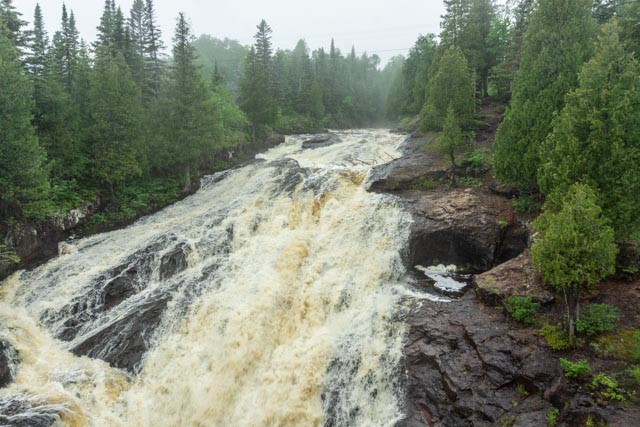
Leaving Bayfield, Minnesota we headed for Grand Portage, Minnesota. We made a stop at this waterfall on the Cross River. It had been raining a lot so most of the waterfalls were running.
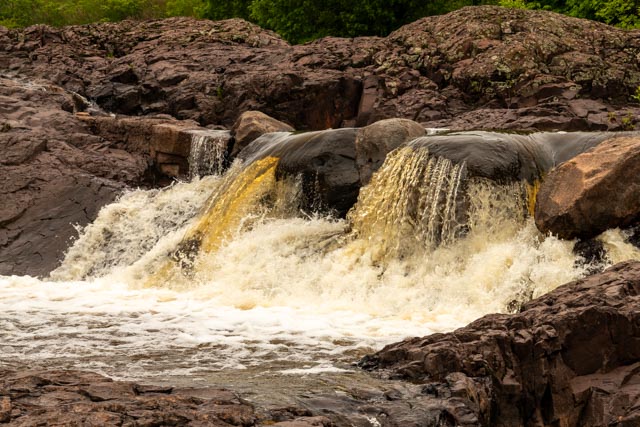
I spotted this water cascade so we turned back and made a stop so I could climb down on the (slippery) rocks.

I managed to climb a little bit lower and took another photo.

I went to the river and took this photo looking back.

Our next layover would be at Grand Marais. I walked out on these rocks in the evening to take a couple of photos of the bay

The sun was setting on the bay so I took this photo of the lighthouse guarding the entrance. The residence to the left of the lighthouse is for the Coast Guard.
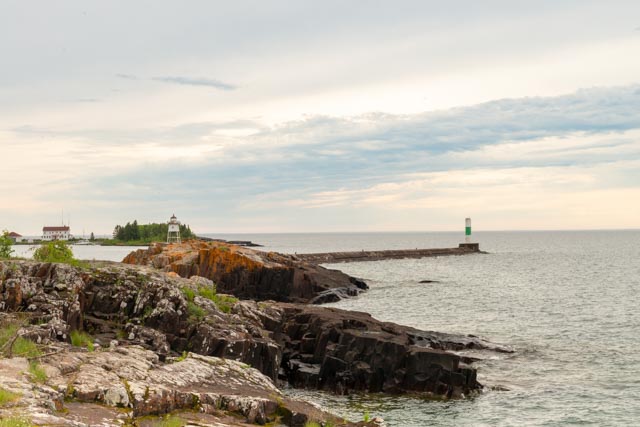
This light fixture was on the opposite side of the inlet into the bay.

We could see the town of Grand Marais in the morning from near our campsite.

I made another climb on the rocks surrounding the bay.
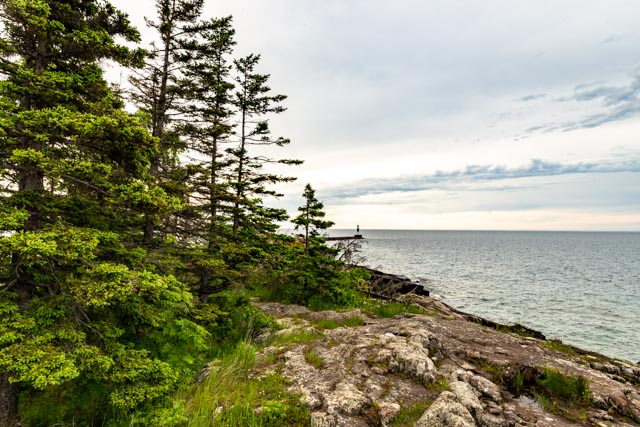
The road followed the lake-shore all the way to Grand Portage and beyond. There were a lot of photo opportunities along the way.

It was late in the evening so we made a day trip to the historical site of Grand Portage to scope it out for the next day. This was our first stop (once we left the visitor’s center). This was the canoe building shop. We were given a demonstration on the art of canoe building; seaworthy canoes that could hold up to four tons!

After entering the gates of the compound, we visited the manager’s quarters (on the left) and the combo living quarters and mess hall for the voyageurs.

This was an oven, very similar to what we saw at the massive pueblos in Arizona. What works there obviously worked here.

Above is the guard house or lookout tower. This was mainly for the safety of the Native Americans and voyageurs. Without them the operation could not work. The natives brought in thousands of pelts yearly to be traded for blankets, tinware and food.

This was a typical place setting for the “upper” class, typically the captains, leaders and record keepers. Yes, the tableware was from China, even then! We asked.
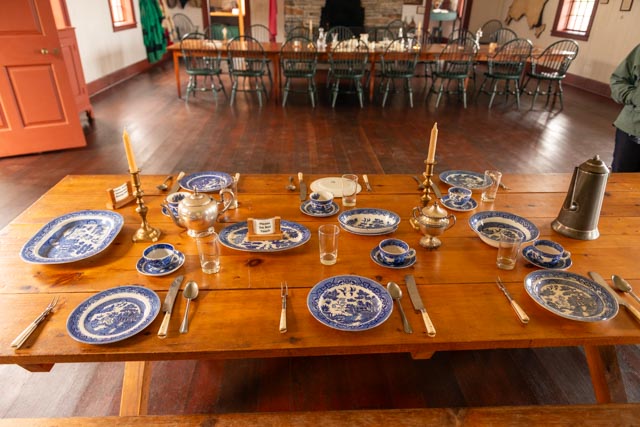
This was a typical place setting for the voyageurs and skilled workers. The food was the same for all.
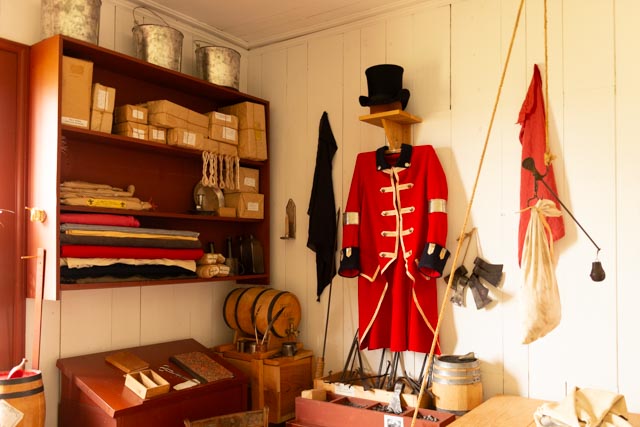
This is the barter room, where pelts were traded for upper-class goods.

This wall has a variety of pelts that could be traded, they are all native to the area. It was amazing the variety that was available, from martin to mink to wolf, fox and beaver.

Looking out into Portage Bay, the loaded canoes would make the trip from Montreal and beyond, over 1,500 miles without any contact from shore.

This is taken from the end of the loading and unloading dock, looking back at the fortified encampment. The natives chose to stay outside of the fencing. That is the top of the main fort, over the picket line.

 Travelling with the Schinglers