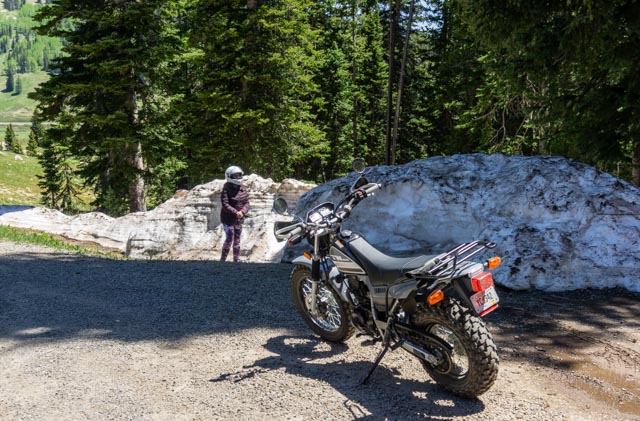
After we returned from Marble we spent the next day traveling the area on our motorcycle. We went up the Kebler pass from Crested Butte and took a side road into a small lake surrounded by snow capped mountains. Then we went back through Crested Butte, Mt. Crested Butte and Gothic.
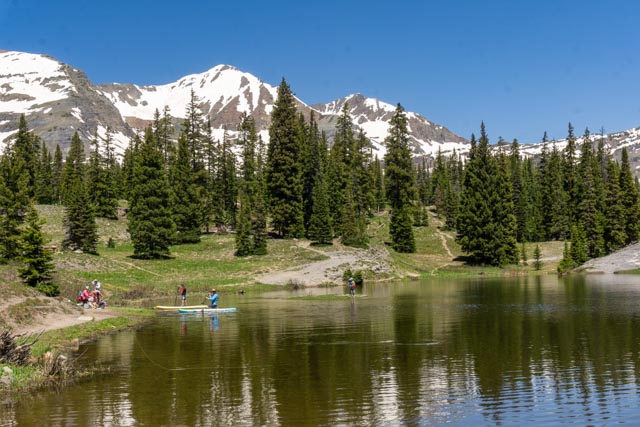
There were several fishermen working the lake and we could see some pretty good sized rainbows in the clear waters.
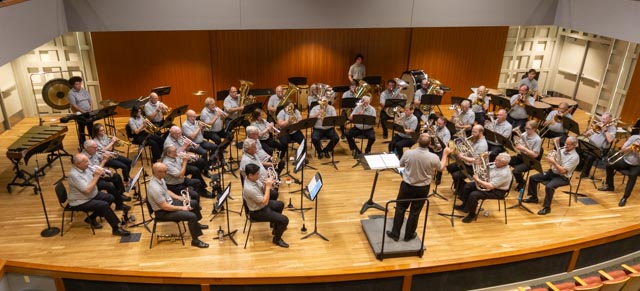
We enjoyed the 48th Annual Summer Concert put on by the Colorado Brass Band and Alpine Brass & Percussion Academy. It was held in the Kincaid Concert Hall at the Western Colorado University in Gunnison. They played nine selections, ending with Sousa’s Stars and Stripes Forever. Great music, great venue.
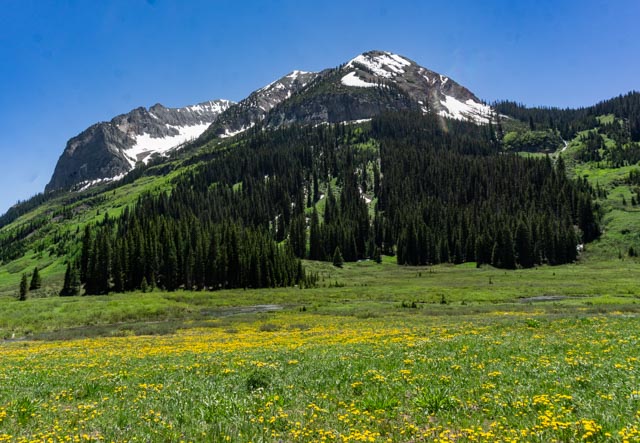
The flowers were just starting to bloom when we left for Oregon.
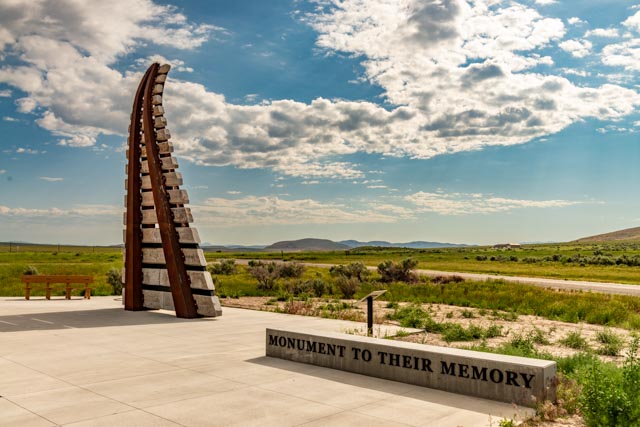
On the way to Oregon, we stopped at Promontory Point, site of the joining of the Union Pacific and Central Pacific railroads, creating the Transcontinental Railroad.
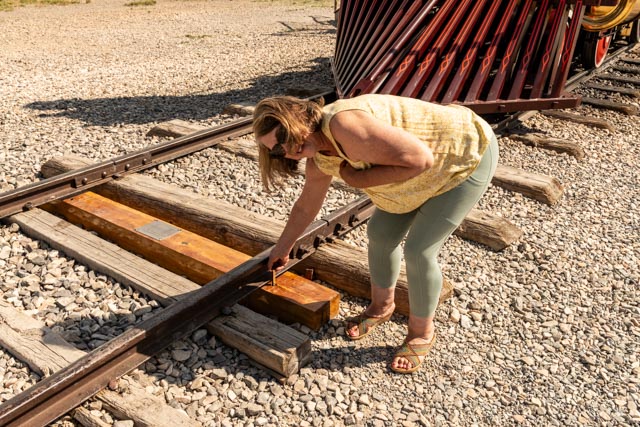
This is Cathy laying the golden spike.
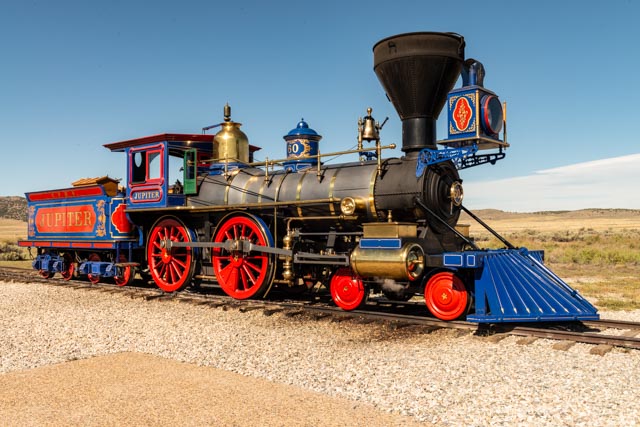
The Central Pacific Locomotive.
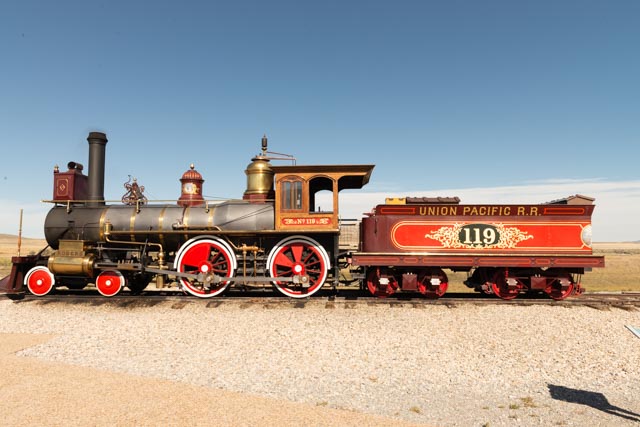
The Union Pacific Locomotive.
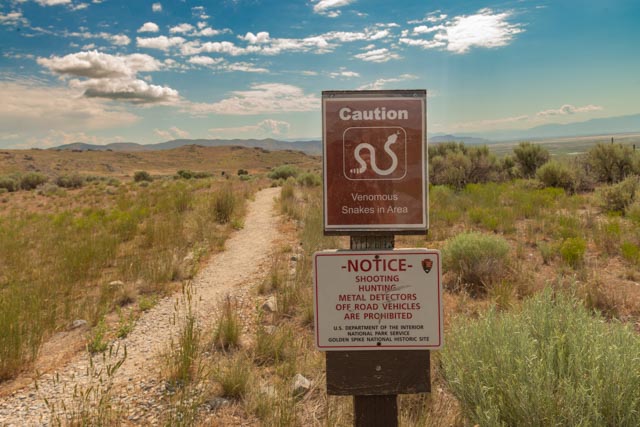
This 1.5 mile (roundtrip) route leads to two of the most significant railroad construction features in the Promontory area, the Central Pacific’s Big Fill and the Union Pacific’s Big Trestle site. Overcoming the Promontories required some of the “heaviest work, highest grades, and sharpest curves,” in addition to enormous fills and numerous cuts.
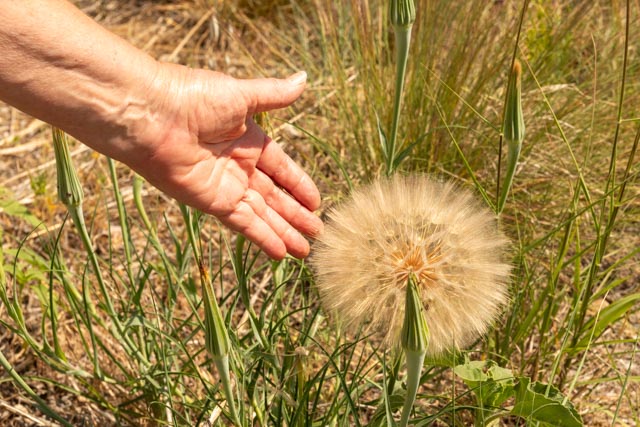
The size of the dandelions in this area was amazing.
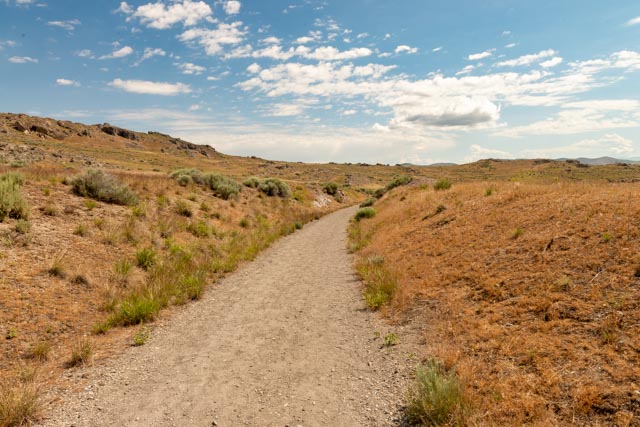
This is the start of the Big Fill Trail, the original transcontinental railroad roadbed.
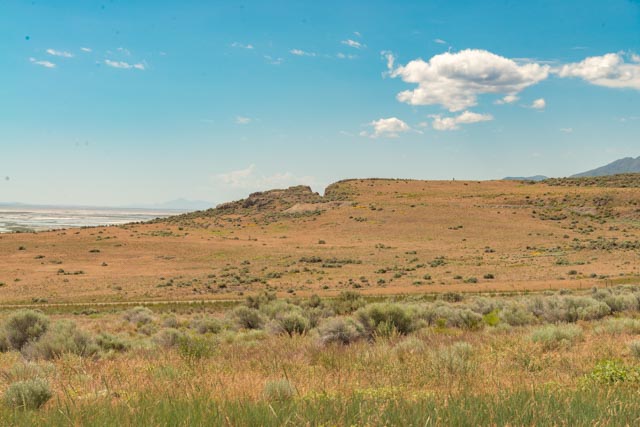
The cut in the rock in the distance is where the railroad roadbed was originally laid.
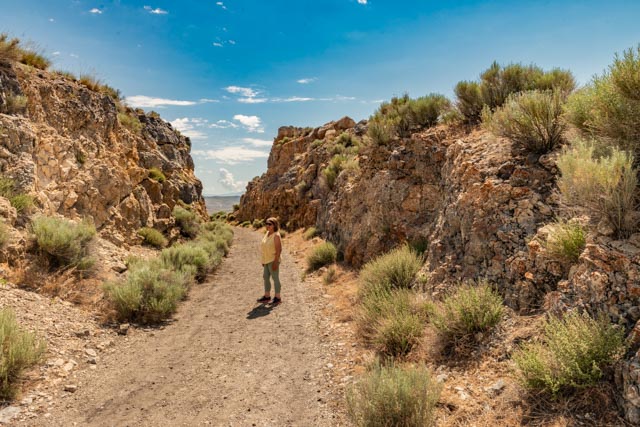
Cathy is standing in one of the original Central Pacific’s cuts. You can still see evidence of the originally hand-drilled holes for explosives.
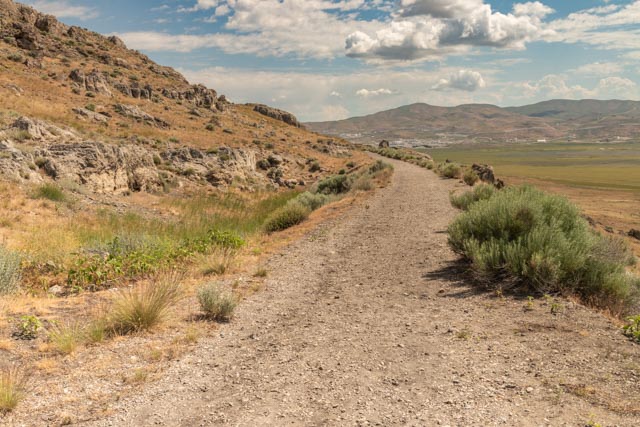
The original roadbed turned sharply to the left following the contours of the hillside if possible. In the distance you can barely see the Northrup Grumman installation.
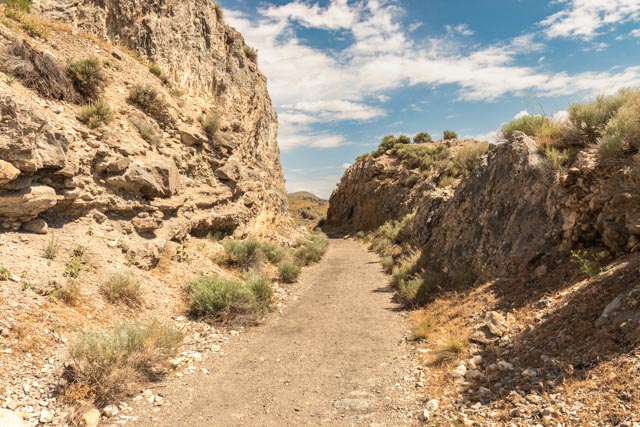
Another of the original cuts, this one a little deeper than the last.
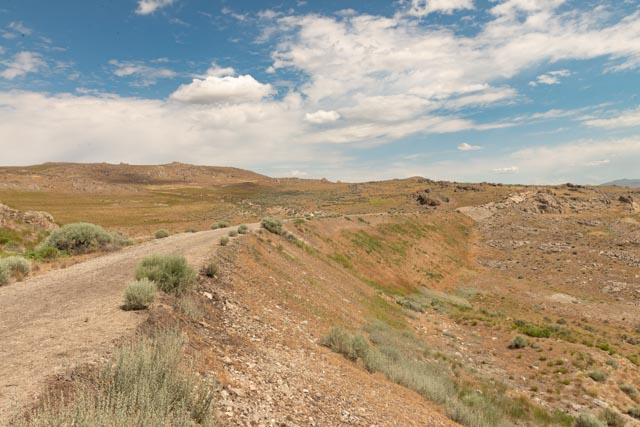
This is where the Central Pacific built the “Big Fill”. Morman workers constructed the Big Fill, requiring the effort of 500 men and 250 teams of horses. This earthen structure rose to a height of 170 feet or about 17 stories high. The Central Pacific’s solution was time consuming but had a much longer lifespan. The Union Pacific chose the quicker route, constructing a wooden trestle to span the gully, it was constructed to the right of this photo.
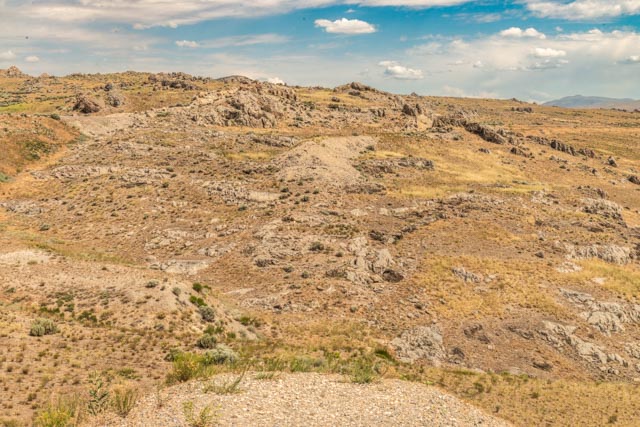
This is where the Union Pacific built the “Big Trestle”. It originally spanned from the light base at the bottom of the frame to the white base in the top center of the the photo. The span was adjacent to where the Central Pacific built the “Big Fill” which can be seen in the top left margin of this photo. Both railroads were being paid by the mile by Congress and it took a while before Congress realized that they were paying large sums of money and land grants to two organizations for doing the same thing. Eventually the duplication was discovered and corrected.
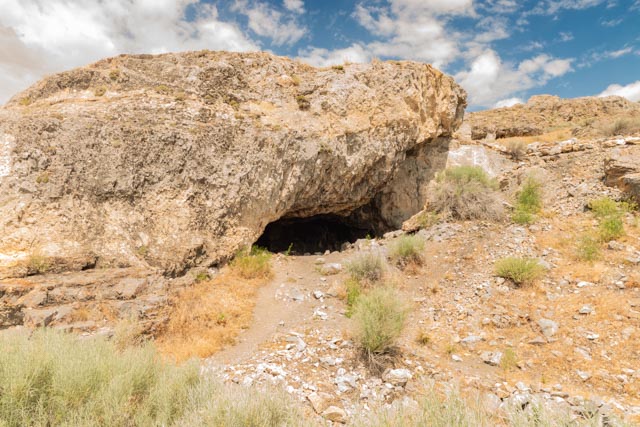
This is one of the caves in which workers retired to periodically to escape the heat.
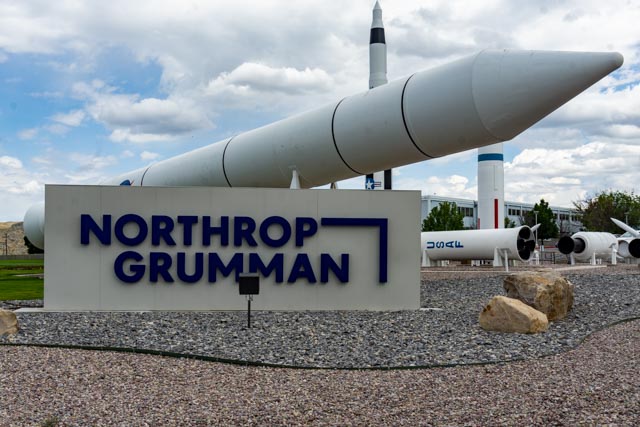
It was interesting that as we left Promontory Point, site of the completion of the Transcontinental Railroad, we would stop at Northrop Grumman’s test and development facility, located within sight of the original roadbed.
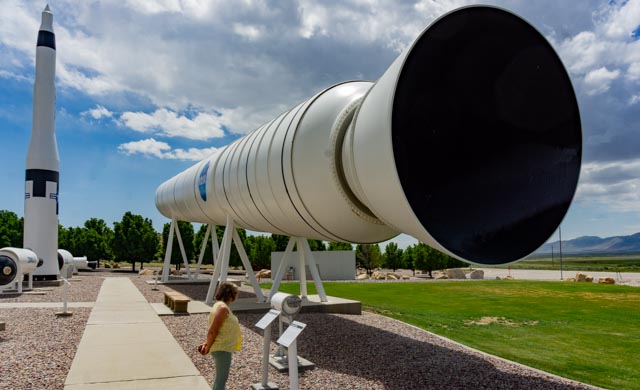
This is Cathy reading about one of the engines that powered the space shuttle.
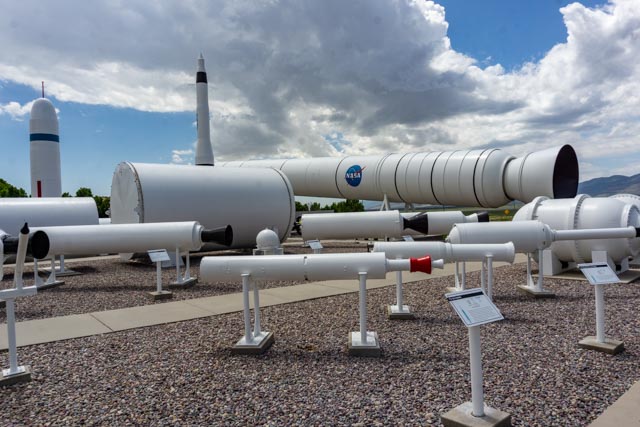
There were many rocket engines on display, for older to newer. It was interesting that they got more powerful, smaller, more efficient and more accurate as technology evolved.

 Travelling with the Schinglers