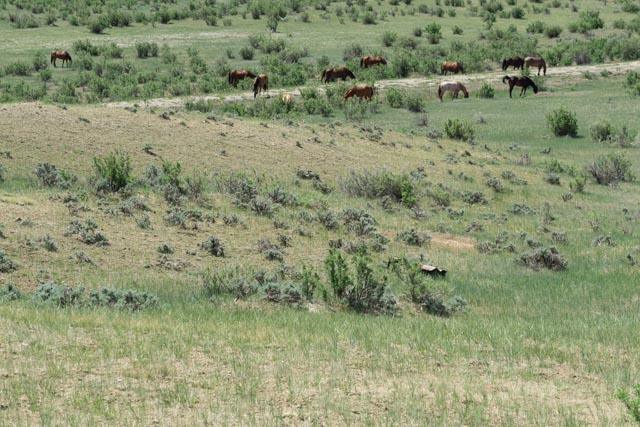
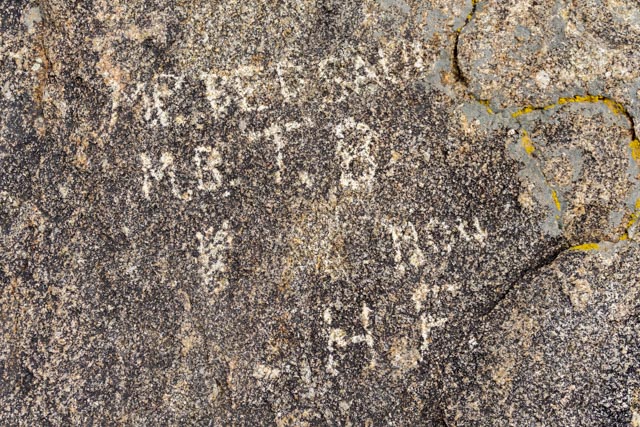
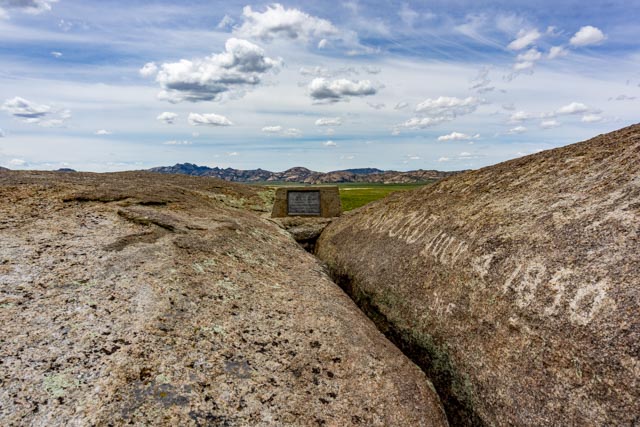
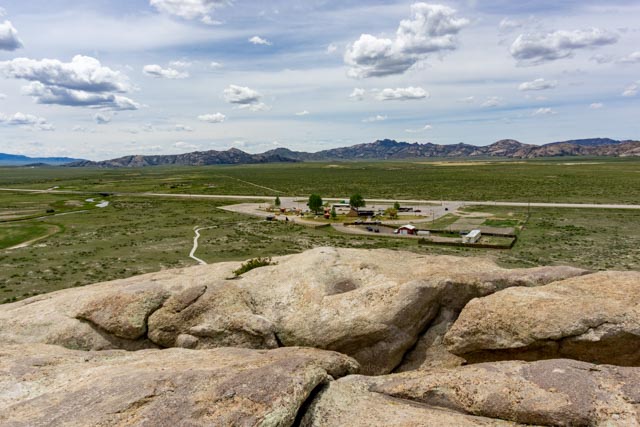
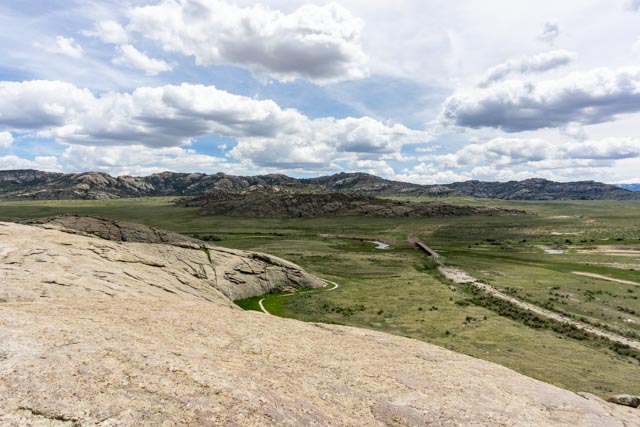
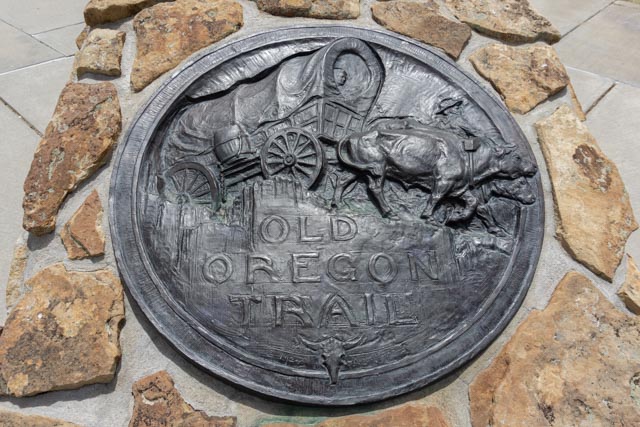
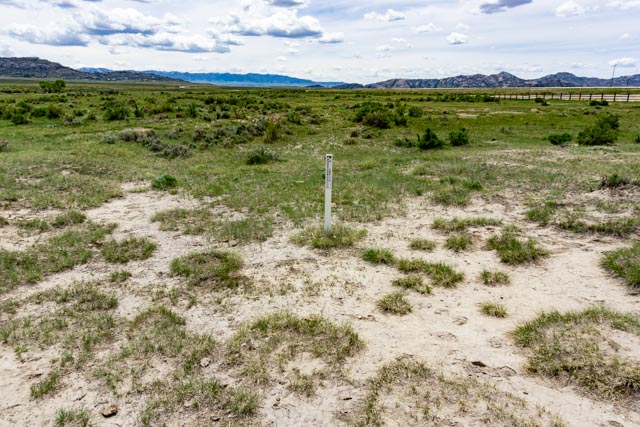
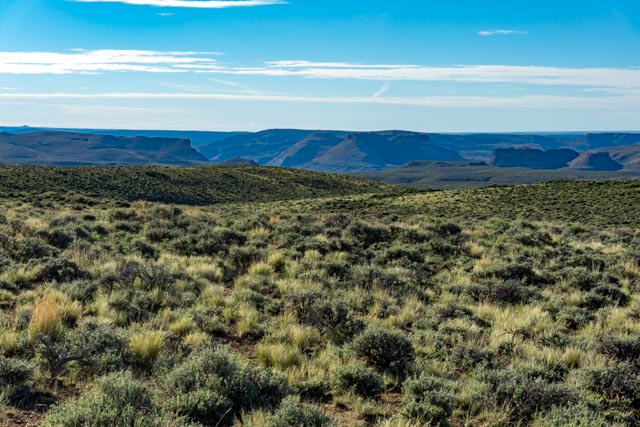
Heading south on I-87, we took the cutoff to Edgerton, SR387 to SR259 so we could experience the site of the Teapot Dome Scandal, which exposed back room dealings between wealthy financiers and high ranking government and military officials in the 1920s. During the scandal, President Harding died, and Secretary of the Interior Albert Fall, Secretary of the Navy Edwin Denby, and Attorney General Harry Daugherty all resigned. The problem was . . . the entire oilfield was leased to Mammoth Oil without competitive bidding and Albert Fall was caught redhanded taking bribes. In 1931 Fall was convicted, fined and imprisoned for committing a felony while in office, becoming the first Cabinet officer to be jailed. Harry Sinclair was subsequently acquitted of bribery but sentenced to jail for contempt of court and the Senate. Hmmm, government!We saw this group of range horses grazing in the oilfields. After visiting the site of the Teapot Dome Scandal, we continued on to Independence Rock, named the “The Great Record of the Desert” by Jesuit Missionary Jean Pierre DeSmet in 1841.Thousands who traveled the Oregon Trail to the West stopped by this landmark and chisled their names into the rock.The extreme weather is working to slowly erase the names of the early pioneers and they are becoming hard to see.Independence Rock is a significant feature in the valley and I had to scramble up the curved face to see the view it provided. I made sure that climbing was allowed (it was, but there was the typical warnings of dangerous slips and falls) and up I went, using this crack as a handhold. That is Cathy waiting at the bottom. I am about 30% up the rock at this time.Once I reached the top, I found several other markings made by the early pioneers (along with more recent carvings by vandals).The museum and rest facility is shown here and you can barely make out our rig parked in the upper right of the lot.This is the original roadway and bridge over a waterway feeding the Pathfinder Reservoir.We saw this memorial to the original Oregon Trail so we backtracked to find the actual trail (below with the stake in the middle). You can see the lack of bushes straight back from the stake. The trail traveled through a “notch” in the closest range of hills below. You can barely make out the notch just to the right of a straight line extending from the stake.Next we entered the Flaming Gorge National Recreation Area. This was a very large section of land with very little habitation. There is a huge reservoir in the canyon which extends from Green River almost to Dutch John, over 30 miles.In the distant foothills is the site of the First Rendezvous in the Rocky Mountains of (white) traders and trappers held in July 1825 near McKinnon (another side trip). Among those assembled for the 1825 event were some of they industry’s most colorful characters: General Ashley ( who owned the trading post and organized the Rendezvous), Jedediah Smith, Bill Sublette, Davey Jackson, Tom Fitzpatrick, Etienne Provost and Jim Bridger. Ashley travelled to St. Louis with over $50,000 in furs when the trading ended. This Rendezvous became a yearly tradition until 1840. (Readers of Western history will recognize these names.)
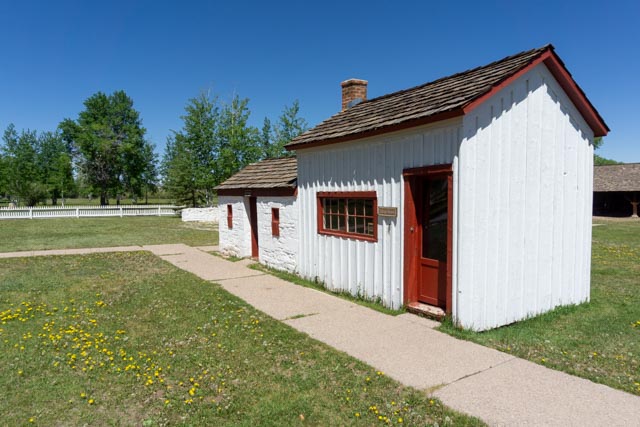
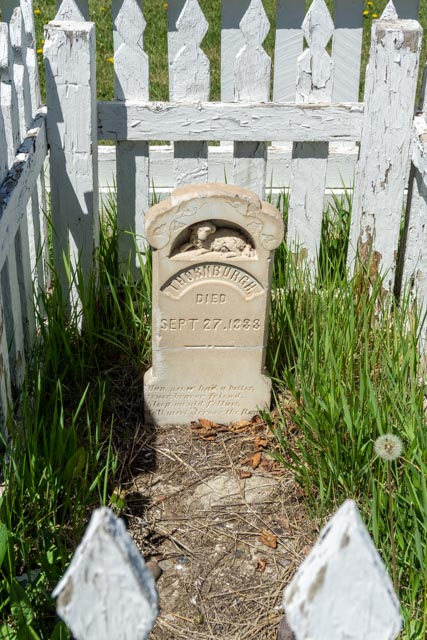
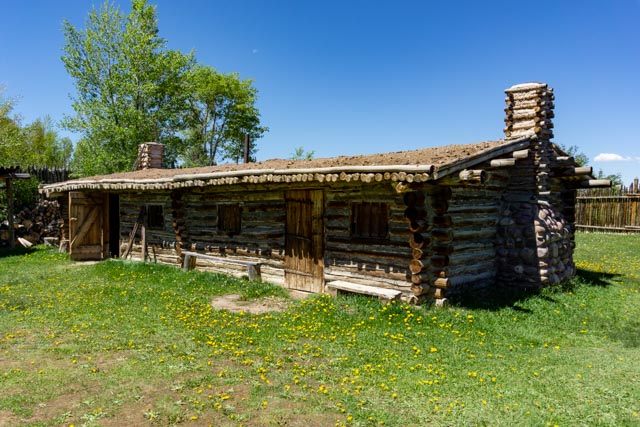
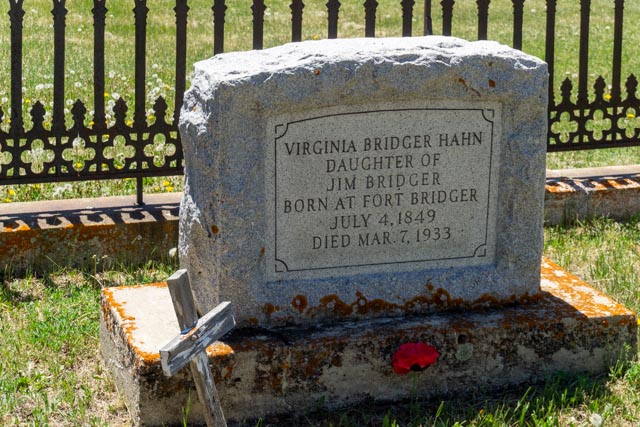
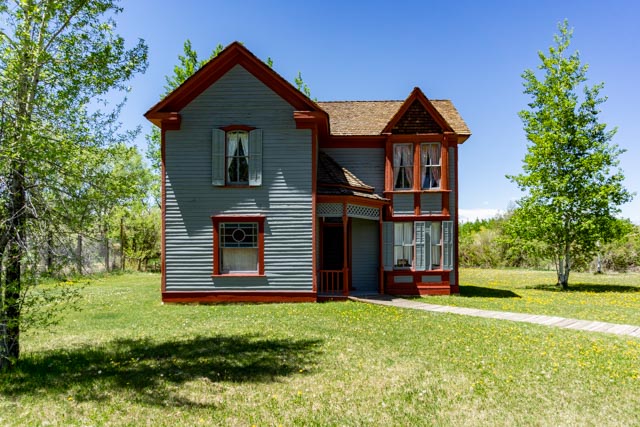
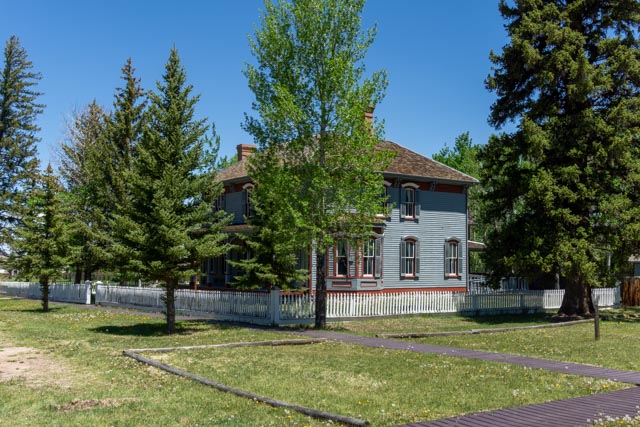
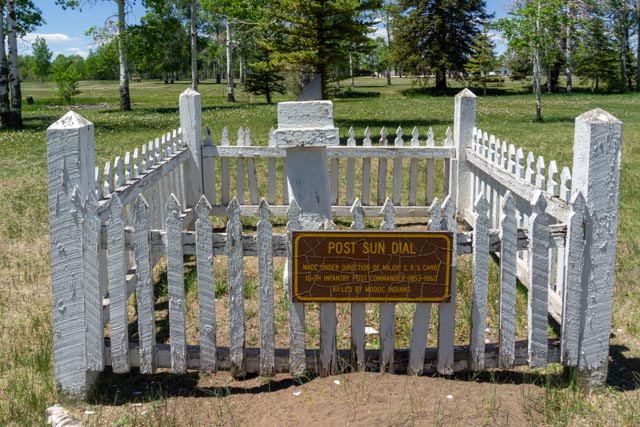
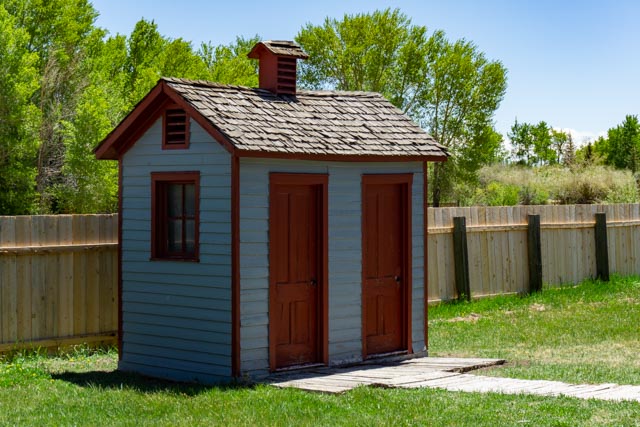
We talked with some state employees repairing animal fencing along the roadway and got a little more information about the site. One of the repairmen was a pilot and scouted the area extensively in his small airplane, locating dozens of pioneer cabins and sites from the air in a region that is fairly roadless. I did manage to get an insulator from him and we came home with a piece of wood (possibly a remnant of an original cabin) that was dovetailed and had square nails protruding. I found it downstream in the nearby creek that led to the site of the Rendezvous.Our next stop was Fort Bridger, near Urie, WY. Fort Bridger was established by Jim Bridger and Louis Vasquez in 1843 as an emigrant supply stop along the Oregon Trail. The Mormons bought it from Louis Vasquez in the 1850s (in Bridger’s absence and without his consent) and it became a military outpost in 1858.This is the first schoolhouse in Wyoming. It was originally built for just one family but was expanded as needed..This is the gravesite of Thornburgh, the dog of major T.T. Thornburgh who was killed in a battle with the Ute Indians on September 29, 1879. The dog was the sole survivor of a wagon train that was burned during the battle. He became the devoted companion of freighter “Buck” Buchanan and died as a result of a kick by one of Buchanan’s mules. A fort favorite, he is credited with helping to catch a commissary thief, warning a sentinel of marauding indians, saving the life of a soldier in a knife fight and saving a young boy from drowning. His grave is prominent in the fort while his master is buried in an unmarked grave in Salt Lake City.This is the guard area for the jailhouse. Notice that the bunks for the three guards are angled up to insure that the guards were always “ready” to exit in an emergency. The jail cell was attached to the right.This is the original cabin of Jim Bridger. Due to the sod roof, it remained very cool inside even with outside temps in the high 80s. His corral was located directly behind this structure.This is the gravesite of Virginia Hahn, the last surviving member of the Bridger family. It is located in the fort’s cemetary.This is a ranch home that was built in 1910, after the fort was abandoned and returned to ranch land.This is the commanding officers home in the fort. It was built in 1884 and replaced a smaller home nearby. This is the official timepiece of the fort. It was built under the direction of Major Canby who was Commander of the 10th Infantry from 1853 until 1860 when he was killed by Modoc Indians.My favorite, and most important building in the fort . . . a two holer! Almost decadent!








 Travelling with the Schinglers
Only a two joker?? Cracked me up!!
LikeLike