Jason is visiting a food locker at the 13.2 million acre Wrangell St. Elias National Park. When you are “off the grid” (66% of the park is designated as wilderness), these are commonplace and used for food storage. They are usually a little higher off the ground to make them relatively bear-proof resistant .

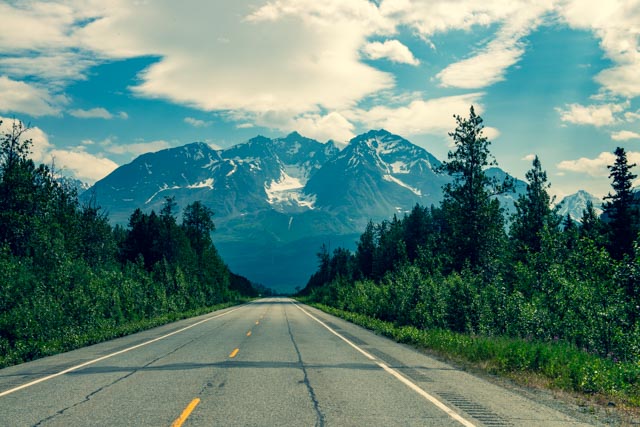
This is the view from our roadside stop to investigate a moose sign along the road. This is the mountain range approaching the town of Valdez. The traffic is light midweek but the area will be full for the 4th.
We stopped to take a look at the Worthington Glacier at the top of the pass. When we were here before, the glacier was hidden by cloud cover.
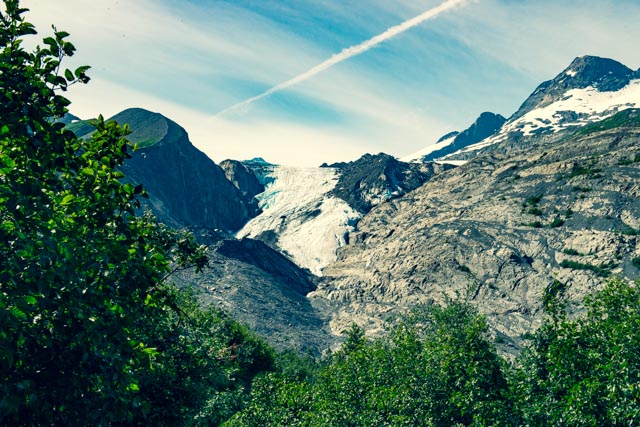
You can see some of the blue ice at the top and middle left of the icefall.

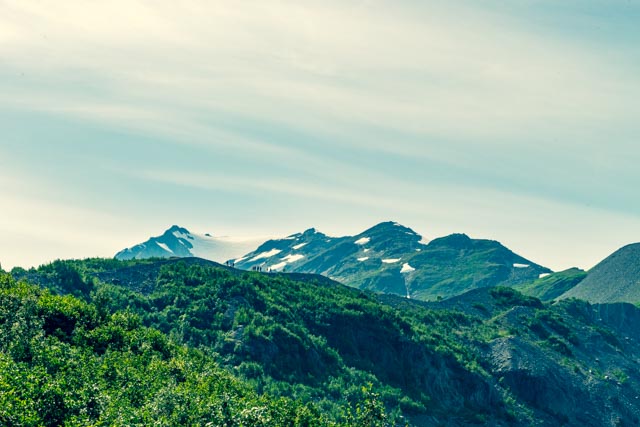
This is looking back across the hillside towards the Wrangell St. Elias Mountain range.
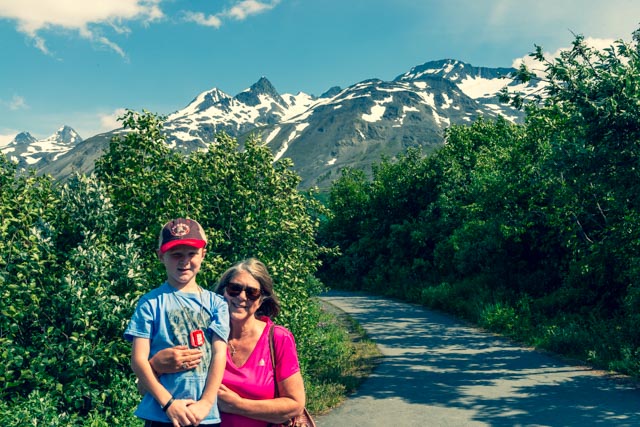
Cathy and Jason posed on the viewpoint trail. Jason and I will be climbing the ridge to the left of the Worthington glacier in a couple of days to get a closer look at the ice-fields. We talked with a local hiker about the wildlife issues (there are none yet) and are pretty convinced we can make this ascent AND hike the “Trail of “98” in one day. The “Trail of 98” was one of the ways to avoid the Chilkoot Pass in getting to Dawson City and the Klondike in the late nineteenth century.
Leaving the Worthington Glacier, we travelled through the waterfall-strewn Keystone Canyon and dropped into the Prince William Sound valley and the town of Valdez. We spent the 4th of July in downtown Valdez, starting with a 5k fun run and returning for the town parade.
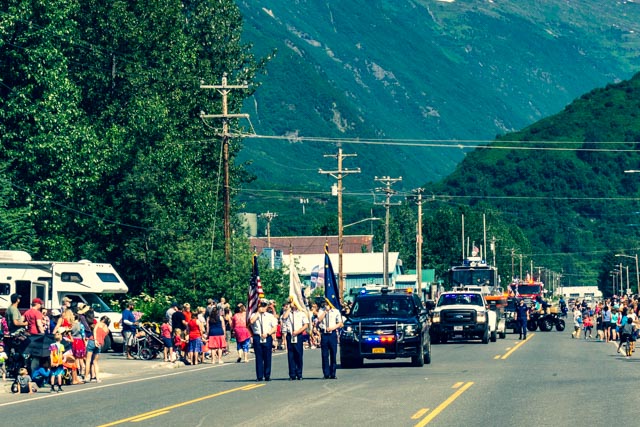
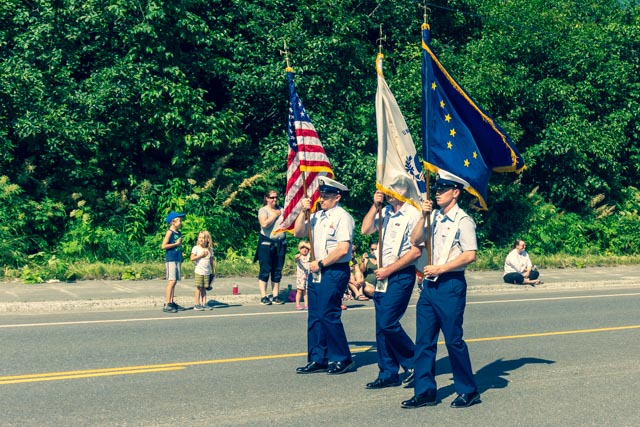
The US Coast Guard color guard was out in front.
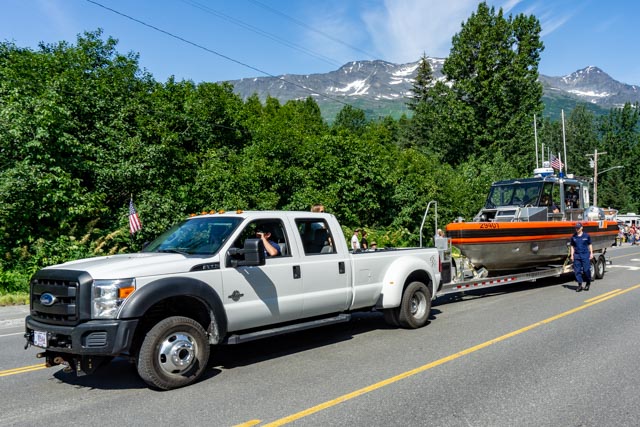
A small Coast Guard rescue boat followed.
The town police were in attendance.

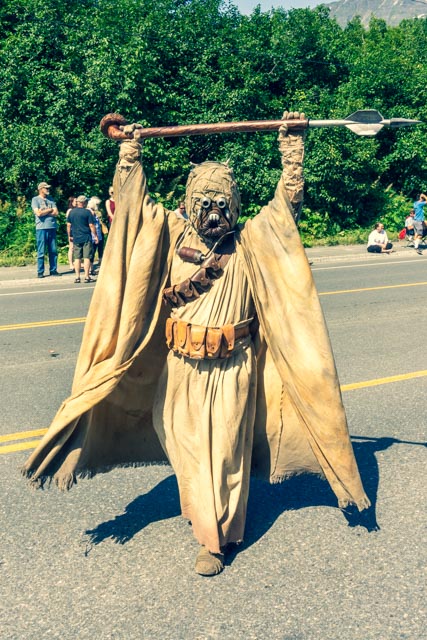
Neptune, the god of freshwater and the sea in Roman religion was in attendance. He was just a little scary. He was the Roman version of the Greek god Poseidon. Cathy thought is was a Star Wars character. (Maybe it was?)
We saw a couple of these units and later found out they were bated with peppermint! The bears like sugar. These are the equivalent of “dog catchers” in the lower 48.
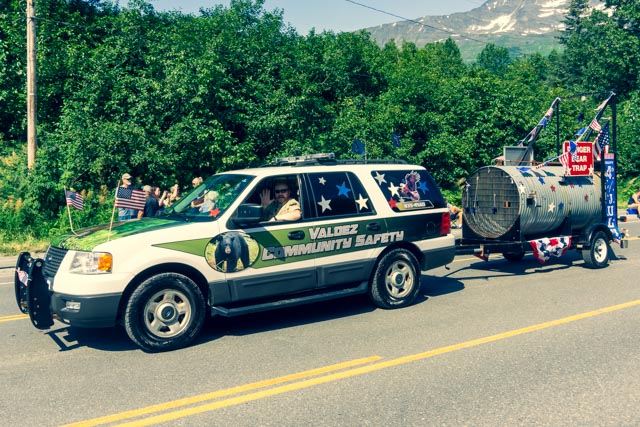
And, there is the dog!

They have a pretty good looking all-wheel drive fire engine.

Our campground provided this snow vehicle.

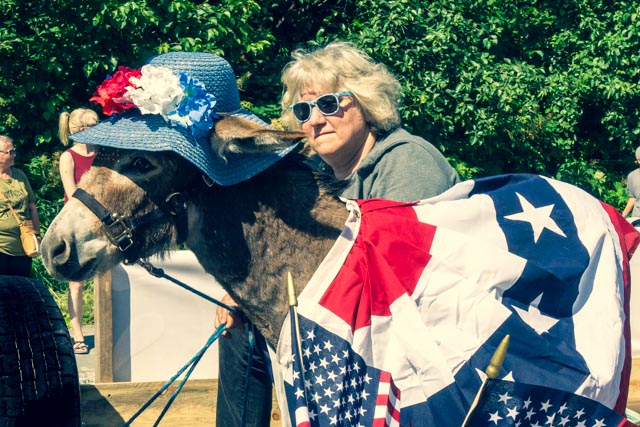
For us, the highlight of the parade was the well-dressed donkey.
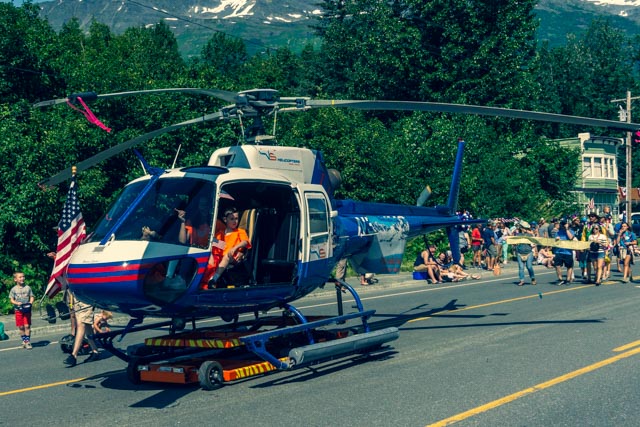
This tour helicopter and was moving down the street on a remote controlled cart below the landing gear.
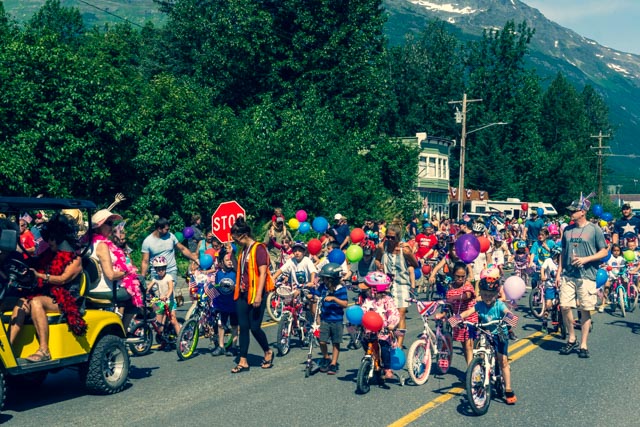
The parade ended with a large group of children on their decorated bicycles.
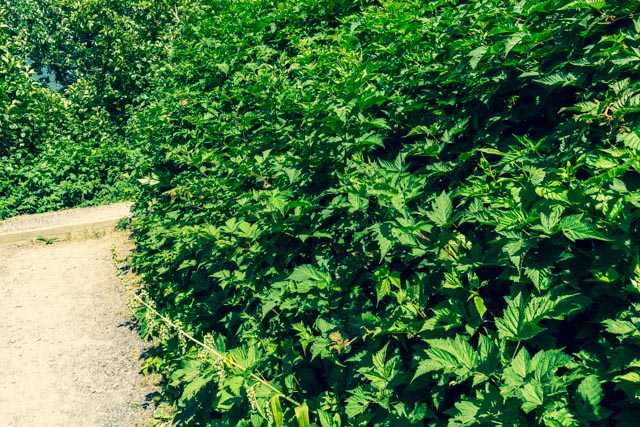
After the parade, we hiked to the top of the town viewpoint. Only later did we find out that the path is a favorite of the local bears, as it was lined with salmon berry bushes. Jason had a handful of salmon berries that the bears must have missed and we saw the bear warning signage at the other end of the trail.
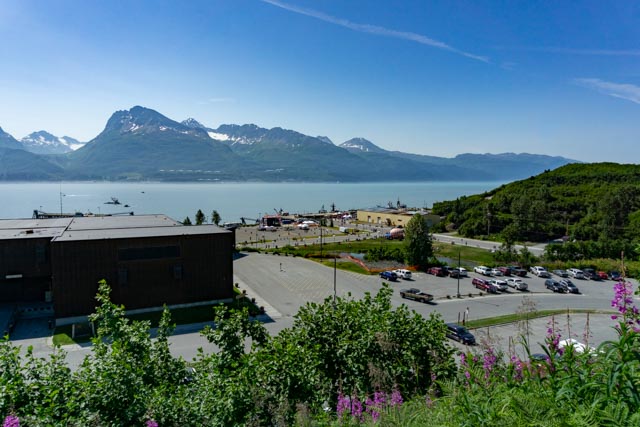
After watching the canoe-jousting competition, we headed for the Coast Guard boats that were open for tours. This is Jason piloting the smaller of the rescue boats on display.

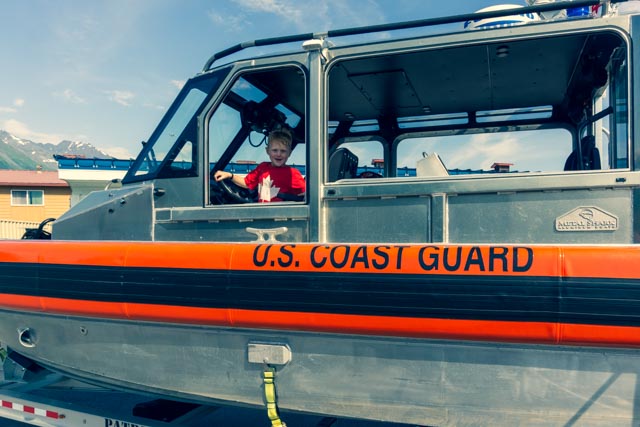
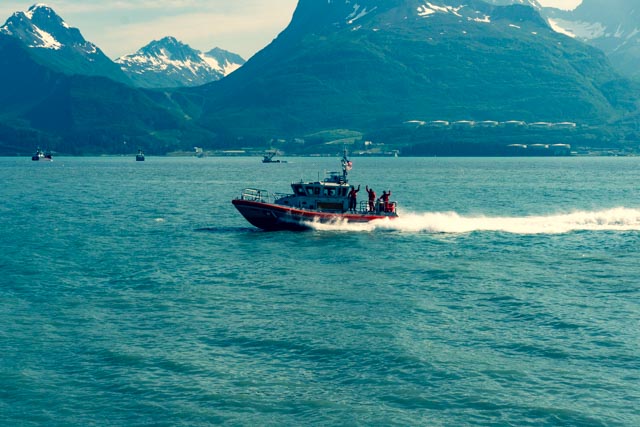
These are two of the newer and larger 45 foot “Response Boat-Medium” designed for open water rescues. They were build pretty stout, with hydraulic hand holds and navigation screens for up to three drivers and a separate seating system for the navigator. There was also a hold in the bow that securely seated an additional six personnel. We spotted the racks for the M-16s (which were removed) and noticed the gun turret mounted on the fronts of these two boats, designed to hold the M240B. There were two MTU Detroit Diesel turbocharged engines below, producing 825 hp to the twin jet drives. This combination produces a top speed of 50 mph.
According to the US Coast Guard, the evolution of missions has increased the original requirement from a search and rescue asset to perform many missions including recreational boating safety, marine environmental protection, enforcement of laws and treaties, ports, waterways, and coastal security, and defense operations, including those traditional missions associated with Homeland Security.

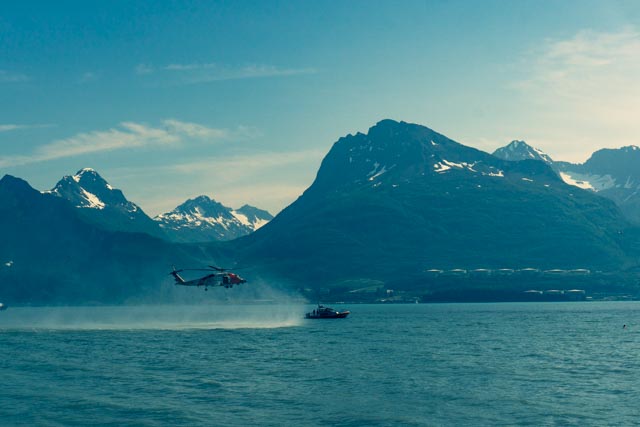
After viewing the boats dockside, the Coast Guard provided a demonstration of their rescue capability, using the boat and their helicopters with Prince William Sound as the backdrop. The row of storage tanks visible in the background is the terminus of the Alaska Pipeline.
This is a water rescue using a “cuff” on a diver.
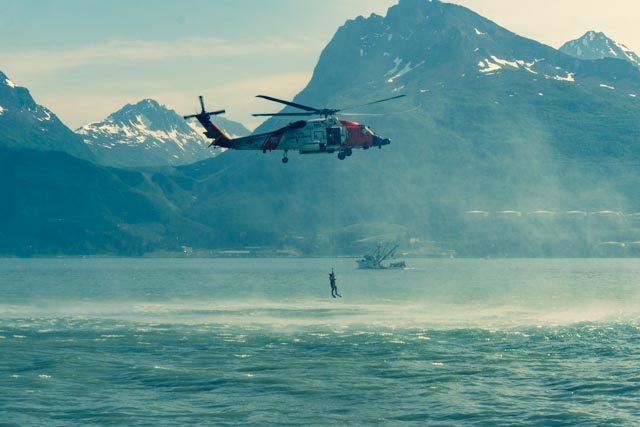
The boat and the helicopter work as a team.

The helicopter dropped a sling onto the back of this boat at speed and

then lifted it back out, loaded with supplies.
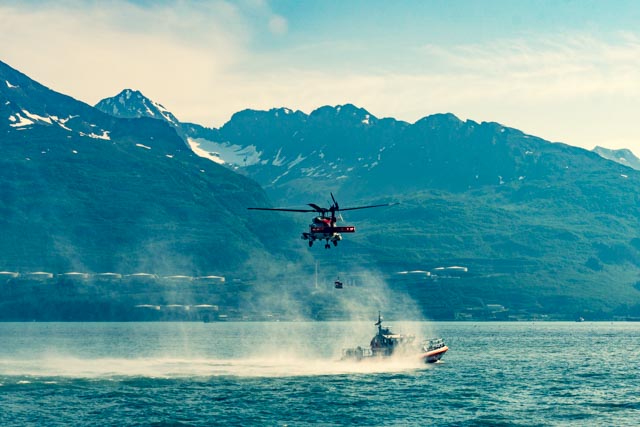
At the end of the hour-long demonstration, the boat and helicopter did a final pass at speed.

 Travelling with the Schinglers