2019-05-12
We lodged at the Palacio del Inka in Cusco for two nights. The hotel is considered a historical property with both Incan and Colonial heritage including an original Inca stone wall 64 m long located inside the hotel bar. In the heart of this wall you can see the ‘Stone of 8 Angles’ made from a type of plutonic rock like Diorita Vede which is formed deep in the earth. This stone is the center of this historical structure.

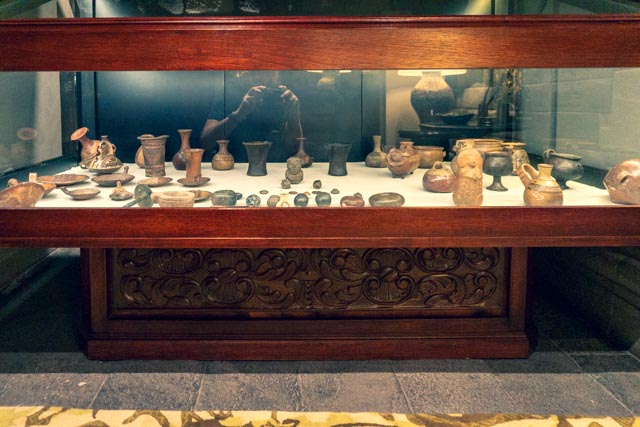
The Palacio del Inka Hotel is a museum hotel that inspires with its world-class art collection. They have a stunning collection of over 165 paintings, 60 of which are originals from the famous ‘Cusco School’ tradition that you can admire during your stay. Some elements of the mansion, such as the arch and the stairs, have remained intact since the Inca period. Pottery items, unearthed during reconstruction are displayed near the bar.
Leaving Cusco, we headed to Valle Sagrado and the Inkaterra Hacienda Urubamba. We stopped at a llama exhibit to familiarize ourselves with the different types of llamas that are found in Peru.
Cathy is feeding this pack of Medium llamas. The medium llama has long fibers on the body and neck region, but shorter fibers on the head, legs, and ears than the wooly llama. The medium llama has a fleece that is double layered, with long, rough guard hairs which extend with a great undercoat. Some of these llamas are the result of breeding a wooly llama and a traditional or common llama.

Smaller than many other types of llamas, the Wooly llama has strong wool covering the entire body, particularly on the head, neck, and ears. Their fiber is very kinky and thick, and it is mixed with a minimum number of guard hairs. In fact, many wooly llamas have fiber that is the same quality as an ordinary alpaca, and because the undercoat is missing on these animals, their consistent fleece is usually known as single-layered. Notice the eyelashes on this guy.

Suri llamas are extremely rare and offer wool protection such as the wooly llama, the difference being that the fibers are much less fine than they are on the wooly llamas. They are also difficult to breed because their genetic pool is very small and not readily available, even for experienced breeders.
The word “Suri” refers to the type of fiber structure belonging to the llama. For it to be classified as a Suri, the fiber has to hang in well-defined “locks” from the skin to the end of the lock.
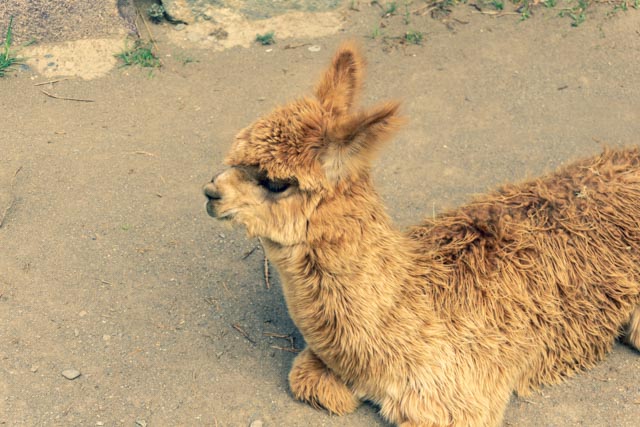
There were a couple of the “wild critters” that wandered into view during this stop.
Vicuna cannot be domesticated and can only be shorn every three years. Because it takes up to 30 vicuna to make just one coat, this type of wool is very rare, even more rare than cashmere. The vicuna are native to the Andes Mountains of South America, and they usually have an orange coat with patches of white on it. Vicuna will starve themselves if kept in captivity, which means they have to be released back into the wild after they are shorn. These were in the wild, coming down the hill to feed.
Viscachas live in rocky dens and feed on a wide variety of plant matter, almost anything it will find in its rocky environment. While they prefer grasses and seeds, they will even snack on an occasional insect.

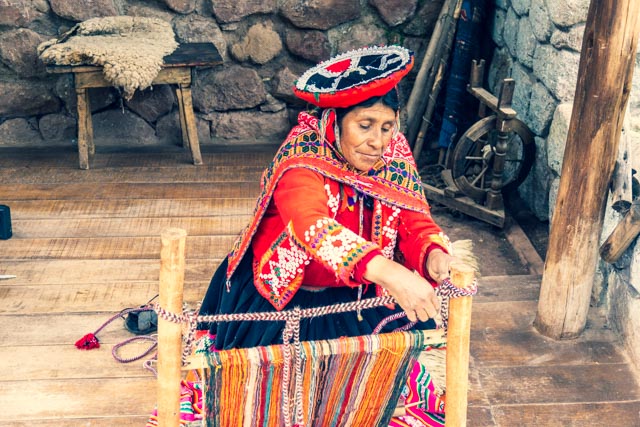
This is a native master weaver building an intricate pattern. The quality of her work was outstanding. All of the patterns (hundreds) are in her head.
Waiting in traffic, I spotted these ceramic bulls on top of a nearby house. Diego Valle, our guide explained the significance of these symbols to me. They are placed on the rooftops for good fortune and protection for the house and families that inhabit it. This tradition dates to Inka times.

Our hotel was located in the Sacred Valley of the Incas. Stretching from Pisac to Ollantaytambo, this fertile valley is irrigated by the Urubamba River. The Chanapata civilization first utilized this area starting at around 800 BCE because of the rich soil used for agriculture. The Qotacalla civilization lived in the Sacred Valley from 500 to 900 CE The Killke civilization then lived in the Sacred Valley from 900 CE until the Incan Empire took over the region in 1420. The Incan Empire ruled this area until the arrival of the Spanish.
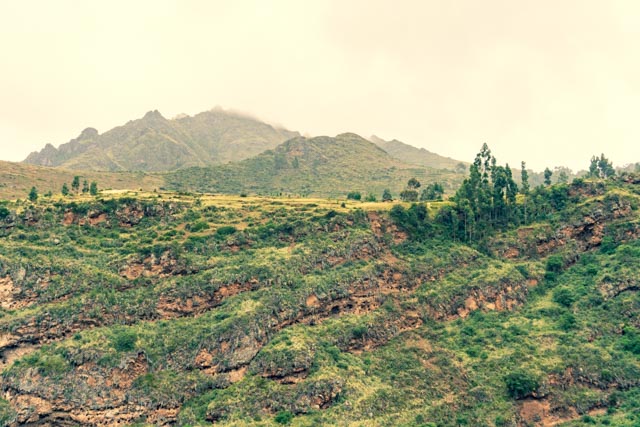
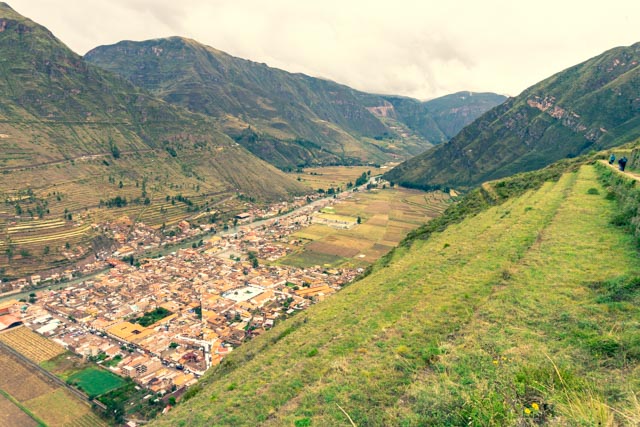
This is the view from the top of the agricultural terraces, looking down at the town of Pisac. It is perhaps best known for its Incan ruins, known as Inca Písac, which lie atop a hill at the entrance to the valley. The Inca constructed agricultural terraces on the steep hillside, which many are still in use today. They created the terraces by hauling richer topsoil by hand from the lower lands. They fertilized the soil by hauling guano, one bag at a time, from the seacoast near Lima. The terraces enabled the production of surplus food, more than would normally be possible at altitudes as high as 11,000 feet.


Descending via a steep trail from the top of the terraces, this Inca burial site came into view, across the canyon. Unfortunately, all obvious burial sites have been raided and most items have been subsequently removed. Above this burial site, behind the trees on the right lie several dwellings, reachable only by trail.
We had to go through one Inca era tunnel. Incas were less the five feet tall so you can imagine this would be a squeeze.
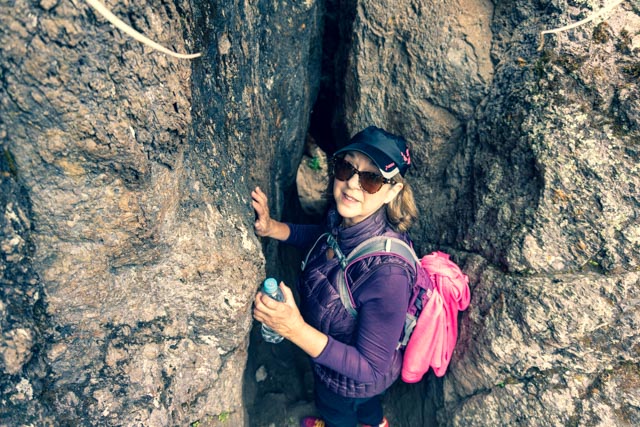
This is the exit from the “tunnel”.

Our group continued down towards the famous Pisac Sunday market.


About halfway down the trail, these ruins came into view.


We continued down to the next feature.

The Incas were adept at providing water at their locations. There were fountains located periodically along the trails, with small channels directing water.

Pisac was getting closer but we still had one more relatively steep section to go.
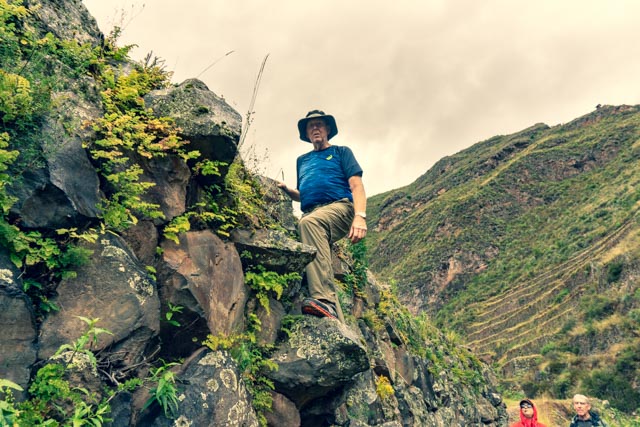
Inca walls included these “floating steps” to assist the original builders. This set was sturdy enough for me . . . at least that is what they told me.
The Pisac market was in full swing and we spent about an hour walking through the area. I was fascinated by the colors and the dress of the native women. These women carry all of their produce up and down the hills, similar to what we had just traversed and do it many times a week. There are no roadways to their homes. The children run down the hills everyday on their way to school and have to ascend the hills every afternoon. This must keep them in good condition. The hats worn by these women are specific to the village that they are from. I love the hats!


While the actual birthplace of the potato is in dispute between Chile and Peru, there are over 3,800 varieties in production. This woman was selling potatoes and had some of those varieties on hand.

Leaving Pisac, we headed to the ruins of Moray. Between Pisac and Moray we passed through this small town known for its roasted Guinea pig (pig on a stick). There was actually a traffic jam going through town as many people were there celebrating Mother’s day dining on this Peruvian delicacy. There were still a couple of sticks left at this vendor.

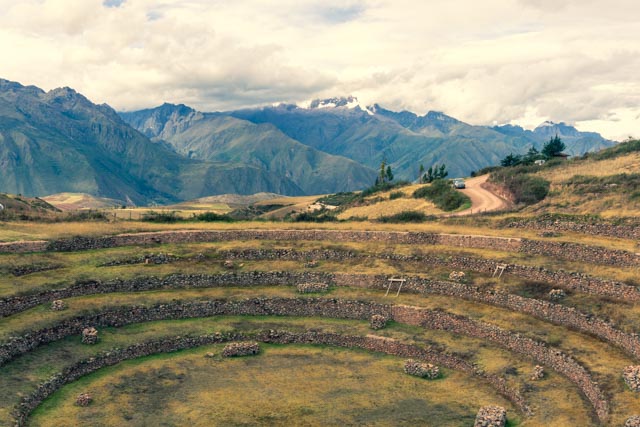
Moray is an Inca archeological site consisting in a set of circular terraced depressions. The ruins of Moray are not quite like the Inca ruins we usually encounter – houses, temples, and fortresses. In fact, It is believed that Moray was used by the Incas as an agriculture research station. It is at least the most widely accepted theory.
The principle is to create a whole range of microclimates, and experiment various crops in various growing conditions.
The conditions do vary according to where you are inside of the depression. The temperatures vary as much as 15°C (59°F) between the top and the bottom of the depression. The circular shape enabled a lot of testing for crop culture as well; if the crops are facing north, south, east or west, the amount of sunshine they receive varies considerably. Therefore, the Incas could experiment and study what crops grow better in what conditions, and get fundamental knowledge that they can apply to their large-scale crop cultivation. There was a cold wind blowing from the glaciers (a natural refrigeration system) that never reaches the bottom areas of these terraces.
It is said that with a structure such as Moray, the Incas were able to reproduce the various climates found across their empire, from sea level to high altitude. Drainage was carefully planned during construction. The floor of these structures is over 30 feet deep, with layer upon layer of various sizes of gravel to filter any rainwater back into the groundwater system. The terraces and floor never get flooded.


These are two of the smaller terraces, with stacks of original stones for eventual repairs. You can see the glaciated Andes in the distance.

Maras Salt Ponds – This entire region was once sea bottom. The ancient salt is found in a local subterranean stream and emerges into a spring. The flow of the spring has been directed through a system of channels (built before the Incas) so the water runs down the valley through a series of terraced ponds. As the water evaporates, salt crystals form on the inner surfaces of the ponds walls. When enough salt crystals have formed, the pond owner will block the water flow and allow the pond to dry out then scrape the salt from the sides and bottom of the pond.
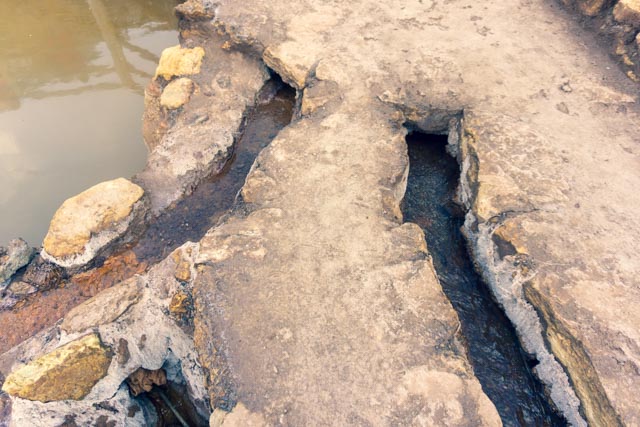
This is the Manantial salt water spring that feeds the ponds.

Water is directed from the spring, through a series of channels to the ponds. This construction predates the Inca.
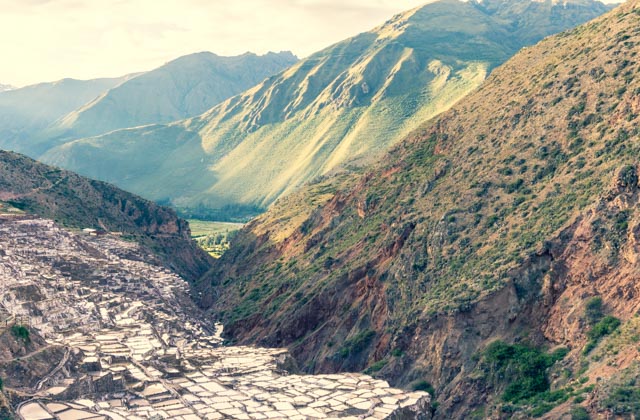
Here you can see the salt ponds and the valley below.

We returned, past these glaciated Andes peaks, to our hotel and dinner.

Our dinner included:
My Guinea pig:

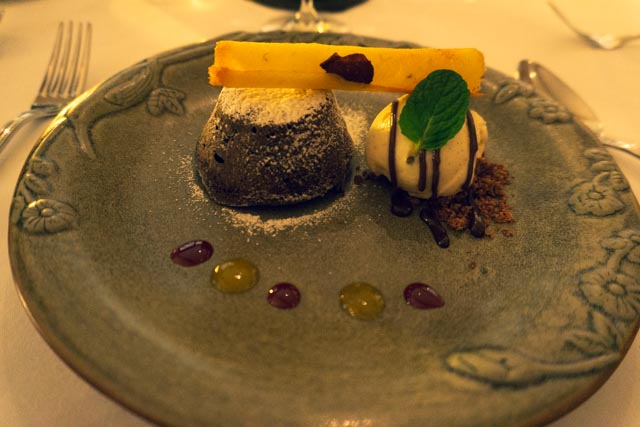
Cathy’s llama and dessert:


 Travelling with the Schinglers