2019-05-11
Qoricancha Templo del Sol
The devastating earthquake of 1950 leveled the construction on top of the intact Inca ruins. The decision was made to expose the original ruins and not rebuild on top.
This was home to nearly 4,000 of the Empire’s highest ranking priests and their attendants, Qoricancha Temple del Sol was an extraordinary display of Inca masonry and wealth. Dedicated to the worship of the sun, the Temple of the Sun was the main astronomical observatory for the Incas. The complex also included smaller temples and shrines dedicated to the worship of less important deities of the moon, Venus, thunder, lightning and rainbows. In Quechua its name means “Golden Courtyard”, which is an appropriate title for a temple once adorned with gold panels, life-size gold figures, solid gold altars and a gigantic golden sun disc, all intended to reflect sunlight and drench the entire temple in golden light. This is our guide Diego giving us the details about the set of buildings, their history and construction methodology. Diego also has led and lectured for National Geographic and is a historian.

This skill of the rock masons that constructed this system of buildings is evident when looking through this “window”. The attached buildings are all perfectly aligned with each other.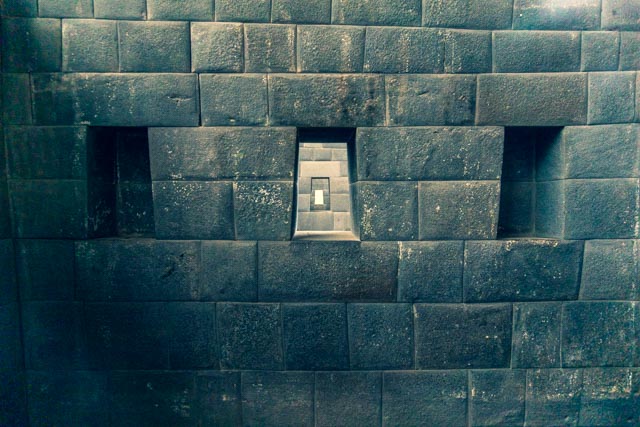
During the summer, light enters a strategically placed niche, where only the Inca Chieftan was allowed to sit. The small holes around this window were used to hold the solid gold frame, which was cast in place. The entire wall surrounding this Inca facility was capped with solid gold, about 3/4″ thick. This cap was poured in place, (flowing into the small holes to secure it) and ran the entire length of the surrounding stone wall. It was u-shaped, dropping down about 6″ on both the front and back.

Plaza de Armas
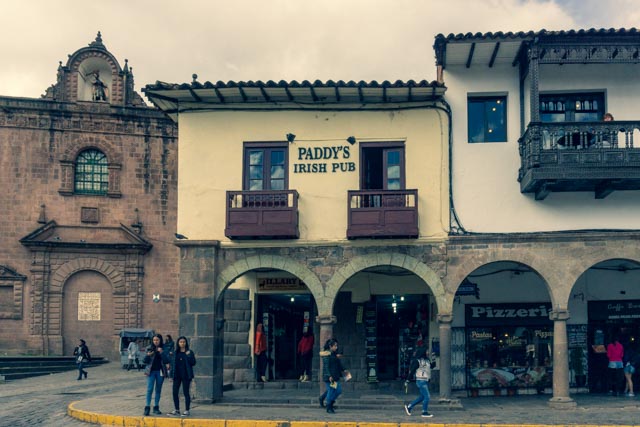
This is for Michelle. Apparently this is the highest (in elevation) Irish pub in the world. No, we did not go in.
On the right side of the Catedrel is this “annex”, actually a smaller worship area (larger than most churches by itself). The figure on top is St. Michael the Archangel slaying Satan.

We entered the main chapel via the right annex and were immediately overwhelmed. Everything was massive, arched and domed ceilings, sub-chapels lining both sides of the main sanctuary, incredible paintings, catacombs under lectern area, gold-plated vessels, artifacts, etc.
We happened to be at La Catedral when the Mother’s Day Mass was leaving the church, the beginning of the Mother’s Day festivities in the plaza. This is the banner of one of the Inca Gods being escorted to its place of honor in the tent to the left of this photo.
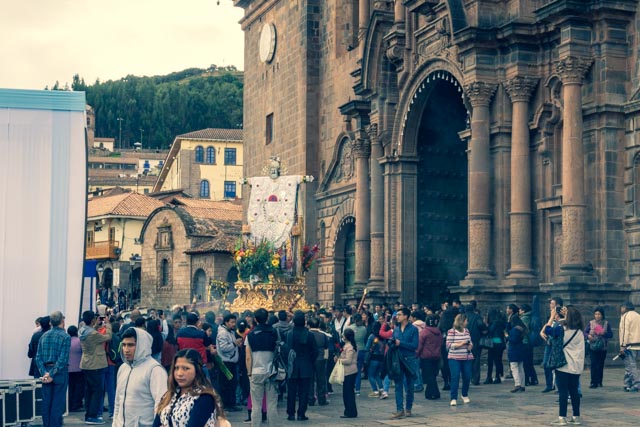
There were many marching groups in the parade around the plaza. This group was performing traditional dances.

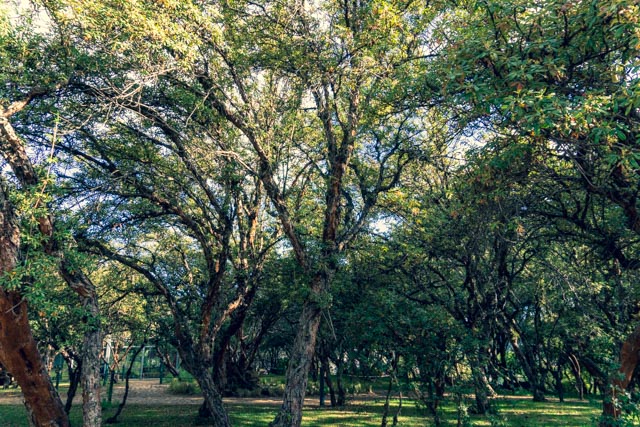
We walked by a grove of these native Q’euña trees. These trees provided little in the way of usable wood. The Europeans introduced Eucalyptus trees which have taken over the landscape and can survive the very high elevations.
Sacsayhuaman
After the tour of the central city, we traveled to Sacsayhuaman, about 4.5 Km up the hill.
The walls of Sacsayhuaman, an ancient fortified complex, are constructed of huge, megalithic stones. Although the wildly varying shapes and sizes of boulders used for the dry stone walls may give the impression of haphazard construction, each piece was carefully cut to fit tightly with the adjacent stones without the use of mortar. The Killke culture built the first sections of the wall around 1100 CE, and the Inca later expanded it further in the 13th century. Many ramps were built and used in the construction of the walls, to move the stones into place (sometimes a ramp for each stone). At the completion of the walls, the ramp material was leveled out to form the grassy, semi-flat area that was to be used for religious ceremonies and other events. The complex sits at an altitude of 12,142 feet and has been variously identified as a fortress, a temple for prayer and sacrifice and the House of Weapons and War.

Looking down the valley into Cusco you see this view.


There were many llamas wandering about on the hills and terraces in the park.

The battle here was won by the Spaniards after they made several unsuccessful attempts. They attacked at night, which the native defenders were not expecting and overran the facility, killing everyone who stayed.
After the battle, in an attempt to destroy what was left, they opened the area up to everyone to come and take the stones. Most of the little stones have been taken down the mountain into Cusco to be used in other buildings but the larger ones are still mostly in place. This systematic dismantling continued until the 20th century when the Peruvian government declared this a historical site and closed the area to future thievery. Some of these boulders weigh upwards of 200+ tons.

The size of these stones was amazing. The large ones at the bottom may extend up to 20 feet underground! They have withstood several earthquakes. (Earthquakes in this area must be over a “7” on the Richter magnitude scale to even qualify!)


We walked from Sacsayhuaman to these ruins. This is the view from the top of the hill looking down into the town of Cusco. The Inca trail is visible on the left side of the second photograph.
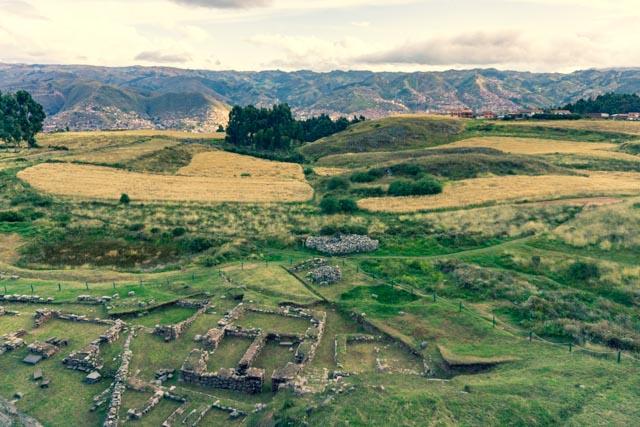
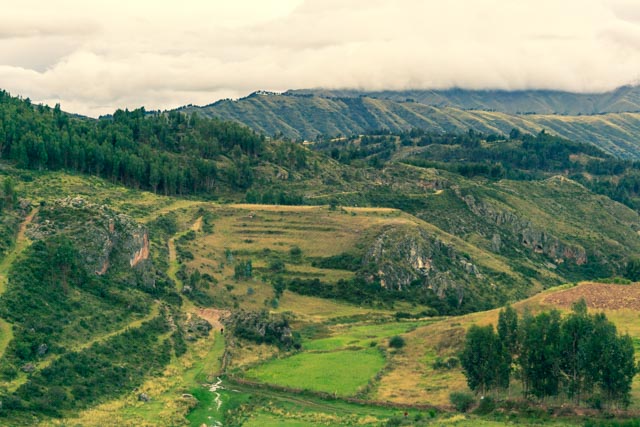
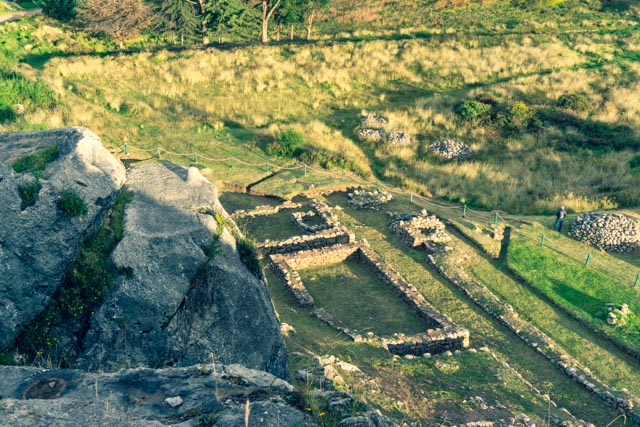
The protrusion on the edge of the flat rock was probably some sort of “sundial”. The buildings below were probably used for storage.
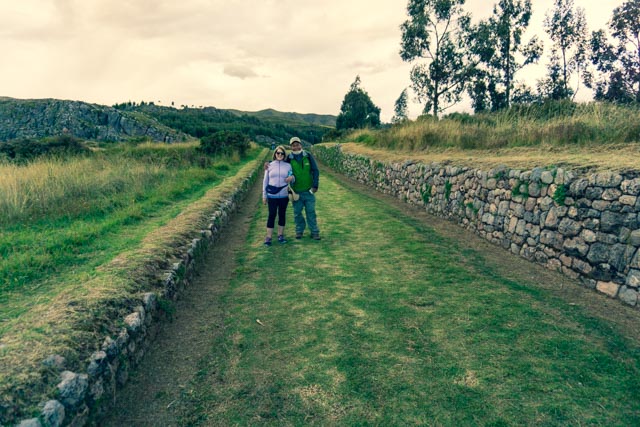
Cathy and Vidal, our other guide, posed on the original Inca trail. There was an elaborate drainage system (original Inca design) that kept this trail relatively dry despite the recent rainfall. It was in amazing condition considering it was thousands of years old.
We went off-trail to visit these carved rocks that were used as shrines to place offerings for the gods.

Vidal and I walked down to this secluded place, which had a very steep drop-off. Inside this cave was a rock shrine used to place offerings to the gods. The rock was covered in cocoa leaves, the traditional offering here.

We returned to Plaza de Armas for dinner and the party was still going. It ended with a massive fireworks display. We were upstairs at Calle de Medio enjoying our dinner.


The food – I will not even try to describe what these are but they were wonderful!

 Travelling with the Schinglers