2019-05-10
Acclimatization
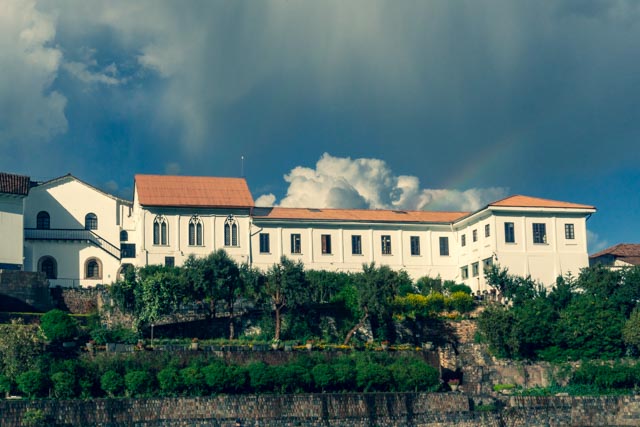
After a short plane ride from Lima, we arrived in Cusco and were met at the airport by REI representatives. They took us to the Palacia del Inca, which would be our home for the next two nights. The altitude here was over 11,000 feet. After a brisk walk to and around the Plaza de Armas, to the convent, and then getting a little lost and backtracking to the hotel, we were feeling a little winded. We will meet our fellow travelers and our REI guides midday tomorrow. This is the view of the street below our room.

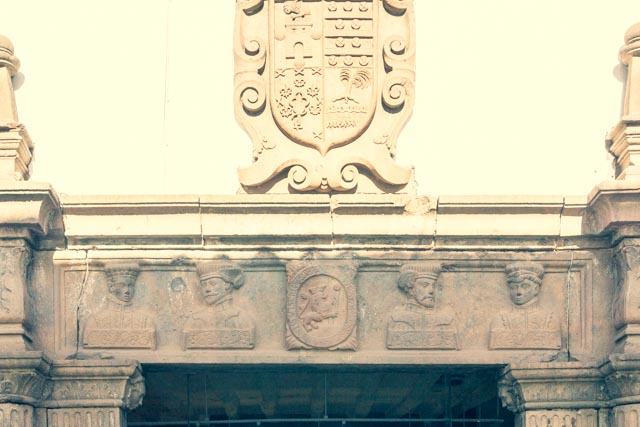
This is the original entrance to the hacienda (yes, this entire building was a home for four Spaniards). The ornate doorway is an indicator of wealth and the four individuals are represented on the header below.

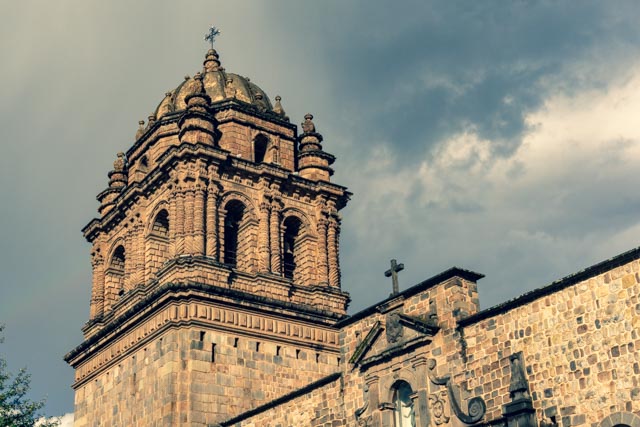
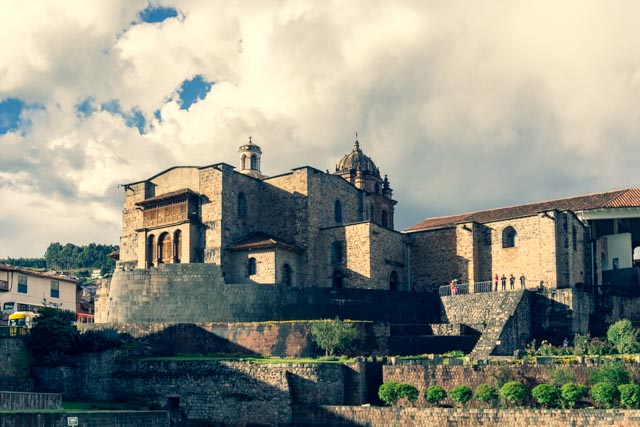
Tower of Santo Domingo Temple del Sol – This large facility is located directly across the street from our hotel. You take your life in your hands trying to cross the street to get to it. Peruvian Frogger! This convent was constructed on top of the ruins of Qoricancha, an Inca temple dedicated to Lightning and the Stars.


La Compania – This church is located on the end of the Plaza, directly across from La Catedral. Talk about trying to overwhelm the natives with the Spanish version of religion!

Built atop the Inca palace Viracocha, the Cusco “La Catedral” was a triumphant statement for conquering colonists who laid the foundation stones in 1559. Now Plaza de Armas’ showpiece, the cathedral is the seat of the Roman Catholic Archdiocese of Cusco and a significant cultural monument holding the largest collection of Cusco School paintings.
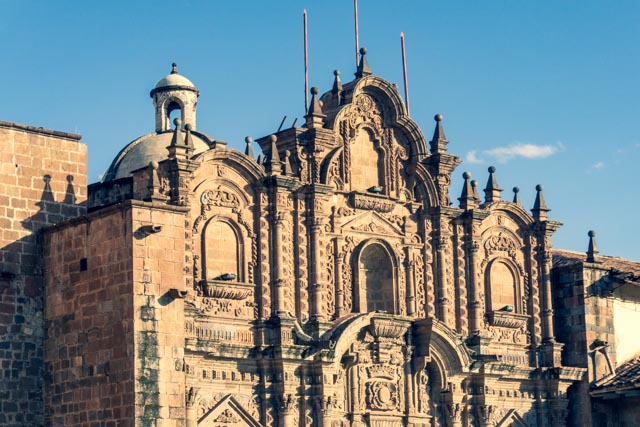
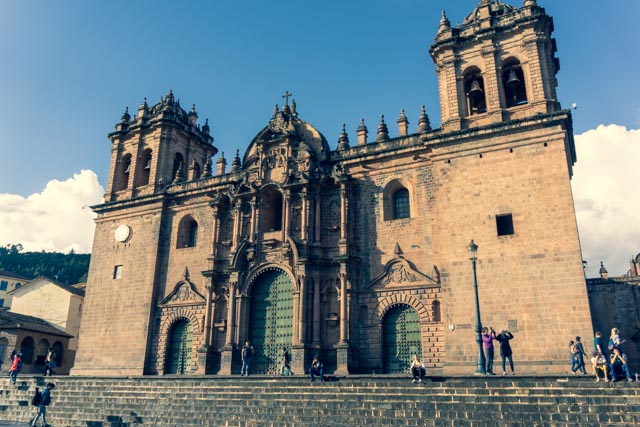
Chapel to the right of La Catedral

This is the view of La Compania from the steps of La Catedral. There are five very large Spanish-built churches within blocks of this point. The Spanish imposed their religion on the natives by shear dominance. When touring the buildings however, we saw that the local artists made changes to painting and symbols of Catholic regimen including:
- In the large painting depicting the “Last Supper”, the main fare was Guinea Pig.
- Judas is Francisco Pizarro.
- Jesus is always showing wearing an Incan dress, not a loincloth.
- Mary is rather large as she represented “Mother Earth”.
- Mary is shown pregnant with another child while young Jesus is at her side.
- There are mirrors in many locations within the main chapel. Mirrors are strictly prohibited per Catholic doctrine, but the natives and Incas were fascinated by mirrors.
- An Inca rounded, holy rock was moved from the main chapel (by a priest directive) to the exit alcove and the parishioners still line up, after performing the (Catholic) sign of the cross to give cocoa leaves to their “Inca” god.
 The
The
A statue of Pachacuti can be found on the Plaza de Armas in Cusco – Pachacuti was the ninth ruler of the Kingdom of Cusco (“Sapa Inca”) and later the Emperor of the Inca Empire. Pachacuti began the expansion of the Inca dominion from the valley of Cusco to a big part of western South America. Some say that Machu Picchu was built as an estate for him.


 Travelling with the Schinglers