Wednesday
500 miles and three states after leaving Traverse City, we arrived in Erie, Pennsylvania.
Thursday
We stayed at Presque Isle Passage, a RV park right off the interstate and decided to drive to its namesake, Presque Isle State Park on Lake Erie, about ten miles away. Our first stop in the state park was at the Perry Monument, erected in 1926 to honor Commodore Oliver Hazard Perry. Lake Erie was the temporary home to a fleet of ships commanded by Commodore Perry during the War of 1812. Six of the eleven vessels were locally built at the mouth of Cascade Creek, in what was then the hamlet of Erie. The shores and waters of Presque Isle protected the fleet during construction. We drove to the location later in the day. It is now home to the Erie Yacht Club.
Perry is remembered for his win in the Battle of Lake Erie. Perry engaged the British on September 10, 1813 at Put-in-Bay, near Sandusky, Ohio. His flagship, the Lawrence, was heavily damaged early in the battle and Perry, along with what was left of his crew, rowed an open boat under heavy British cannon fire to the brig Niagara. They boarded the Niagara, raised Perry’s personal battle flag and proclaimed “Don’t Give Up The Ship”. He then re-engaged the British and within fifteen minutes cut between the enemy battle line and forced the British to surrender. This marked the first time in history that a fleet controlled by the British, the world’s greatest naval power, had been captured by an opponent. He had the famous proclamation “Don’t Give Up The Ship” placed on his battle flag.
After the battle, Perry returned to Little Bay to repair his fleet and winter his crew. Many of Perry’s crew suffered from poor living conditions and the harsh winters. Little Bay was renamed Misery Bay by the surviving Perry sailors. The hull of his flagship was purposely sunk in the bay to protect it from the weather and it was subsequently raised in 1875. It was destroyed by fire during the Centennial Exhibition of 1876. The Niagara was raised in 1912 and an exact replica was then built for the 100th anniversary of the Battle of Lake Erie.
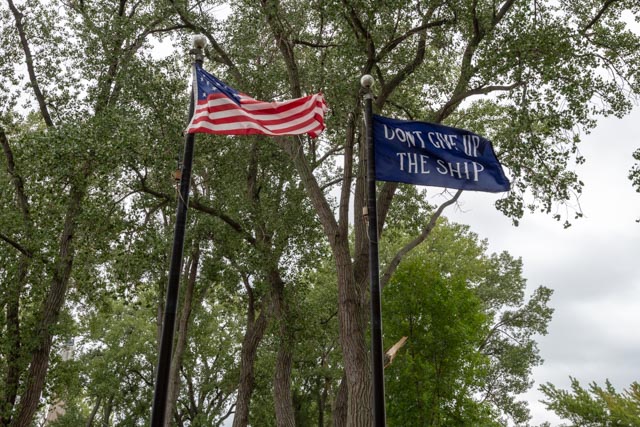
Here is the Perry monument, located at Misery Bay.

These are a couple of shots of Misery Bay. Directly behind me is Graveyard Pond, where Commodore Perry buried those sailors that perished during the harsh winters. I can’t imagine eleven warships anchored in this space.

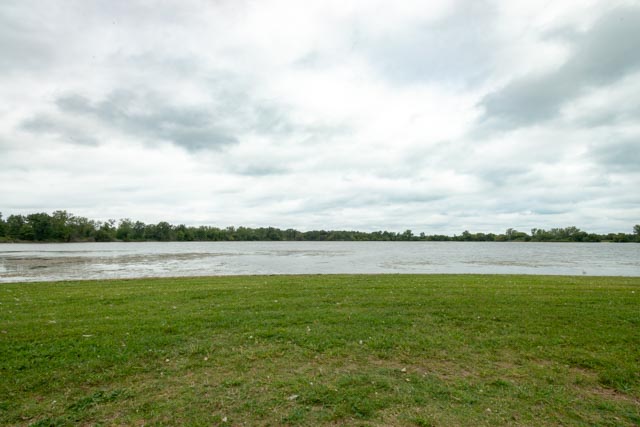
Our next stop was at Number Nine Pine Tree Beach. There are eleven numbered beaches and five more in the Mill Road set of beaches, a virtual swimming paradise! My original intention was to take a swim here but it was just a little windy and the beaches were officially closed to swimming. In the distance (left horizon) you can see one of the 58 rock breakwaters constructed to slow the erosion by partially blocking the waves, reducing the wave energy.

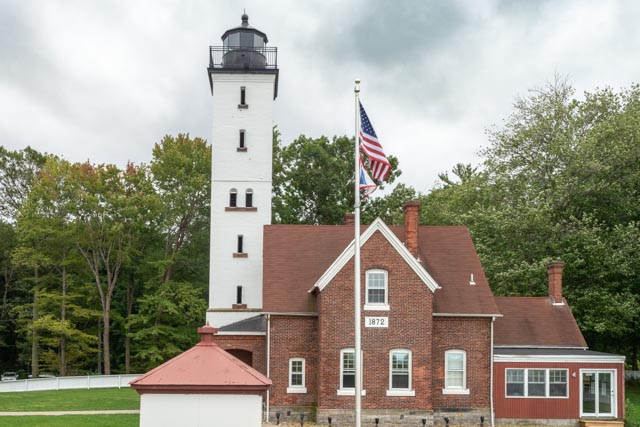
This is the Presque Isle Lighthouse, constructed in 1872 and put in-service in 1873. The tower is 52 feet in height and the red brick structure, including the living quarters is open for tours. It is still in use and is maintained by the U.S. Coast Guard, which has a station directly across the isle.
This is the North Pier Lighthouse, a square, metal pier-head light, built in 1848 and located at the end of the Erie Harbor Channel. It marks the entrance between the north and south piers.

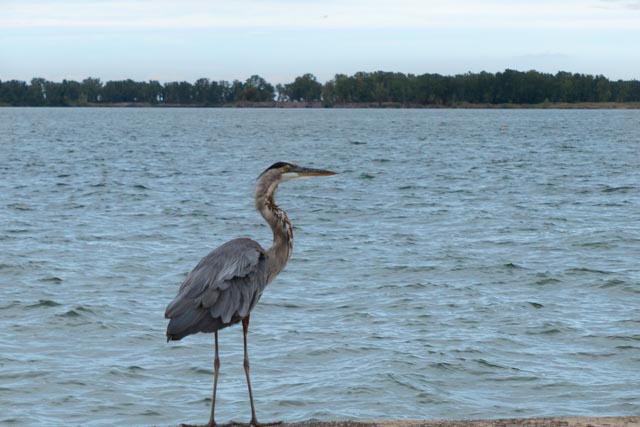
We saw a couple of these while walking the pier to the lighthouse. This is a great blue heron, the brave one who stayed and posed for me.
Friday
We drove almost 500 miles (again) and wound up staying overnight in the small town of Dorset, about 30 miles off of our route. It was a great drive through some beautiful countryside, including the small towns of Fort Ann and Granville, New York; then North Pawlet, Pawlet, East Rupert, and Dorset, Vermont. Most of us probably have never heard of these towns, but all were pretty cool in their own ways. We even passed a farm that has been in operation since 1767!
We are spending the evening at the Dorset RV Park on Route 30. The season is over so we got a pretty good rate and they even bumped us from a 30A to 50A!
We passed a couple of slate quarries as we entered Vermont but could not find room to park close by. We did spot a quarry very near to our campsite and took the short drive back to investigate once we were set up. Near Mt. Aeolus, Issac Underhill opened the first marble quarry in the United States, in 1785. The Dorset quarries were most active in the early 1800s, producing small slabs used for hearths, doorsills and headstones. As larger equipment and saws were developed, they were able to quarry the larger pieces you see stacked up on the edges. It appeared this area is used as a local swimming hole and we could see many fish in the clear waters.
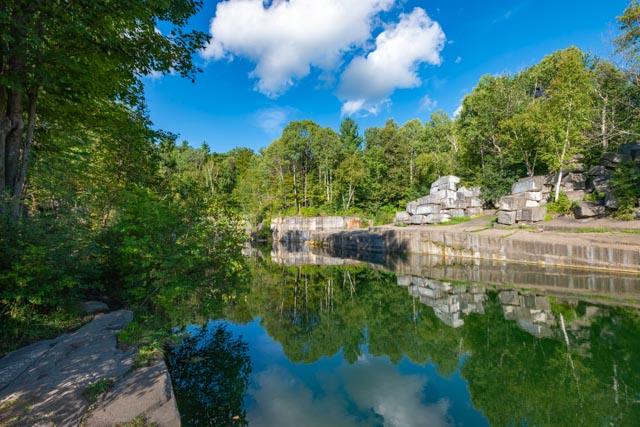
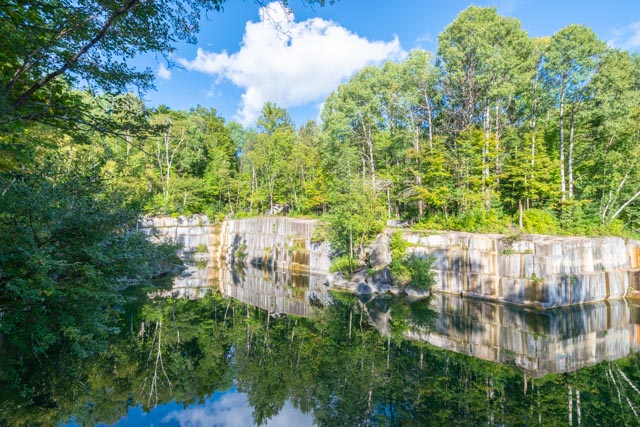
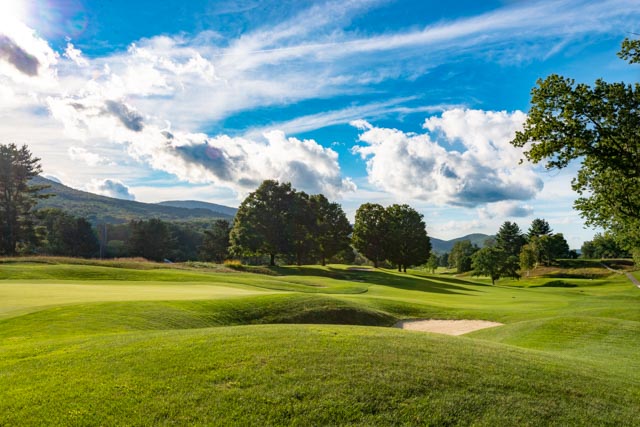
This is one of the fairways of the Dorset Field Club, the oldest continually operated golf course in the United States. In 1886 a group of golfers from Troy and New York City, who summered in Dorset, laid out a nine-hole golf course, then known as the Dorset Golf Links. This venerable course has undergone five substantial alterations, rerouting and added nine holes, but has remained on the same grounds.
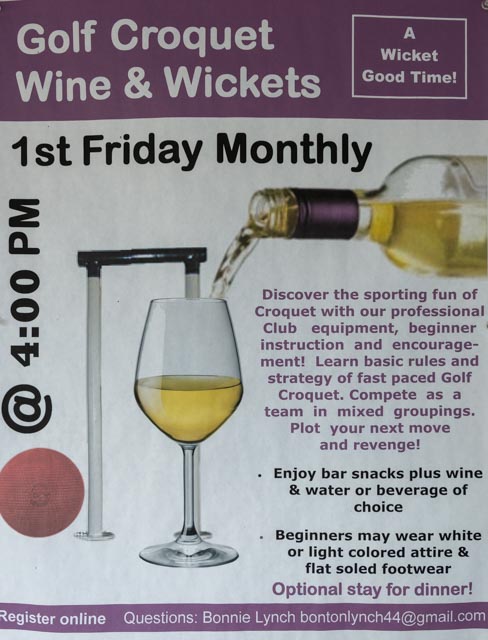
We watched the local golf croquet club practicing, as it was the first Friday of the month and time for the monthly Golf Croquet Wine and Wickets event. They were using some serious mallets. I counted six empty wine glasses on the bench, next to the gentleman in pink!
The small downtown area was loaded with restaurants and small bed and breakfast homes and inns. It was very upscale.

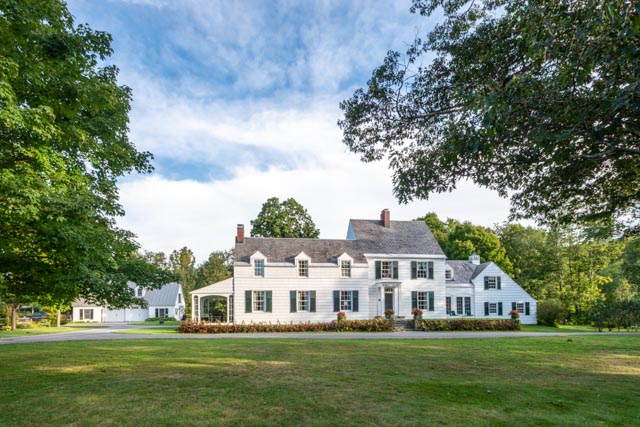
This is the Dorset Colony house, used as home to writers for much of the winter and for the performers at the Dorset Playhouse, just down the street when they were performing.
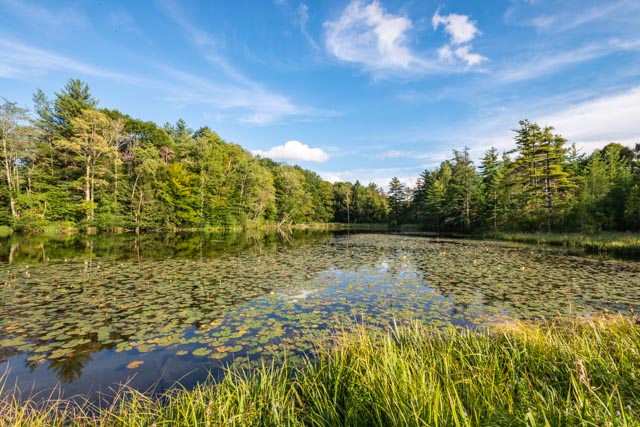
There is a small pond located just off the main street.
We took a random drive down a country road and came across this site. It is the Fenton Pottery site, which operated from 1801 to 1810. Here Jonathon Fenton made redware from clay found along the banks of the Mettowee River. He was the first potter in Vermont to make salt-glazed stoneware, and in 1810 he moved his pottery works to East Dorset. His sons both became stoneware potters of note, winding up with the Norton family of Bennington. Bennington pottery is very highly desired.
Continuing on, we came across this flock of wild turkeys in front of a home listed by Sothebys Real Estate. I counted at least a dozen in the group but by the time I retrieved my camera (and wide-angle lens) they had moved to the side yard then into the back yard. I did not want to follow them into someone’s yard so I took these from the road. I managed to get about nine in the shot.

 Travelling with the Schinglers