Leaving the airport, we drove down Virginia Avenue into Reno and had breakfast at the El Dorado Casino. From there, we walked to the Truckee River, which winds through town. The river appears to have been rerouted for swimming/tubing/rafting.
We parked near Lundsford Park and saw “Yarn Bombing Graffiti” on the trees. It grabbed our attention and we walked through the area marveling at the artwork. There were many trees with this ‘bombing” but we only took a few pictures. These remain in place during the month of July only. It was very different/interesting and made the river walk beautiful.
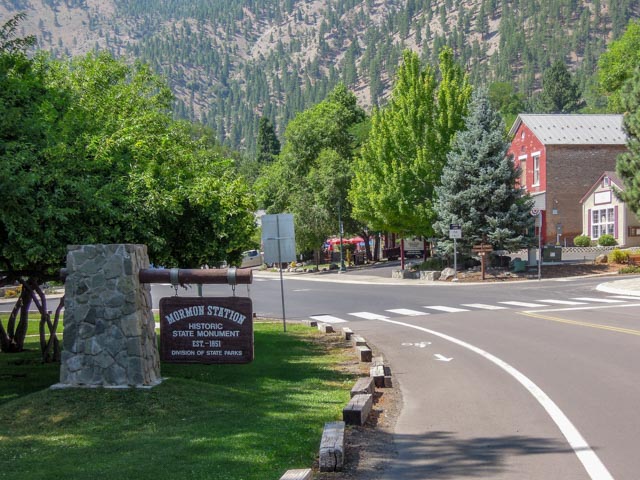
We passed through Genoa, Nevada’s oldest settlement on our way back to the camp in Minden. During the 1840s and 1850s wagon trains rolled along from points east over the Overland Emigrant Trail to what is now Nevada, many destined for the California gold fields. Leading the way were Latter Day Saints, anxious to colonize new territories. Originally known as Mormon Station (from the much publicized pamphlets and booklets encouraging Mormon settlers to move west) this site was selected for its abundance of water and was the perfect way station along the trail. Wagon trains rested their stock here for their attempt at crossing the Sierra Nevada mountains, their last obstacle on the trip.
One of our first stops was at “Sierra Chef”, purveyor of Italian Pastries. Cathy did the ordering from the proprietor. The strawberry thingy I got was very good.

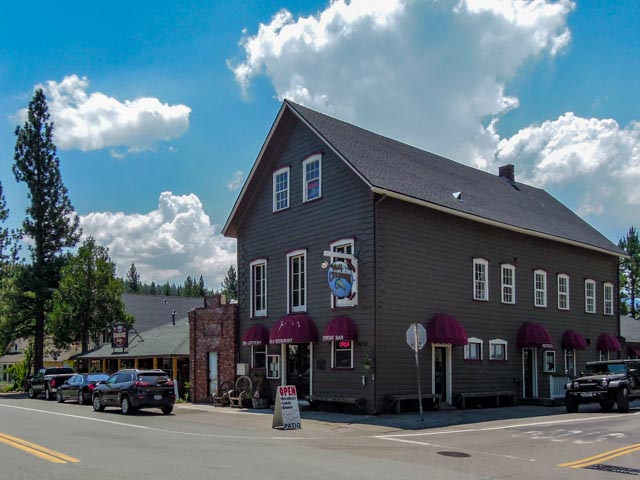
Built in 1863, this building was operated as Livingston’s Exchange. In 1884 it was bought by Frank Fettic and the name changed to Fettic’s Exchange. Frank operated it as a “Gentleman’s Bar”, with no “rough stuff or excessive drinking” allowed. Now known as the “Old Genoa Bar”, it is the oldest continually operating thirst parlor in the state of Nevada – No Horses Allowed.

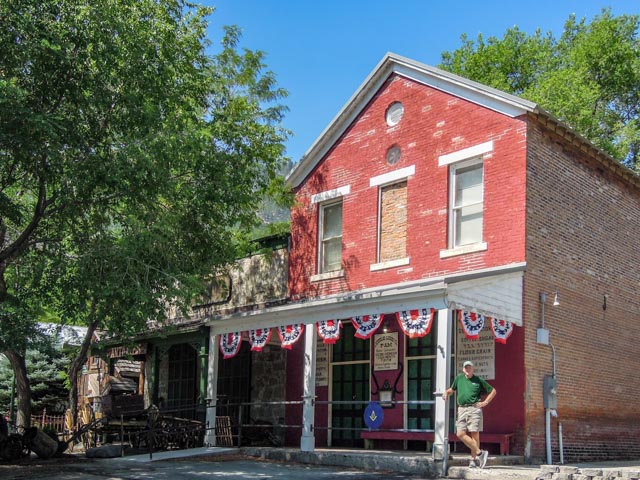
The old Masonic Hall, this building has been used for various businesses, including a general store.
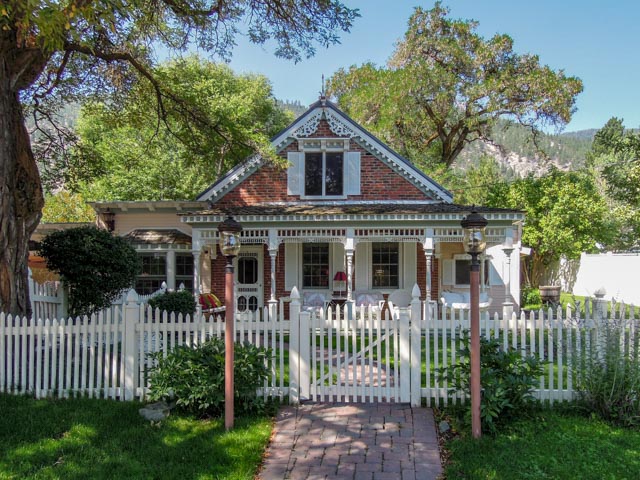
Built in 1855, this red brick house was built by William J. “Lucky Bill” Thorington. William was a rancher, entrepreneur, polygamist and yes, the first man hanged in Nevada.
Built in 1886, this is the Raycraft Dance Hall, located near their hotel. The general specs for the building were simple:
- Foundation: rock
- Building size: 80′ x 33′ x 16′
- Flooring: Best quality wood available
It was constructed by Raycraft’s sons and dedicated June 4th, 1886 with a “First Class” orchestra and a full dinner being served. It is still being used as the Genoa town hall and is used for various town activities. It is still immaculate inside and out.

This statue is of John A. “Snowshoe” Thompson, “Mailman of the Sierra” is located on the grounds of the Mormon Station Monument. Thompson carried the mail from 1856 to 1876, from Placerville in California to Genoa year round, but made only two trips a month during the winter months, using homemade skies and negotiating 20 to 50 foot snow drifts. He carried a 50 to 100 pound mail sack and took about six days to complete the summer trek (round trip). He is buried in the Genoa Cemetery.

This is the Genoa Courthouse and Jail. It is now being used as a museum. It is directly across the street from the Mormon Station Historic Monument.

This is the “Hanging Tree” where Adam Uber met his death. After killing a townperson over a drink in nearby Millerville (now gone), he was taken to the Genoa Courthouse Jail. Later that evening a mob of about 20 men broke into the courthouse and drug Uber to this cottonwood tree, about a half mile out-of-town and hung him. The next morning he was cut down and the limb used for the hanging was removed. He was the only person hanged in Genoa and no one was ever charged for the crime. Talking to a docent, I learned that all 20 men met violent or really suspicious/weird deaths when their time came.

We drove over to Markleeville, a little town in California located near the junction of Highway 4 and Highway 89 in the eastern Sierras. It is famous for its excellent trout fishing. We have not been to this area in many years. This building was originally built as the “Fiske House” in Silver Mountain City. It was dismantled in 1886, board by board and moved to this site in 1900 and became the “Hot Springs Hotel”. Even the original square nails were saved and re-used. Later it was renamed the “Alpine Hotel” and retains that name today. We had an excellent lunch here on our last trip.

 Travelling with the Schinglers