We enjoyed a second day of sunshine in the canyon so we returned to the Hermit’s Rest area to take in the sights, as we were pushing sunlight yesterday. These are some random pictures that we took during the return.
We stopped at Powell Point to see the monument to John Wesley Powell, the first person (of European descent) to travel, via the Colorado River through the Grand Canyon.

Here is the view from just beyond the monument (closer to the edge of course).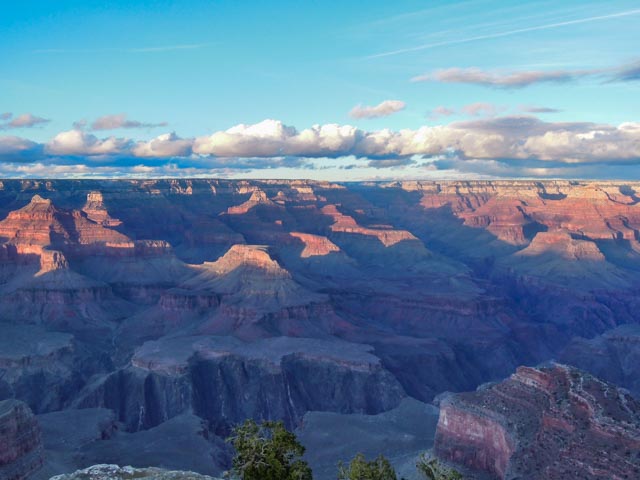
Across from Powell Point is the remains of the Orphan Mine. In 1891, Dan Hogan, an orphan, discovered copper here about 1,100 feet below the rim of the canyon. He gave up mining as the copper ore petered out in 1936 and opened up a lodge and trading post. In 1947 the lodge was renamed the Grand Canyon Inn. This quickly changed in 1951 when uranium was discovered at the site. A steel head frame was erected and a mineshaft dropped 1,500 feet to one of the richest uranium ore deposits in the United States. The mine was closed in 1969 and the area is currently in a phase of reclamation.

I started to experiment with HDR again, which includes taking multiple photos at different exposures and stacking them together to make one “high dynamic range” photo. Unfortunately, the resolution has to be dropped to use in this application but these photos contain more than 100 megs of resolution.


I played with panorama (nine photos in this case)

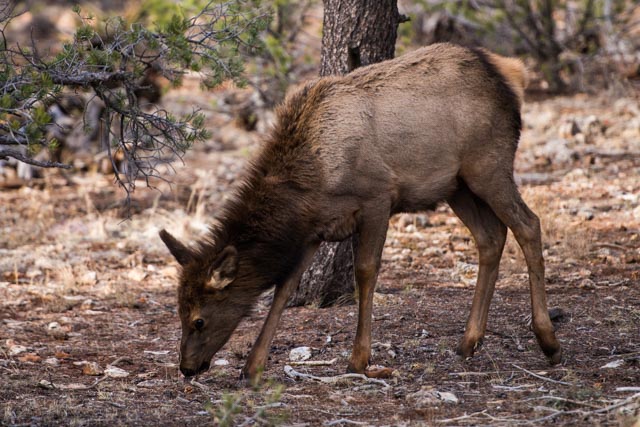
After leaving Powell Point, we ran into a small herd of elk…again.
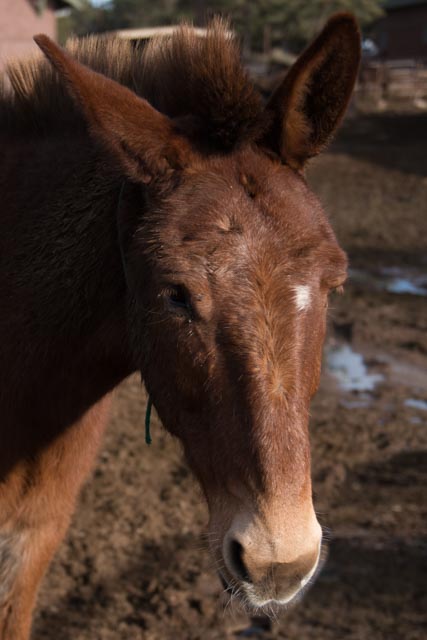
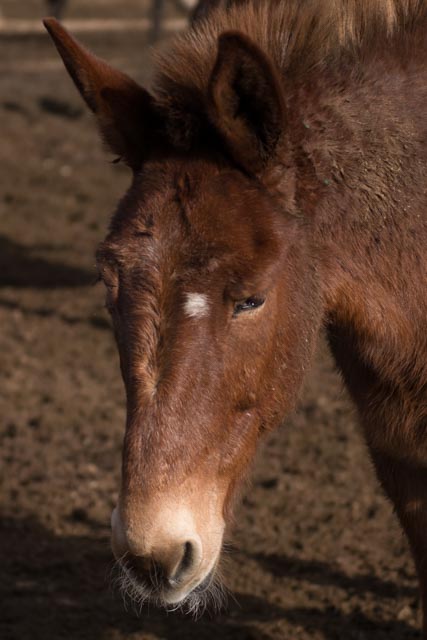
We drove by these guys a couple of times and Cathy HAD to stop a meet them. The are the real workhorses (work mules) of the Grand Canyon. These guys travel up and down the trail to Phantom Ranch via the Bright Angle trail without failure.
This a view of the El Tovar Hotel from the train depot. The hotel, built in 1905, was named after Pedro de Tovar, who had reported rumors of a large river in the area, inspiring the Cárdenas expedition. He should have reported a large canyon.
Pedro de Tovar was part of the Coronado expedition that explored Arizona in 1540 in search of transportable riches. From Háwikuh, five miles east of the present day border of AZ and NM, near Zuni Pueblo, the overland party split up. Coronado went east to continue the search for his riches, and another band traveled west to reconnoiter with expected Spanish ships. A small group led westward by Pedro de Tovar reached Tusayán, the location of several Hopi villages on the Colorado Plateau. The Hopi people were hospitable and exchanged goods with the travelers. After Pedro de Tovar returned to Háwikuh, Hopi guides took another small group, this one led by Garcia Lopez de Cardenas, to a vast river located 20 days journey from Tusayán. Tusayán is the town at the South Rim entrance to the canyon.

This is the entrance to the hotel.

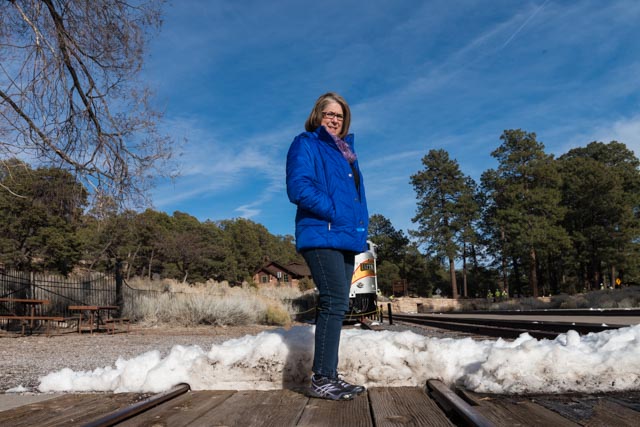
Cathy playing with trains at the Grand Canyon Train Depot. This train, consisting of two engine units, a power car (to supply a/c etc.) to the several skyview cars and multiple traditional period passenger cars, arrives daily from Williams, about 70 miles south of the park.


This is the entrance to the Bright Angel Lodge.

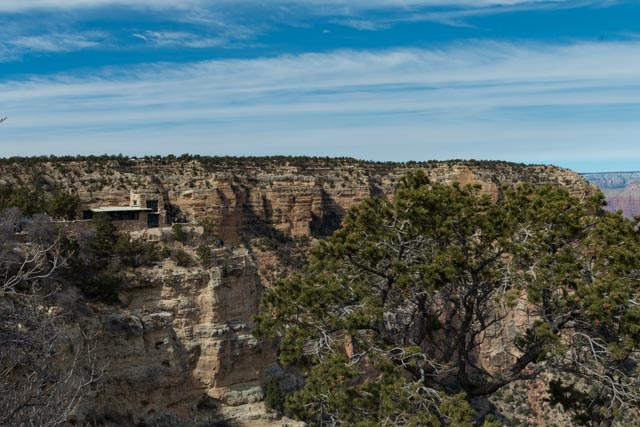
Here is the Lookout Studio, perched cliff side as seen from the Village Amphitheater.
Cathy is braving the windchill from the Bright Angel Trailhead.

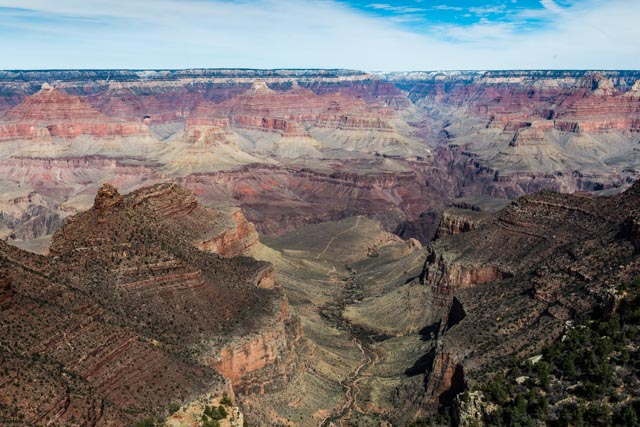
The Plateau Point Trail, in the center of the photo, branches off of the Bright Angel Trail, about 2,500 feet below the camera. The Bright Angel Trail is in the canyon to the right of the visible trail.

 Travelling with the Schinglers