We had just a day in NYC so we made it a point to make it to the World Trade Center Memorial. The “new” WTC towers above the city:

Just a block before the memorial, we saw the steeple of this church buried deep between the tall buildings:
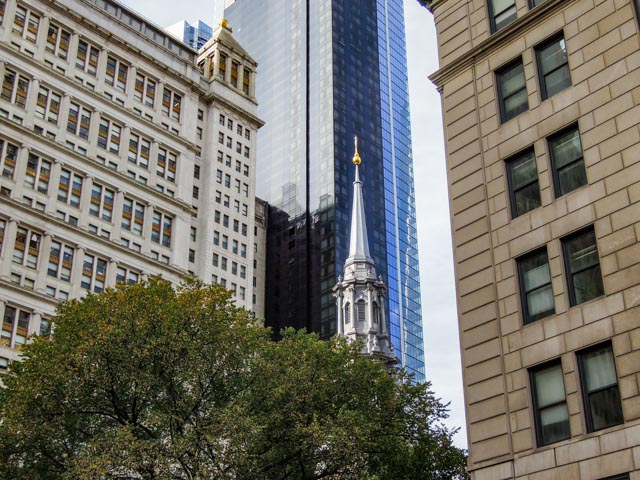
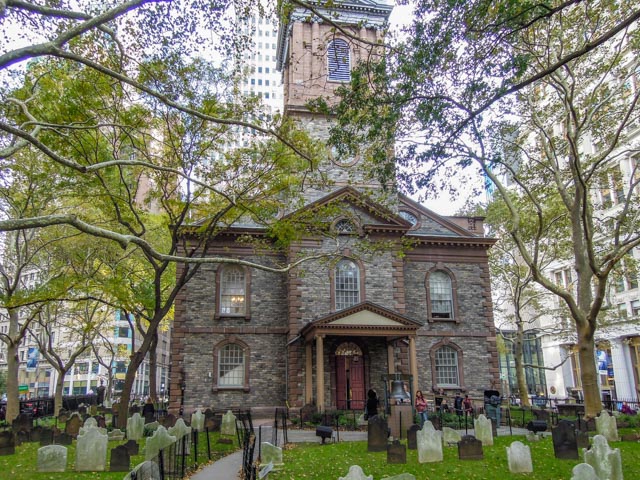
We stopped and visited the site on the way back to the MTA station. It is Saint Paul’s Chapel, which was built and opened in 1766 by the Episcopal Parish of Trinity Church. It is the oldest public building in continuous use and the only remaining Colonial-era church in Manhattan. In 1789 George Washington prayed in this chapel after his inauguration as the first president of the United States.
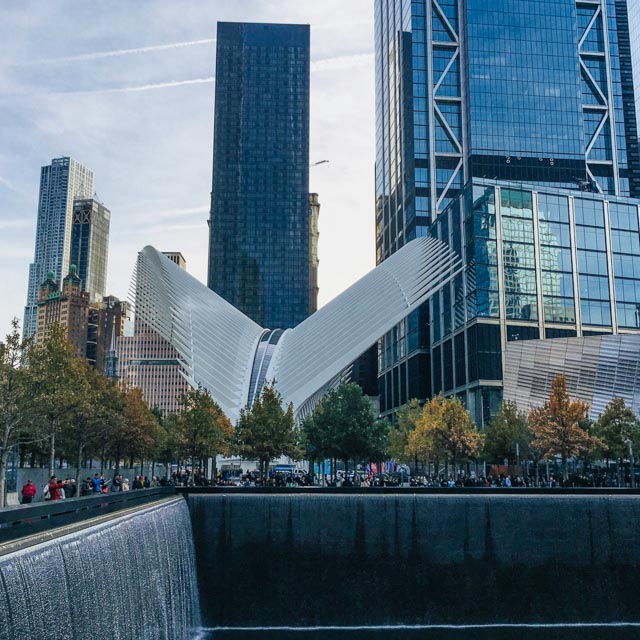
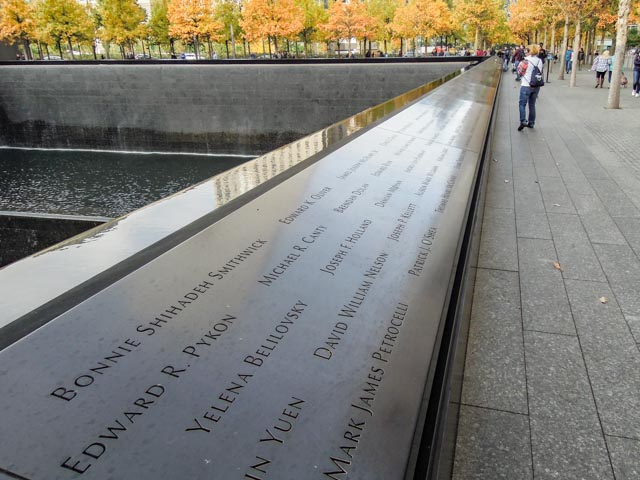
This is the “above ground” memorial, the site of the North Tower. The second picture is that of the South Tower. The names of the victims of the 1993 WTC attack, USS Cole attack, and 911 Trade Center, Pentagon and Shanksville terrorist attacks are inscribed on the rims of these two water features.

After spending some time on top, we descended down into the museum. I was not expecting much as I believed most of the buildings were reduced to dust, but was surprised at the amount of items they have recovered.
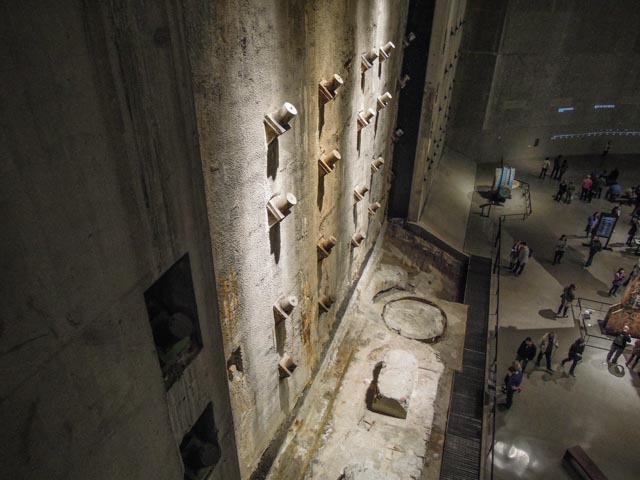
This is a segment of the original slurry wall, constructed in 1966 to keep water from the Hudson river from seeping into or flooding the site of the soon to be constructed World Trade Center. After the attack, a fear was that this wall would collapse, flooding the wreckage. It held and was preserved in place.
As the recovery at the WTC site neared completion, one piece of steel was chosen to mark the occasion symbolically. Designated the “Last Column” it was removed from the site in a solemn ceremony held on May 30, 2002. In the weeks that preceded its departure, recovery workers, first responders, volunteers and victim’s relatives signed the column and affixed to it memorial messages, photographs and other tributes.

This is the truck the carried Ladder Company 3 to the rescue on September 11th, 2001. As you can see, it was hit pretty hard from the collapse of the buildings, even though it was parked some distance from “ground zero”.

This was a “recon” group for the NYFD and the group was going up, floor by floor checking for survivors in the North Tower when the building pancaked. Eleven of them perished. This is the front cab of their vehicle.

This is one of 99 elevators motors that powered the elevators within the WTC. It was, when installed, the largest elevator motor in the world, capable of lifting the express elevators up at a rate of 1,600 feet per minute.

This is what is left of the 360 foot tall radio and television antenna that was on top of the North Tower.

This is the set of stairs that were named “Survivor’s Stairs”, connecting the WTC Plaza to street level. Hundreds of individuals used these stairs to evacuate the North Tower. This was the first artifact moved to the site of the National September 11 Memorial & Museum.

There were large parts of the museum where photography was prohibited, but again, we were amazed by what survived, what we saw (and learned), and spent more than four hours at the museum. I would recommend more time if you have it.
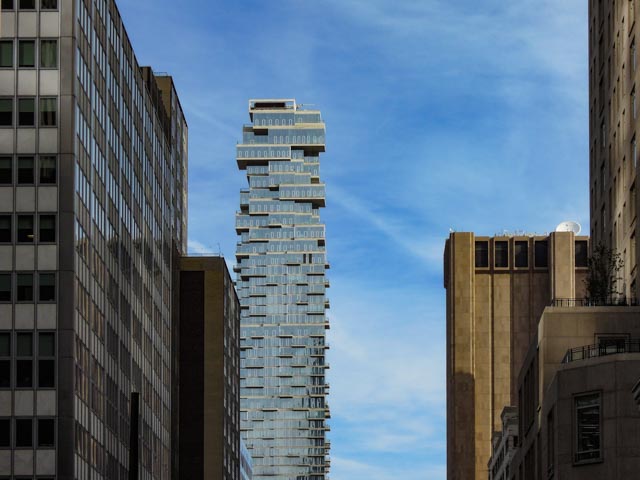
We saw this building north of the memorial. It unusual configuration made me take a picture. We were told that the top floor condos go for upwards of $20M. We were approached by a panhandler (while taking this photo) who informed us that he lived in the top floor penthouse, which had been given to him. Hmmm
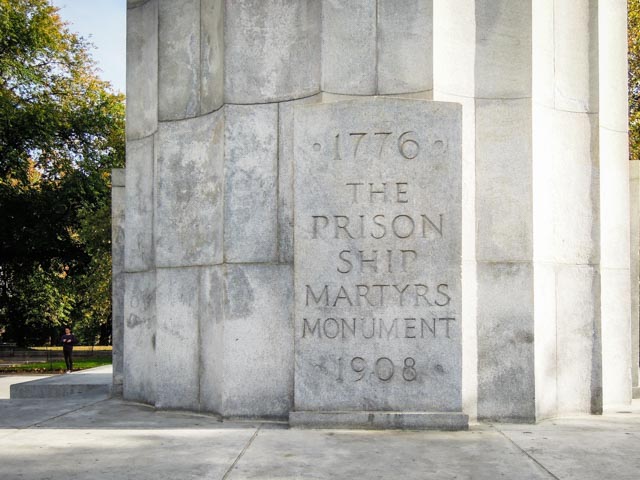
I just finished reading “The Ghost Ship of Brooklyn” (thanks Michelle) and had to find the location of the “Prison Ship Martyrs Monument”. Unbeknownst to even lifelong New Yorkers we met, the Revolutionary War produced about 7,000 Continental Army combat deaths. (Based on population, that would be the equivalent of about 3 million people today). The British, originally thought the war would end quickly, and shortly ran out of room to hold prisoners. They did not want to build infrastructure in the states, so they staged non-seaworthy ships in the New York harbor to be used as prisons for captured patriots. It is documented that at least 11,500 Colonials perished in these ships, more than all combat deaths. They suffered from starvation, torture, beatings and various diseases caused by the putrid conditions of the ships. The dead were purged from the hulks daily (sometimes it took up to 10 days to realize a person was dead due to the overcrowding of the prisoners in the holds – up to 1,200 in a space designed for 250). They were buried in very shallow mass graves in the nearby mudflats. After the war, their bones kept surfacing and were collected and moved to a crypt near this area. Vandalism and neglect eventually destroyed the crypt and a committee was formed to erect a more permanent final resting place and memorial. The memorial was completed in 1908 and the bones and remains were moved, en masse, to this crypt (with the green door), at the base of the memorial in Ft. Green Park.
We took the MTA into Brooklyn and walked to the monument (through what we were told later were the “projects” and given kudos for bravery?) It seemed like a good area to us, very near a college and dorms, a children’s park etc.
When were first arrived, there were several young adults sitting on top having lunch. I have to believe they had no knowledge of where they were? This is part of the Revolutionary War that is not usually brought up in history books.


 Note: “The Ghost Ship of Brooklyn” is a very worthy read if you are interested in Colonial history.
After spending time at the memorial, we returned to the MTA terminal and headed back to our hotel. By now we thought we were getting pretty good at navigating the metro.

 Travelling with the Schinglers