Friday: We arrived in Ottawa, set up the MH then headed into town to find the Terry Fox Stadium, the start and finish of the Canadian Run. Being from the USA, I had never heard of Terry Fox and was surprised to see his statue across from the Parliament Buildings in downtown Ottawa. The start of the run was at the Terry Fox Field, a track and field stadium. I had to learn more about him so I found this:
Fox was a distance runner and basketball player for his Port Coquitlam, British Columbia high school and Simon Fraser University. His right leg was amputated in 1977 after he was diagnosed with osteosarcoma, though he continued to run using an artificial leg. He also played wheelchair basketball in Vancouver, winning three national championships.
In 1980, he began the Marathon of Hope, a cross-country run to raise money for cancer research. He hoped to raise one dollar from each of Canada’s 24 million people. He began with little fanfare from St. John’s, Newfoundland in April and ran the equivalent of a full marathon every day. Fox had become a national star by the time he reached Ontario; he made numerous public appearances with businessmen, athletes, and politicians in his efforts to raise money. He was forced to end his run outside Thunder Bay when the cancer spread to his lungs. His hopes of overcoming the disease and completing his marathon ended when he died nine months later. He did manage to raise more than $25 million for cancer research during his run.
In addition to being youngest person ever named a Companion of the Order of Canada, Fox won the 1980 Lou Marsh Award as the nation’s top sportsman and was named Canada’s Newsmaker of the Year in both 1980 and 1981. Considered a national hero, he has had many buildings, statues, roads, and parks named in his honor across the country. He is listed in a book that I had purchased recently as one of the 100 most famous or inspirational Canadians
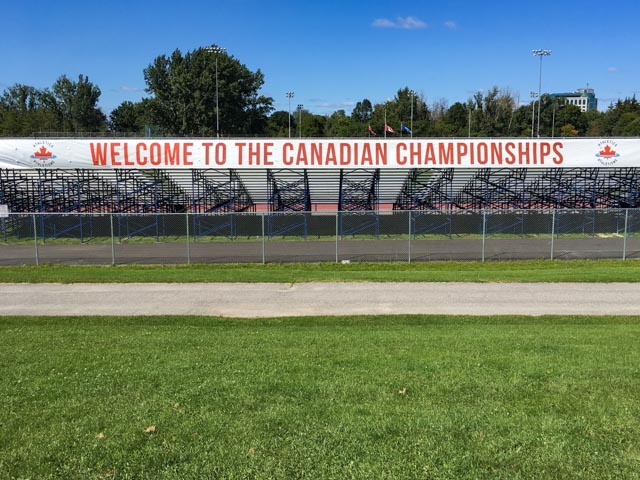
This was the banner welcoming participants in the weekend events.
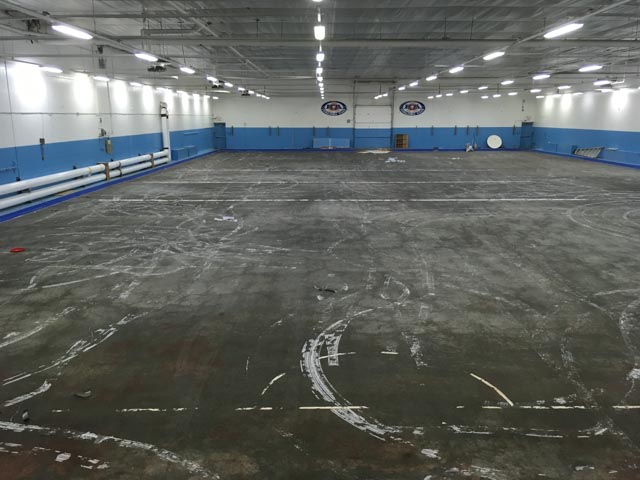
On the way back to the MH, we spotted a curling rink. Alas, we missed it again as they were prepping the concrete for ice while we were there. The ice would be another couple of weeks. So close yet…
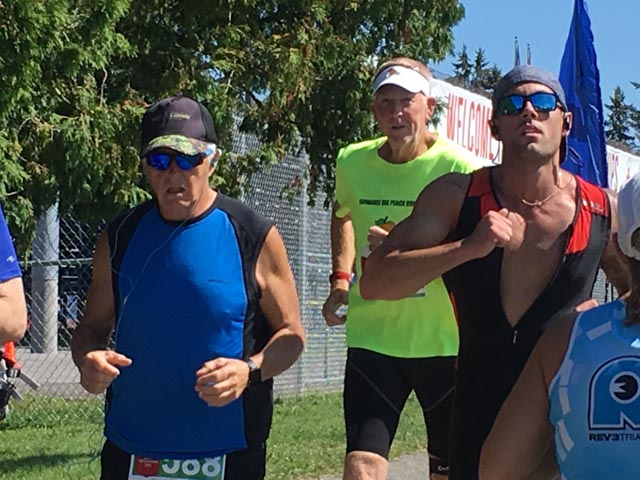
Saturday: Start of the 13.1 mile run. The field was young and very fast.
Me, chugging up the hill on the first lap. There would be four laps of the course before ending in th stadium.
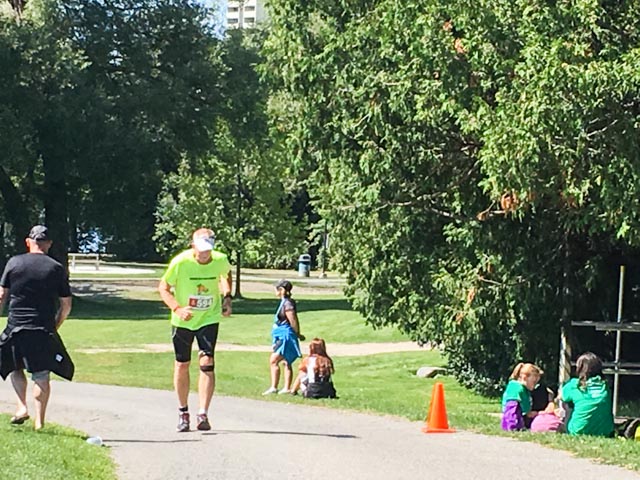
Exiting the stadium on the first lap . . only 10 miles left!
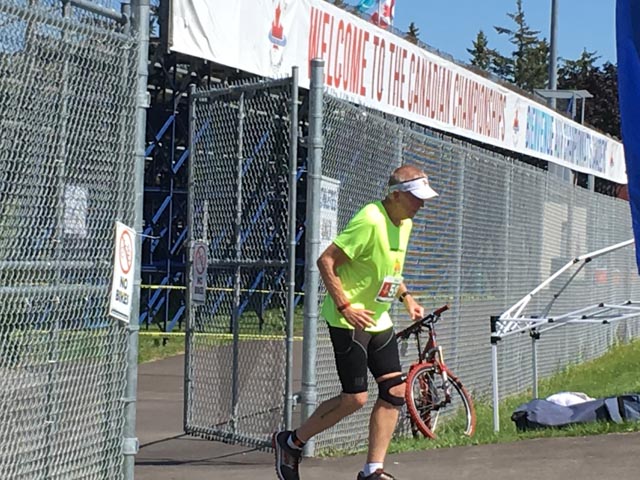
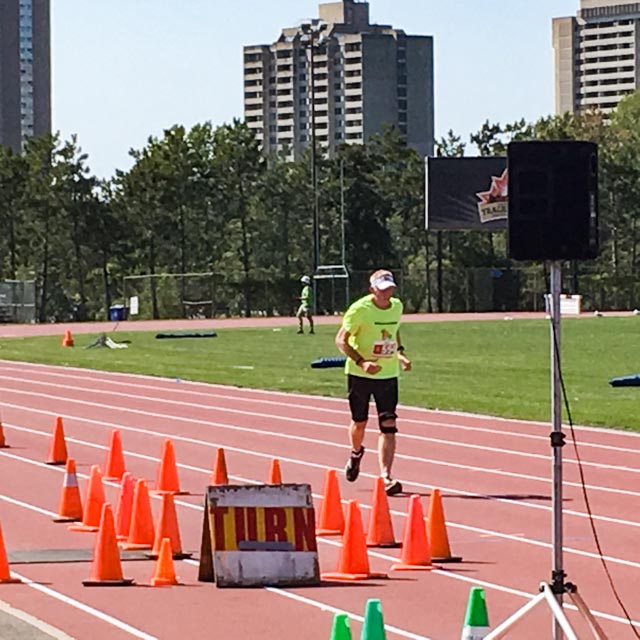
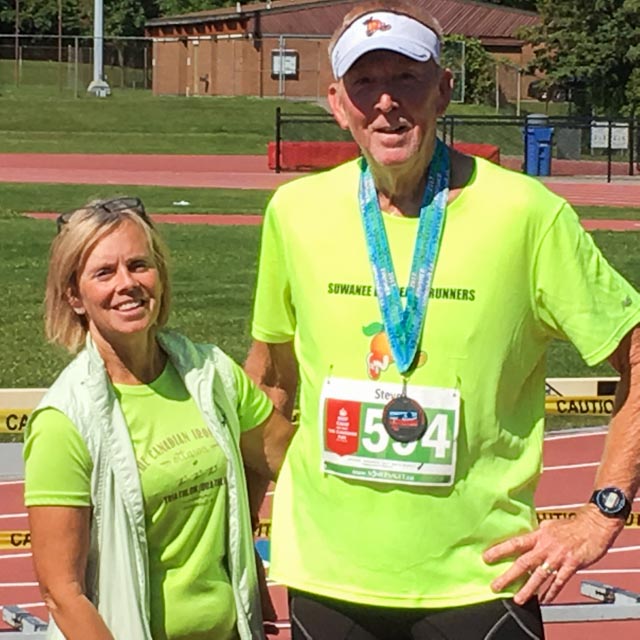
Finishing the 13.1 miles:
Sunday: We decided to take a relaxing day going through the Canadian Museum of History. We took a round-about way getting to the museum, going by “The Rocket’s” Maurice Richard monument in the park directly across the river from the Parliament buildings. Richard is considered one of the best hockey players in history.
It was raining (remnants of Harvey) and all of Canada must have decided to visit the museum (it was also Canadian Labour Day weekend!)
After parking we stood in line to obtain tickets then went straight to the bottom floor to start. The museum consists of four floors and most of the crowd was on the second floor, home to the children’s exhibits and the food courts.
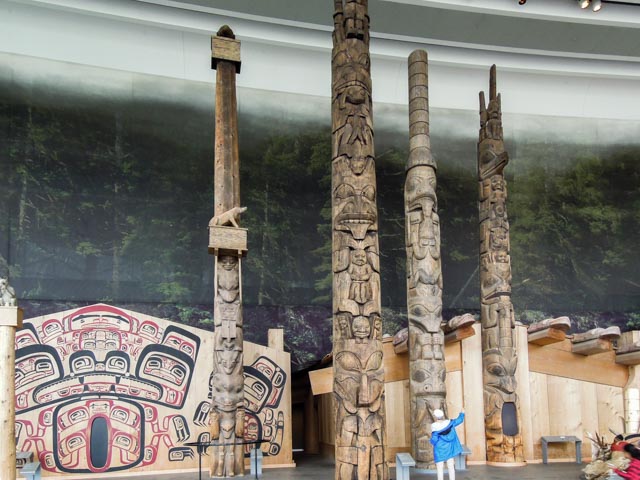
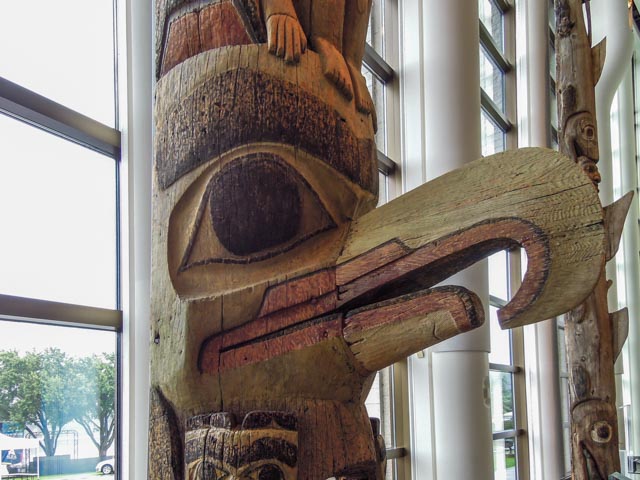
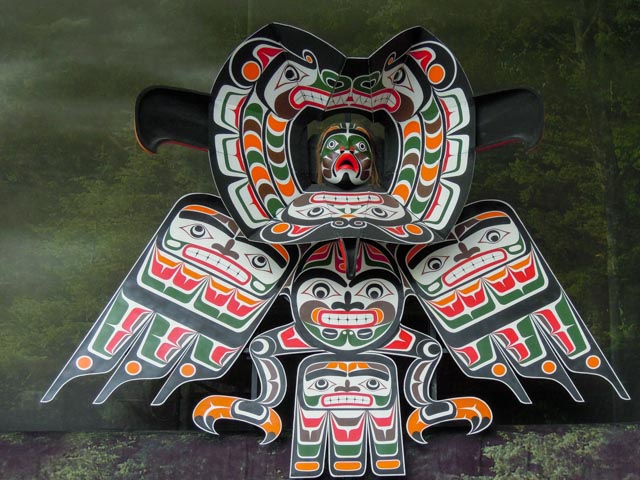
The bottom floor held the First Peoples Hall, First Peoples of the Northwest Coast and the Tsimshian Prehistory exhibits. Being on the first floor allowed for the extreme height of some of the original, 19th century totems to be displayed upright.
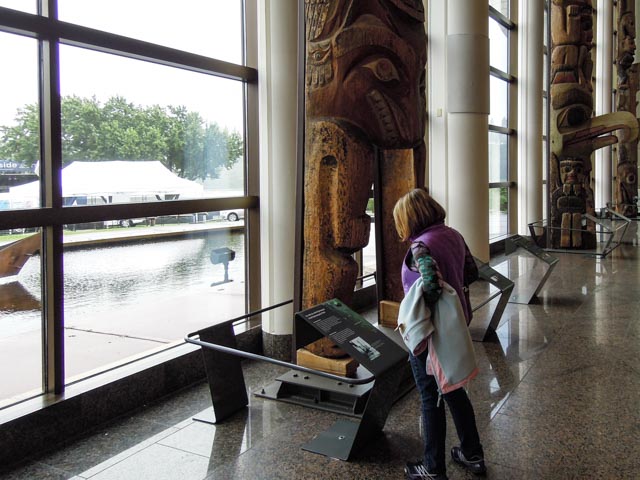
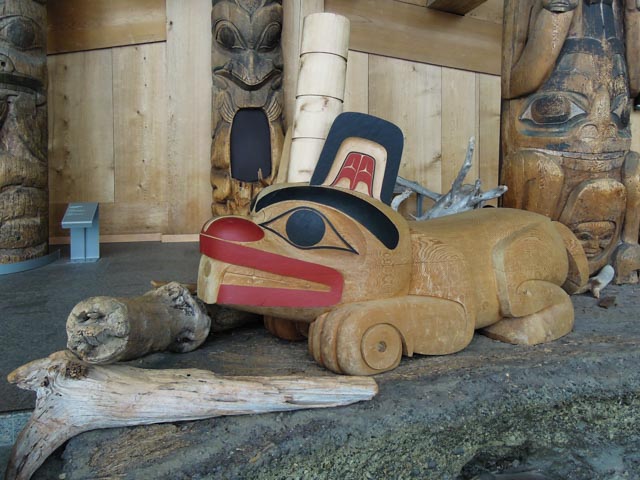
This is one small portion of the “Grand Hall”, the focal point of the Museum which houses the world’s largest collection of totem poles.
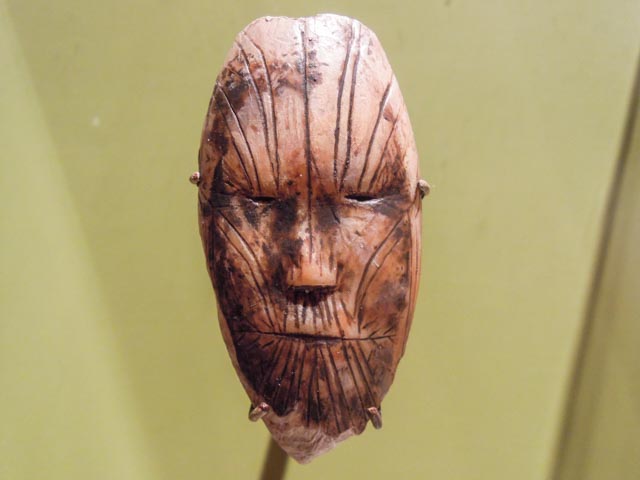
This is a very small, ivory mask, found in Nunavut Territory. At about 3,500 years old, it is one of the oldest surviving representations of the human face in Canada, dating from 1700 BC.
This is a small, wooden figurine also found in Nunavut dating from 1250-1300 AD. It was amazing how well-preserved these two items were.

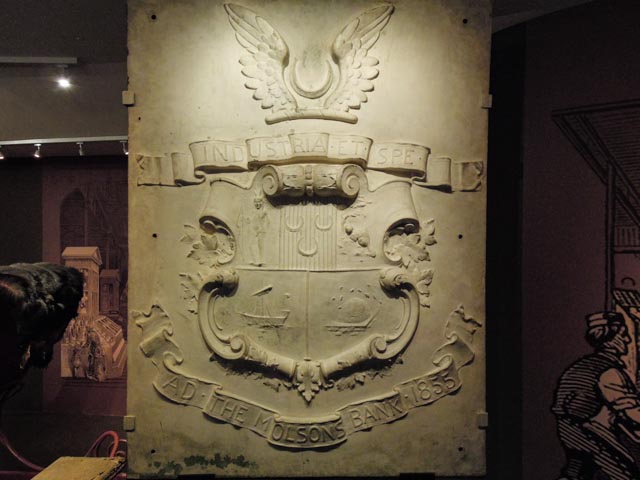
We previously visited the Molson Brewery in Montreal (closed to tours) and found this interesting storefront bronze plaque from the Molson Bank. This bank was one of the leading financial institution in British North America, founded by the sons of brewing magnate and entrepreneur John Molson, it received its charter in 1855. Keeping the money in the family?
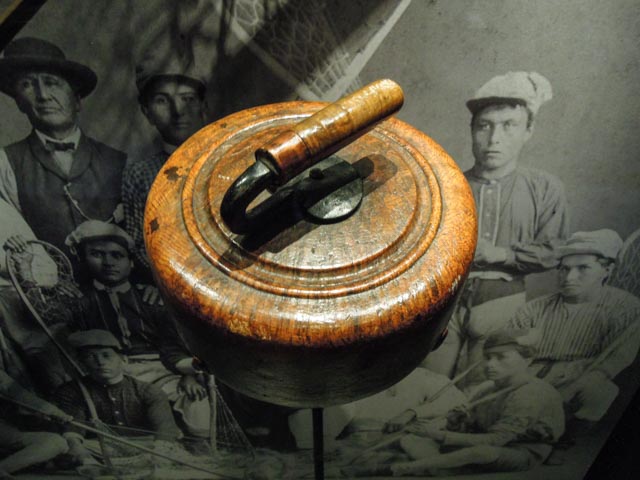
Curling was introduced to Canada by Scottish settlers in the late 1700’s. The Halifax curling club was founded in 1824 and is one of Canada’s oldest clubs. We stopped by the club while we were in Halifax but it was too early in the season and the ice was not down. This is one of the original curling “stones” made of hardwood.
We only allotted a half day for the museum and after being there until closing (6 hours) we had not seen everything.
As they began announcing “closing soon” in French (we caught the gist), we breezed through an extensive hockey exhibit where sweaters from Maurice Richard, Wayne Gretzky, Gordie Howe, Bobby Hull and many other Hall of Fame players were displayed, along with many other examples of equipment illustrating the evolution of hockey. There were videos playing of spectacular or historical plays on the ice, including the “Miracle on Ice” in 1980, the famous Hull “diving goal”, clutch Gretzky goals, and many other goals and (goalie) saves. We would need at least two days to see this museum in its entirety. We were among the last to exit the museum.
We stepped into and quickly out of a complete Canadian philatelic collection (Canadian postage stamps). It would have taken hours to view this collection.
We walked through an exhibit “Treasures from Library and Archives Canada” which gave access to complete copies of the actual founding documents of Canada. Again, an excellent research opportunity and it would have taken hours to see just a sampling here.
Because of the continuing rain (and my wobbly legs), we did not walk as much of the downtown area as we had originally planned.
Nevertheless, we did manage to see Parliament Hill, the Supreme Court, the National Mint, the House of Commons, the Rideau Canal, Rideau Hall, Chateau Laurier, and the spectacular view of the government buildings from across the Ottawa River in Gatineau. Cathy’s cell phone indicated that we had walked more than 6 miles!
We missed the Tomb of the Unknown, the Military Museum, the Holocaust Museum and much more. Sorry, no pictures as I did not want to carry my camera in the weather.
Next stop: Sault Ste. Marie, Ontario

 Travelling with the Schinglers