We had read that the Montreal Canadians “possibly” would be conducting some pre-season training in Bell arena, so we made it our first stop in the morning. Unfortunately, we were told by the office that we were about a week too early, but since we had already paid for parking downtown, we walked for a bit, seeing parts of the downtown that we had not planned on visiting. We did make it into a hockey shop where we picked up a Montreal Canadians hockey shirt for Jason.
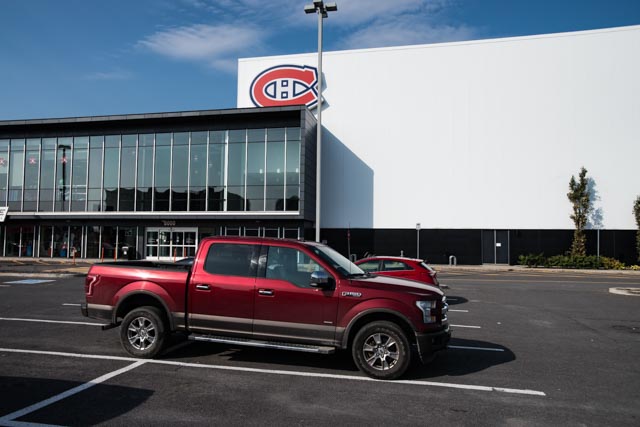
The ice was ready and I had my skates, but to no avail, the scouts weren’t there! I missed my chance to show them what I got! Thank God.

After the disappointment of not seeing the Canadians practice session, we decided to continue down to “Old Montreal”. We parked on King Edward Quay and walked the rest of the morning and into the afternoon. This is the view of the Jacques Cartier Basin from our parking space.
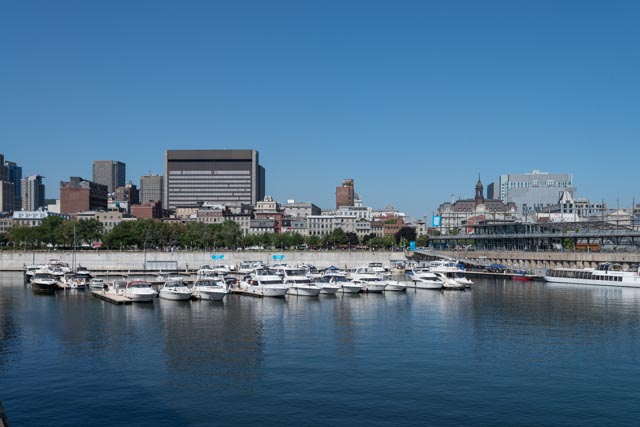
Going up river, we met a family from British Columbia. While talking with them, we found out that the husband went to Emory University! Small world, eh?
Our next stop was at the Canal de Lachine, Nord locks. We took two pictures, as the boats started their way upriver.
After watching a group of boats head north, we started walking the streets of Old Montreal. It was interesting how they made use of all the space, with greenery everywhere. This is a walkway between two very old homes/buildings, with a modern building in the far background:

A wider walking space between two, higher density living buildings…

A very old, very large set of weathered doors, with ironwork intact…

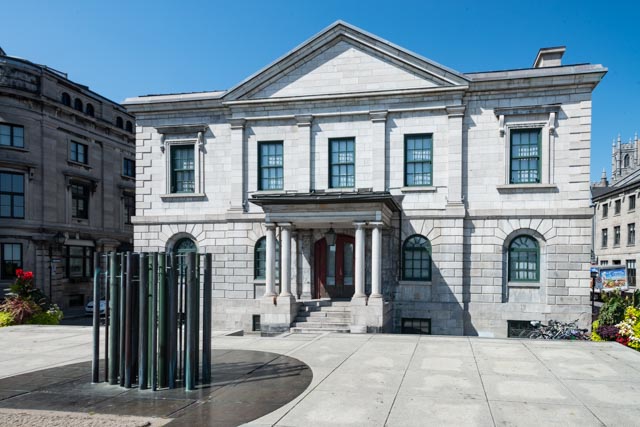
The Former Custom House is a striking, Palladian-style building, distinguished by its elegant facades, compact proportions and architectural detailing. It was built between 1836 and 1838. The Former Montreal Custom House was the first Montreal building designed by John Ostell, a British-trained architect who was, in that era, Montreal’s most important architect. Beginning with the Custom House, Ostell designed 25 of the city’s major buildings in as many years, using a variety of styles.
Some of the narrow streets in Old Montreal. There were eating establishments of all types in this area, and we were getting hungry.
We watched a troupe of street performers on rue Jacques-Cartier for a while.


We decided on a little French type restaurant on the corner of St-Amable and Jacques-Cartier. From here we could watch the comings and goings of the people while eating. Cathy had a seafood bisque and I tried the “fancy french fries”, or Poutine, made with french fries and large chunks of Brie cheese, covered with a pepper sauce then sprinkled with brown gravy. I know, it doesn’t sound very good and it took me a long time to try it but it was very good.
After lunch, we continued on to the Champ-de-Mars (City Hall), walking past the Nelson Monument. The Champ-de-Mars is where Charles de Gaulle uttered his (in)famous “Vive le Quebec libre!”. The building was built between 1872 and 1878 and is surrounded by great artwork in the form of flower beds.
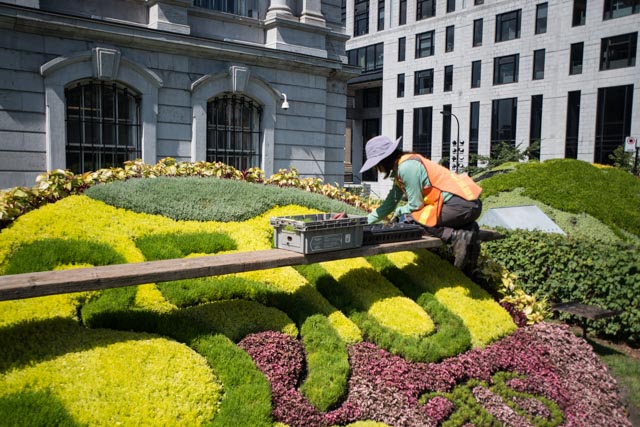
Here is an interesting lawn”scuppture” in front of the city hall building. It was inspired by mazes found in old gardens and represents the Island of Montreal (the raised mound in the center) and the numerous waterways that ran around and through it before the arrival of the Europeans.

There were several of these flower sculptures in front of the building, each with a purpose or meaning. Since the information was in French, I could only decipher four of them
- 375th anniversary of Montreal
- 50th anniversary of Expo ’67
- 350th anniversary of de Lachine
- All four of the armed forces of Canada
We found this woman working on trimming the flowers and I helped her set up the scaffold. She seemed glad to be noticed and again, after talking with her and taking her photo, others began taking her photos. Detail, detail, detail . . she was actually using a device similar to a hair trimmer to sculpt the plants!

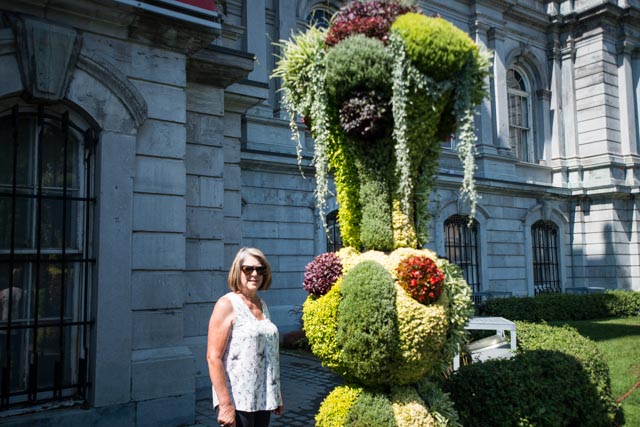
Cathy with another of the very large flower arrangements, similar to what we saw in Quebec City…
This is what is left of the Notre Dame Basilica of Montreal. Built between 1824 and 1829, it is a masterpiece of Gothic Revival architecture. Paintings, sculptures and stained-glass windows illustrate biblical passages as well as 350 years of parish history. These two birds showed up looking for a handout while I was waiting for traffic to clear.
Continuing on, we came across numerous statues, fountains and more of the very narrow streets.
We went off course when I saw this down one of the side streets. It turned out to be an excavation in process. There were several archeologists working in the trench where, during construction of a new building, artifacts were discovered. Building was halted until all of the artifacts could be recovered. A display case nearby showed some of the items that have been recovered so far. Unfortunately, at the depth they were working the items were dating to the late 19th/early 20th century judging by the glass bottles being recovered. It was interesting watching them move the dirt via buckets up to street level to be sifted and any items identified as to exactly where it was unearthed from. They were using rulers, tape measures and levels to accurately identify the area in three dimensions.

 Travelling with the Schinglers