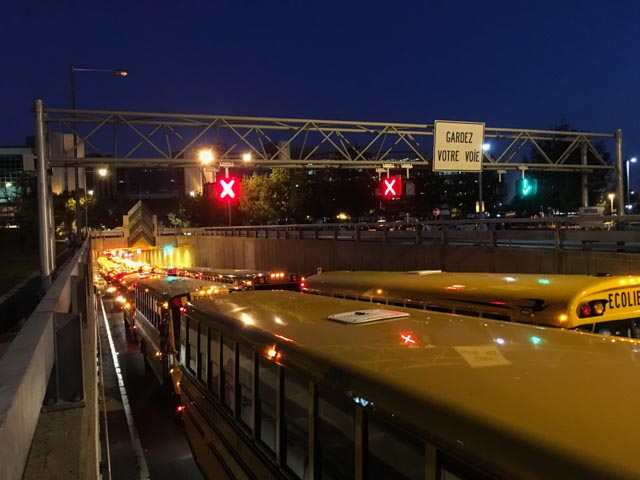
I left camp for the Quebec City Half Marathon at 0400 this morning. I had to park in downtown Quebec City (QC), then take a bus to the race start line, back across the St. Lawrence in Levis. These are the buses staged for transporting the runners to the two starting areas. There were buses as far as you could see, coming out of this tunnel, and we did not have to wait. It was still dark when we were boarding for the 40 minute drive to the start area in Levis.
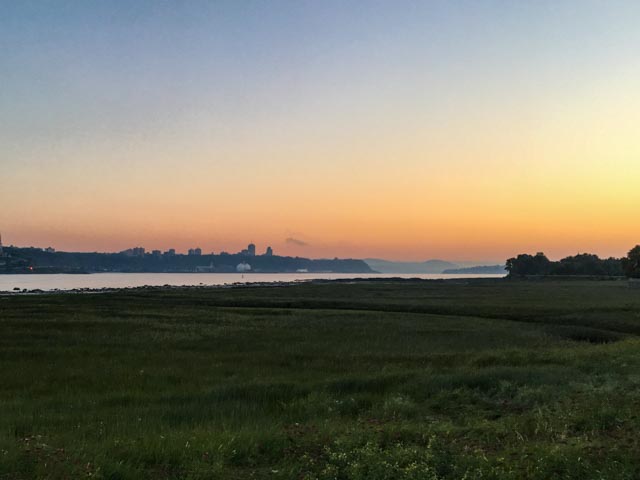
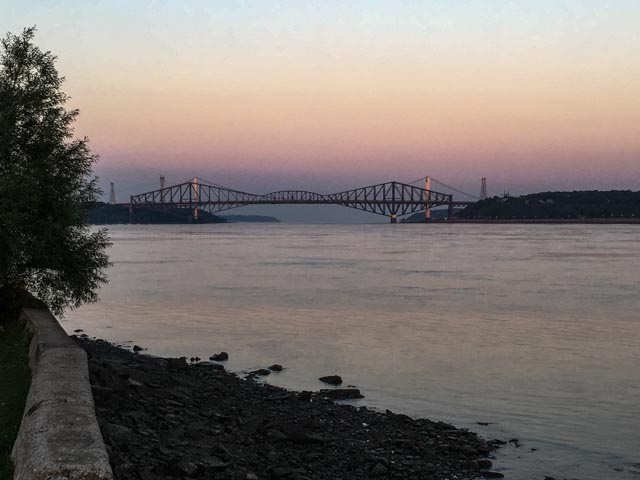
When we arrived, we saw this beautiful sunrise. The first photo is back across the river to QC and the second photo is upriver and the cantilevered Pont de Quebec bridge, that we would be crossing, about five miles into the run. At 549 meters clear span between its pillars, it is the world’s longest bridge of this construction type. Amazingly, it was built in 1917!
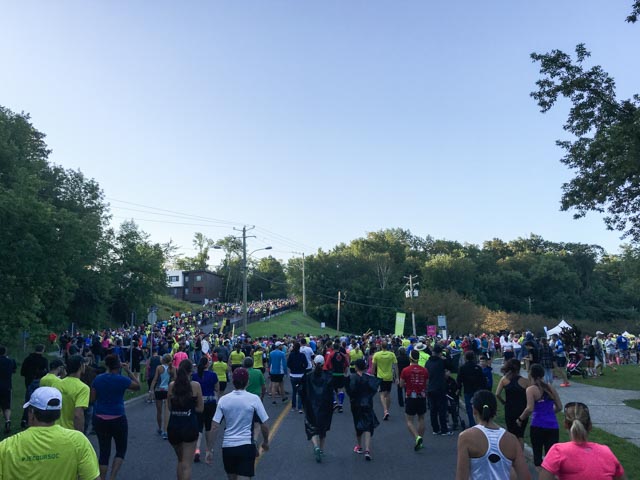
Here is the crowd about a half hour before gun time. We are starting to form the corrals going up the hill.
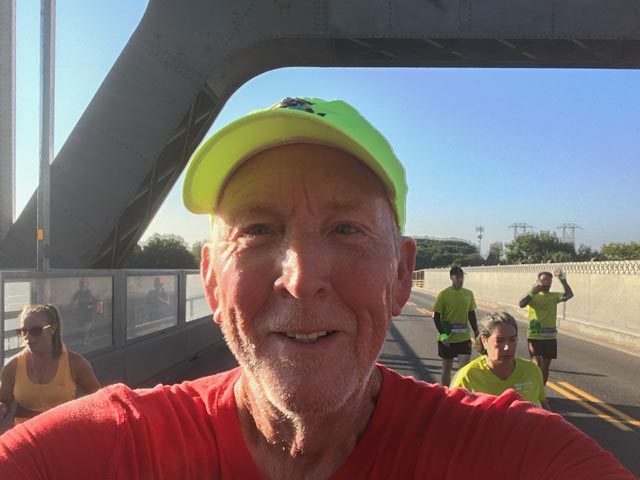
Crossing the bridge the running groups are starting to spread out. We could actually see the leaders crossing below us on the other side heading into town!

I don’t usually take “selfies” but couldn’t resist.
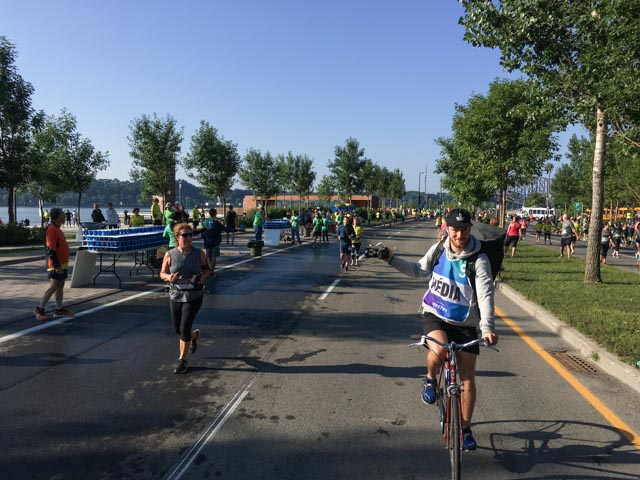
After the bridge, the runners continued to spread out. Here is my photo of a press person taking a photo of me taking his photo at a water stop at about the eight mile mark. I have to say “about” because all measurements were in kilometers.
“A 30-year-old father from Saint-Augustin-de-Desmaures has died after taking part in a half marathon run in Quebec City. Maxime Pouliot Rochefort required medical attention when he was two kilometres from the finish line Sunday morning.” (from the CBC News) . . . This happened in front of me, on the last hill leading into town. Medical teams were working on him as I passed. RIP
As we approached Old Town QC the runners started to bunch up. I finally caught the group that I had been chasing since the start in Levis. I just did not have enough steam left to pass them.

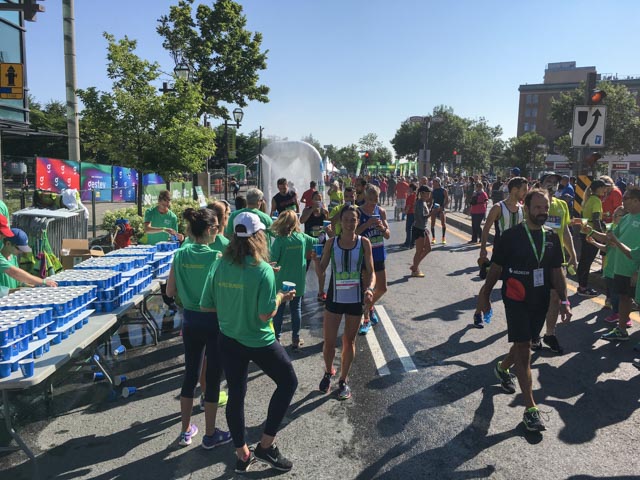
The temperatures were in the low 70s at the end of the race, pretty warm for most of this crowd! They had several of these water spray stations set up after the bridge.
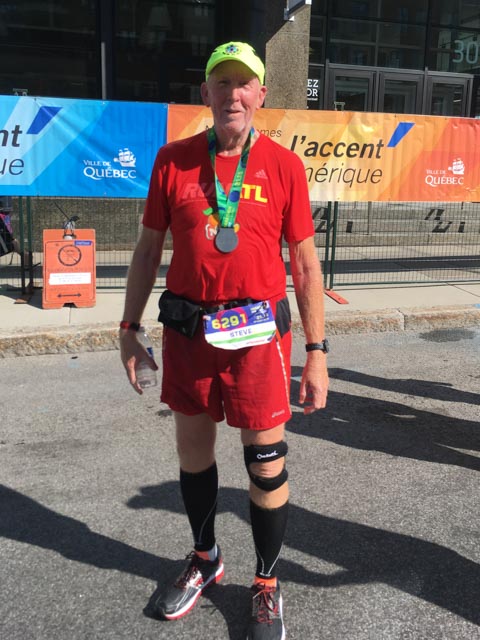
I asked an aid person at the finish area to take a photo of me as Cathy chose to stay in camp. Something about getting up at 0330.
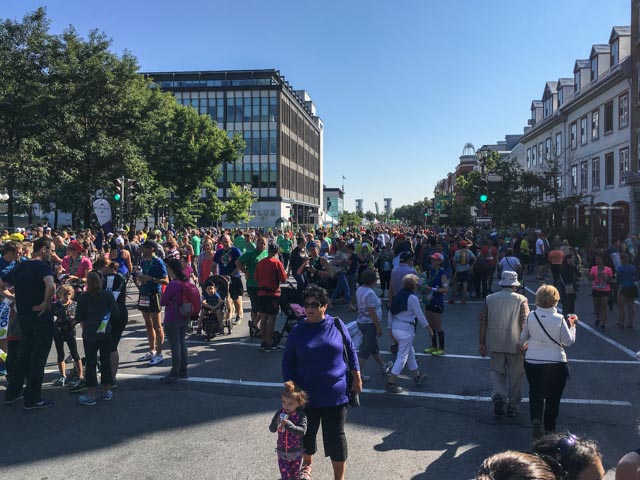
There was a pretty good grouping of runners and support at the finish, and it was crowded like this for several blocks.
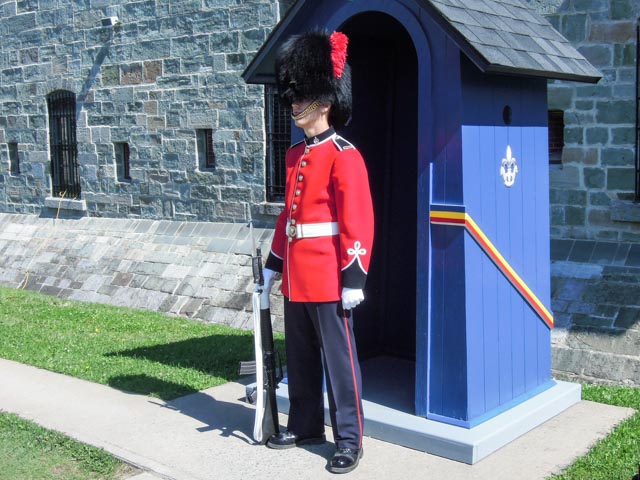
After going back to camp and changing, we decided to take a restful afternoon back in QC. We went to the Citadel and took a walking tour of a little over an hour, then visited the war museum where they were displaying information and artifacts from their Vimy Ridge campaign in WWI. Below is one of the guards at the entrance.
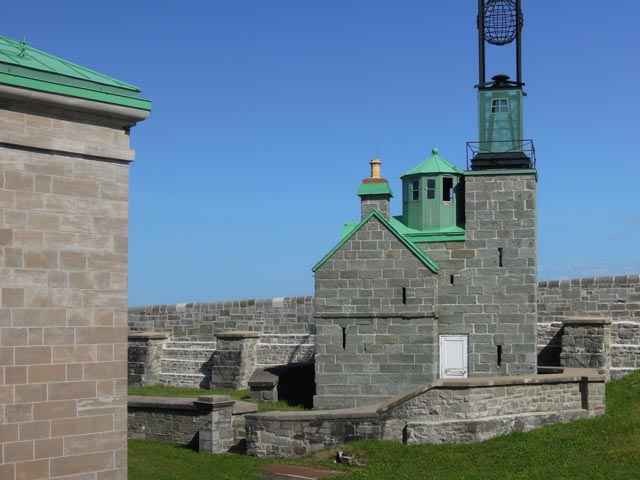
This building was built by the French (you can tell by the stones being irregular while British construction used cut square and rectangular stones). This was a gunpowder storage facility. The design included the five buttresses to strengthen the walls and a very weak roof. This combination would direct any explosion upwards instead of outwards, This is the reverse of the design concept as a modern-day IED.

This building is associated with the development of astronomy in Canada. It is the first and may also be the oldest observatory building in Canada. It was used to find the exact longitude of QC by linking it to Harvard based on an exchange of astronomical clock beats using the telegraph system. Pretty simple concept? The data was then used to determine the exact longitudes of Montreal, Toronto and Kingston.
The ball house was the most accurate source of time available to navigators for a number of years. During the navigation season (May 13th through November 29th), the time ball was used every day except Sunday. It was raised to the half-way point at 12:45 PM, was at the top by 12:55 PM and was dropped at 1:00PM local time.
This was originally a hospital, but what we found interesting is the plaque above the entrance, shown in the closeup below. It is the official insignia on the headquarters of the Royal 22nd Regiment (R22R), based in Quebec. The inscription, in French is “We Will Remember” (where they came from and their fallen military), and there are three distinct patterns in the blocks; the top is the fleur-de-lis (France), the second is the Royal insignia (British) and the third, maple leaves, represents Canada. It is amazing how the cultures pretty much get along to this day.


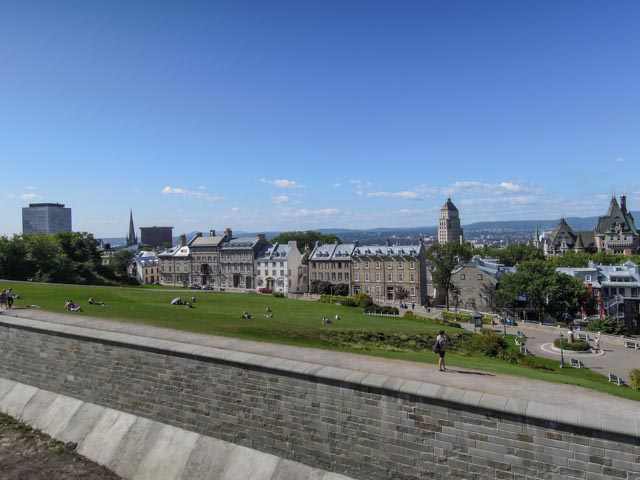
The Chateau Frontenac Hotel Quebec can be seen from the hilltop parade grounds. This is where the changing of the guard takes place and we will be here tomorrow morning to witness it. We will be leaving early, taking the ferry across (no parking) then spending the rest of day walking within the Walled City, actually walking on the wall then walking towards the battlefields for lunch in one of the local restaurants. In Quebec it is mandatory for all restaurants to post at least 80% of their menus for comparison shopping. Pretty good idea?

This is a couple of photos we took of QC, both the upper and lower.

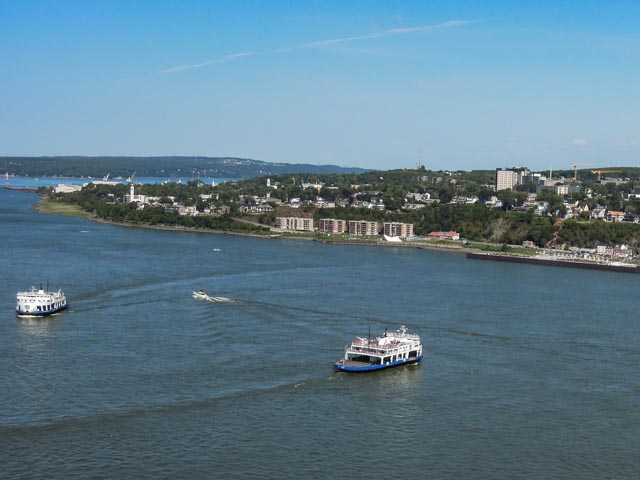
Here is a view of the St. Lawrence, looking downstream. The land mass in the center of the photo is Ile d’ Orleans, the point of land in the foreground right is Levis, where we started the race this morning. The larger of the two boats crossing the river is the ferry, the smaller boat is a sightseeing excursion boat.

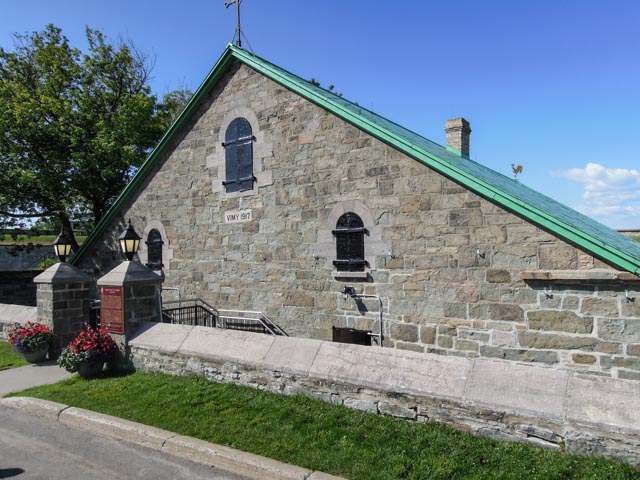
This was originally an ammo locker but was later converted to a chapel. Only military personnel are allowed in the chapel.
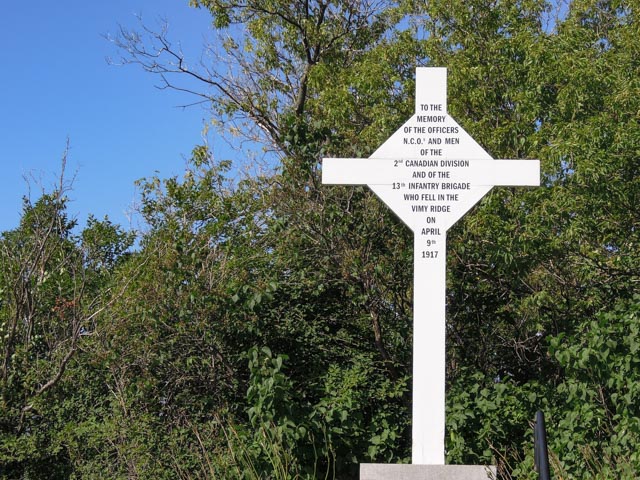
The Battle of Vimy Ridge was a military engagement fought primarily as part of the Battle of Arras, in France during the First World War. The Canadians defeated the Germans in this four-day battle at a cost of 3,598 killed and 7,004 wounded. The French erected a large monument to the Canadians at the battle site and the Canadians are very proud of their military’s effectiveness during that war.
Leaving the fortifications we saw this building. There were cannon on top in the slots that were very well protected from enemy fire. Pretty ingenious arrangement.


 Travelling with the Schinglers