The Newport Mansions or Summer homes of the rich and famous in the “Gilded Age”
The Small: Kingscote
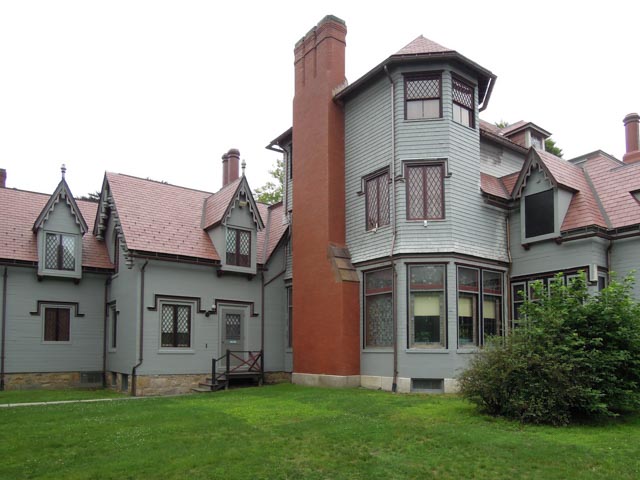
This is the smallest home we visited, and the first. This is an example of Gothic Revival in American architecture. This home was built by a Georgian, George Noble Jones, in 1839 to be used as a summer cottage. After the outbreak of the Civil War, Jones left Newport and did not return. The home was sold in 1864 to a Chinese trade merchant, William Henry King. It remained in the King family until 1972 when it was gifted to the Preservation Society.
The rooms in this home are fully furnished in original, period furnishing and accessories, mostly from the King estate.
One of the examples of stained glass in the home. All of the mansions used stained and stained/painted glass in various and unique applications.

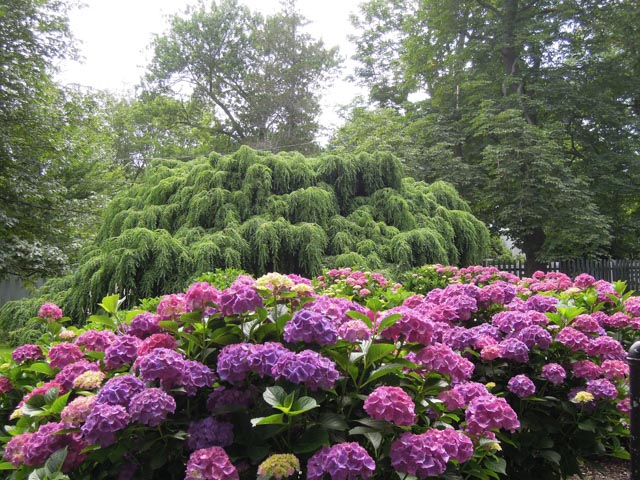
The gardens of Kingscote held many varieties of trees, from all over the world. It was the most substantial and varied landscaping of all the mansions we visited. Hydrangeas were found on all of these estates and just about everywhere in the area, in a myriad of colors.
The mid-sized: The Elms
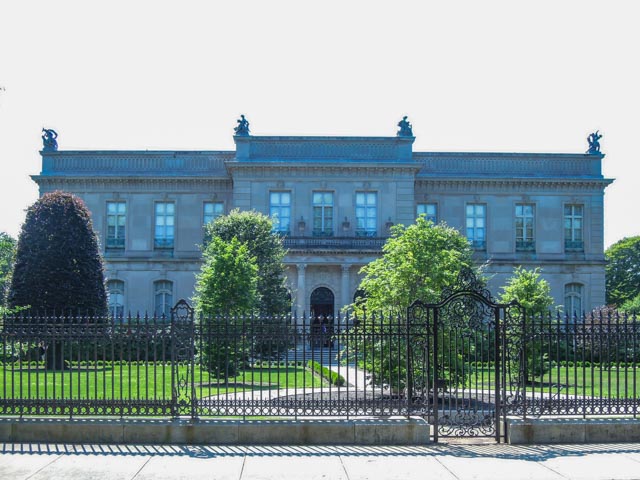
This was the summer residence of Mr. & Mrs. Edward Julius Berwind of Philadelphia and New York. The Berwinds made their fortune in the coal industry. This summer home is about 60,000 square feet in size and was completed in 1901 at a cost of 1.4 milliion dollars. The home and most of its contents were sold at public auction in 1961 after the last family member died. The Preservation Society bought the home in 1962 and managed to reacquire most of its original furnishings.
The formal dining room and small sitting room…
A typical fireplace, marble, crystal and of course the bust…just like us…
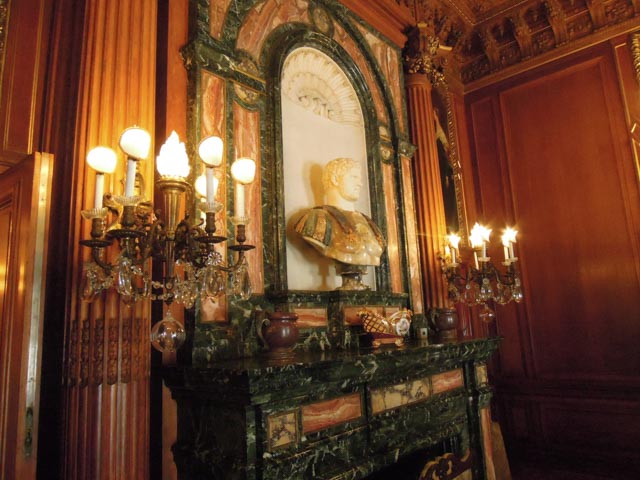
All of the sconces were custom-made in the form of iris petals…

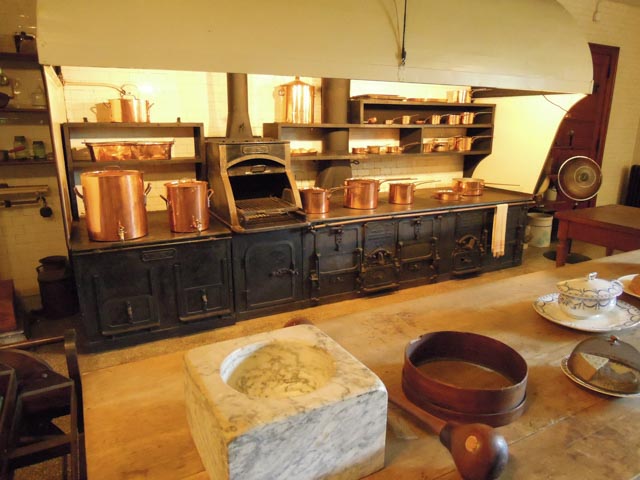
The kitchen area. The enormous stove was fired by what? Coal? You guessed it.
Then, the obscenely large: The Breakers
The Breakers is the grandest of Newport’s summer “cottages” and a symbol of the Vanderbilt family’s social and financial preeminence in turn of the century America.
Commodore Cornelius Vanderbilt (1794-1877) established the family fortune in steamships and later in the New York Central Railroad, which was a pivotal development in the industrial growth of the nation during the late 19th century.
The Commodore’s grandson, Cornelius Vanderbilt II, became Chairman and President of the New York Central Railroad system in 1885, and purchased the property (and a small home) during that same year. In 1893 he began construction on a villa to replace the small home. This replacement was to be a 70 room Italian Renaissance style palazzo inspired by the 16th century palaces of Genoa and Turin.
The Preservation Society purchased the home from Vanderbilt’s heirs in 1972.
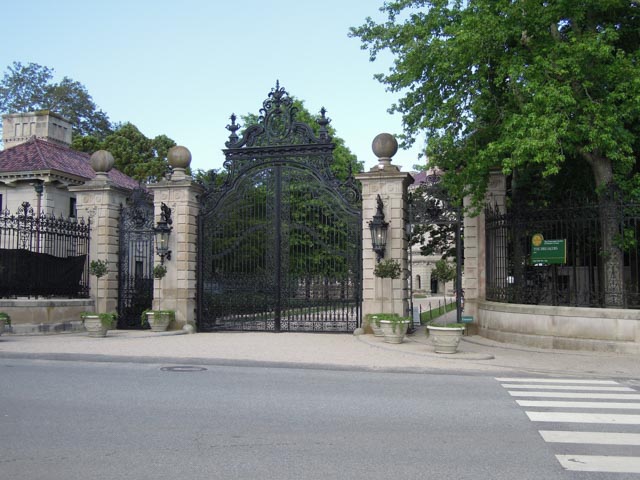
Not one, but two of these entrances on Ochre Points Avenue. This estate takes up an entire city block. These gates are at least twelve feet tall…
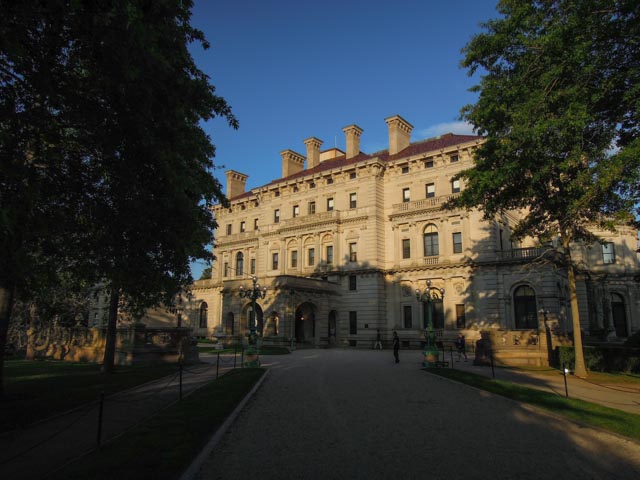
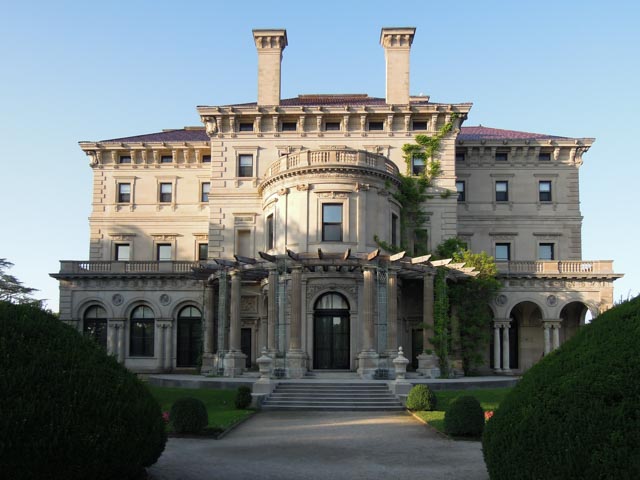
As you enter the property, this is the front of the home…
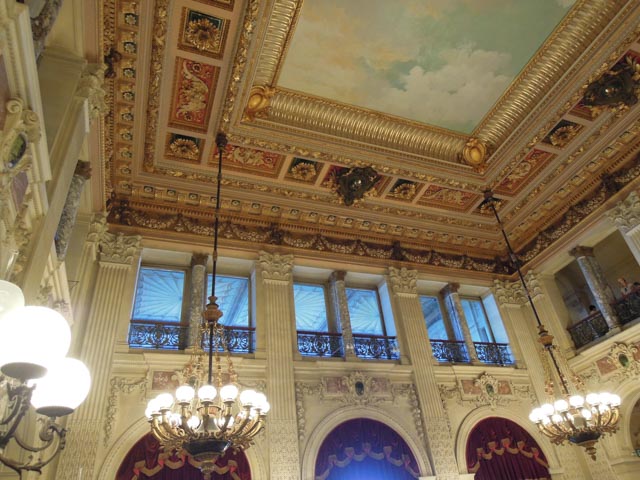
The ceiling in the main ballroom. There was room enough here to entertain 400 guests. JFK attended a function here. The painting on the ceiling is about 50 feet above the floor.
This is the stained glass ceiling above back staircase. It is about 50 feet in length…

These chandeliers were made of baccarat crystal and were powered by electricity. They were so heavy that they literally had to reinforce the ceiling to support them. I took a closer shot of the globe at the bottom; in the event of a power outage, these four small chain/pulley systems could be used to instantly convert the fixture to a gas light, Vanderbilt was a stickler for detail.
I think this wins the prize for the most ornate fireplace. It is over two stories high and is hand carved onyx, granite, marble and gold leaf. Just a little over the top?
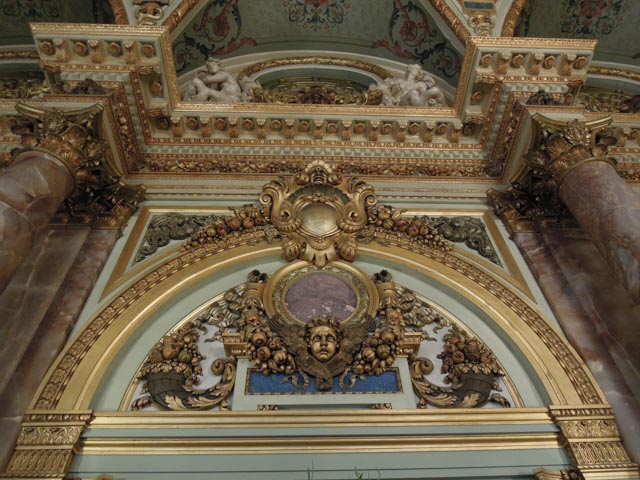
In one of the rooms, there are these silver looking inserts, four in each corner. Over the years, they were thought to be silver, but they never tarnished. An analysis was performed and what were they actually made of? Why Platinum, of course.
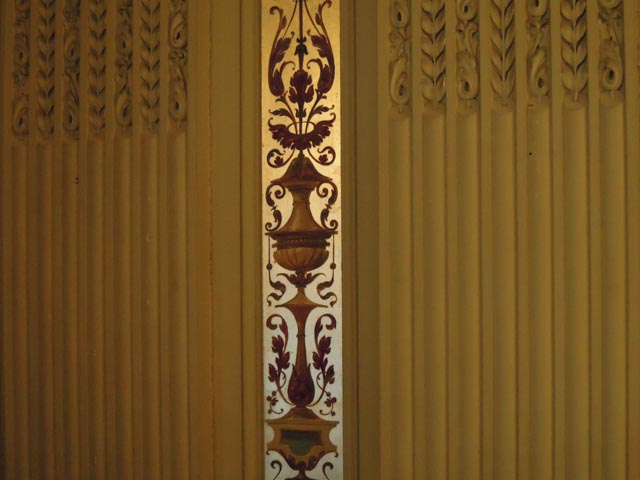
A small sitting room and a music room…
The library…
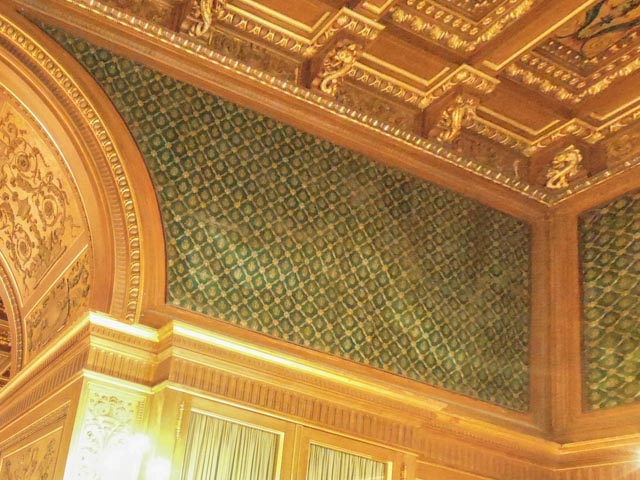
The wall paper in the card room and library is not really wall paper. It is green Corinthian leather, adorned with gold. In addition, most of the woodwork in these rooms are highlighted with gold. It is supposed to give the feeling of wealth…
Cathy, checking out the view from the second floor “deck”…
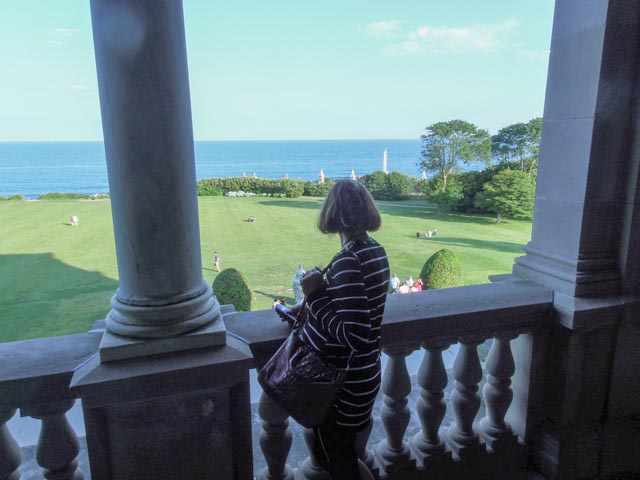
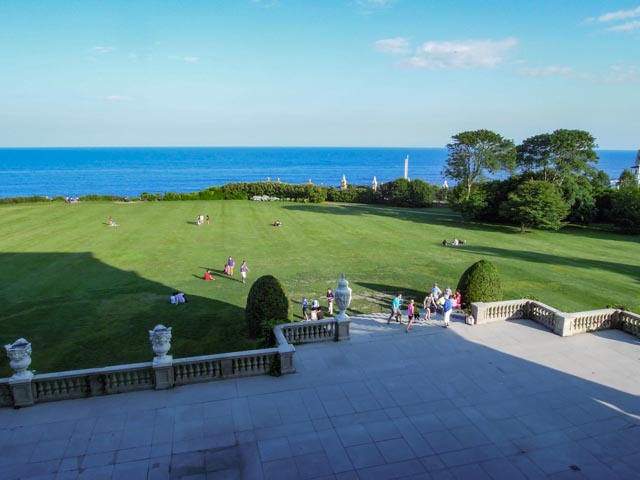
The view from the second floor, the grade level deck is below…
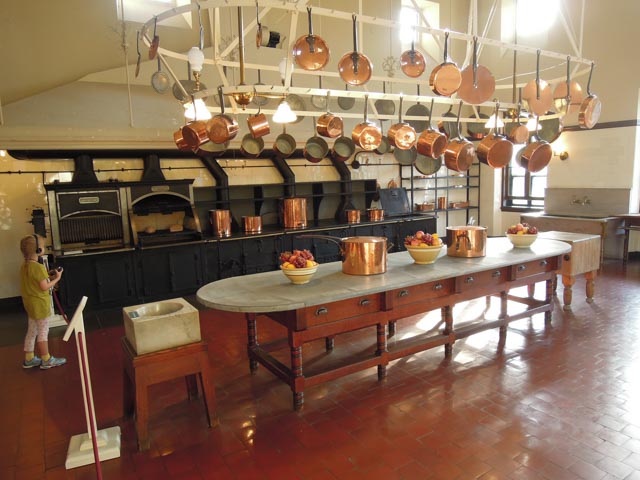
We exited through the kitchen. The stove apparatus was even larger than the one at the Elms. Check out the HUGE mortar at the end of the marble table. It was used for grinding herbs and spices…
This is the back of the house, facing the Atlantic…
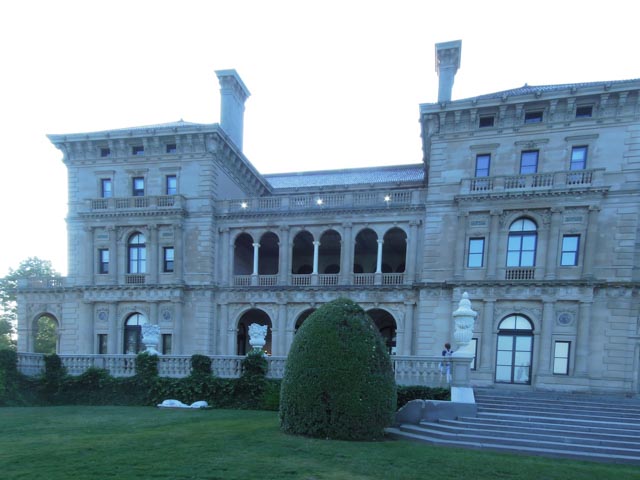
The side of the house, again the details are amazing…
In the garden with a “water feature”. We have one also, but just a little smaller.

This house was “winterized” every year in the fall. Every lamp, fixture, item in the home had a custom-made cover and everything, everything was covered and secured every fall. Every spring, everything was uncovered, cleaned and polished, even the ink was replenished in the inkwells, before the Vanderbilts arrived. It took a massive staff weeks to prepare. The bill for entertainment exceeded 300K/year, in ca 1900 dollars, and that was just for the time they were there (four months). While we were leaving, there was a opera-type person warming up in the grand ballroom for a function that evening. The acoustics were fantastic.
Back to reality and the motor home for the evening. I can not imagine what Vanderbilt’s motor home would have looked like!!

 Travelling with the Schinglers