The weather was nice in the morning so we decided to take a hike into the Palalki Heritage Site. I ran past this area on the Marathon run a couple of weeks ago so I knew exactly how to find it. We made reservations (necessary for the limited parking) and arrived early in the afternoon. The site contains outstanding examples of cliff dwellings and rock art. The site was first documented by Dr. Jessee Walter Fewkes of the Smithsonian Institution in 1895 and again in 1911.
Construction of these dwellings began about AD 1125 and they were occupied by the Sinagua Indians until about AD 1300. There is virtually no history of the Sinagua and it is believed they merged with the Hopi in the nearby Verdi Valley in AD 1300. The Sinagua were primarily farmers who included wild plants and animals in their diets.
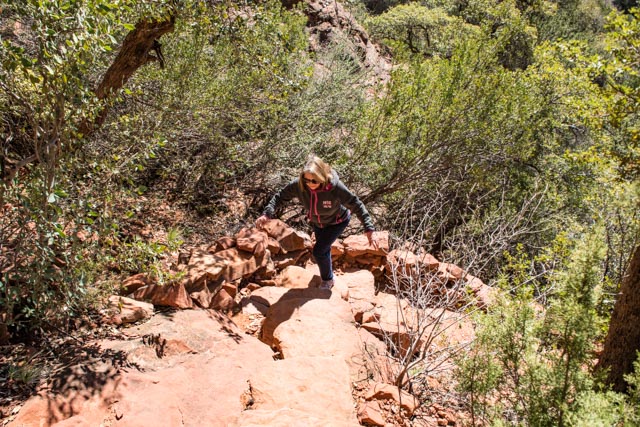
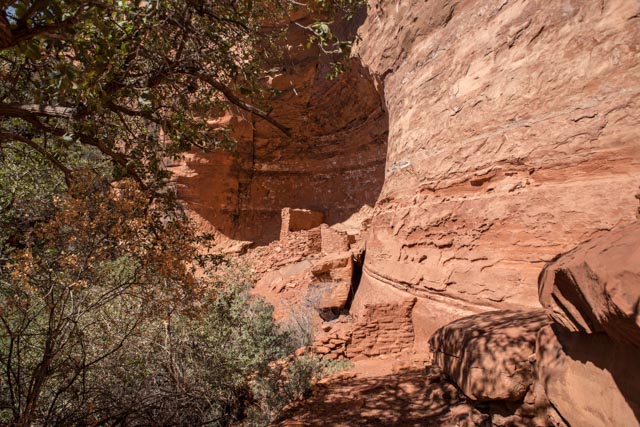
This is Cathy making the final turn up the hill to the ruins. The ruins consisted of three two-story main structures and two smaller structures, one on each side of the main units. They housed between 40 and 60 inhabitants. All that we saw was original and there has been no reconstruction or rebuilding done. They are located under a rock overhang and relatively unaffected by the weather.
It apparently was very cold last night. This trailside bush (center of picture) was directly under a very small waterfall (more of a drip-drip-drip) and it was still iced up at midday . . in Arizona!
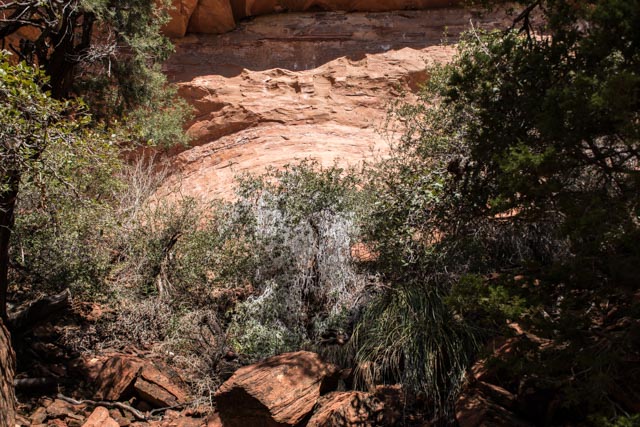
The main structures. Both of these were two stories in height. The wooden roofs have been scavanged over the years for firewood. Two of the three wooden headers over the doorways were removed by Fewkes for testing and were replaced while the third is original.
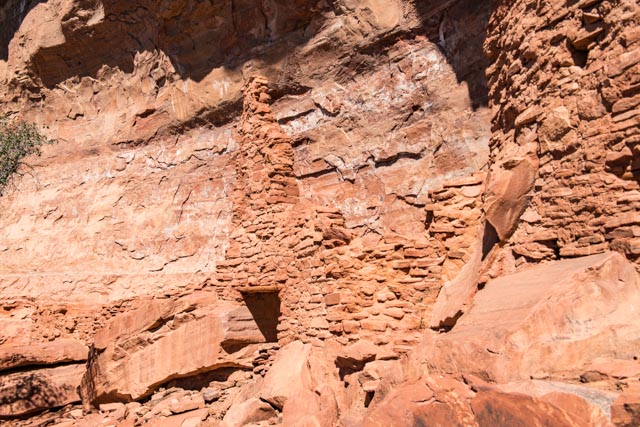
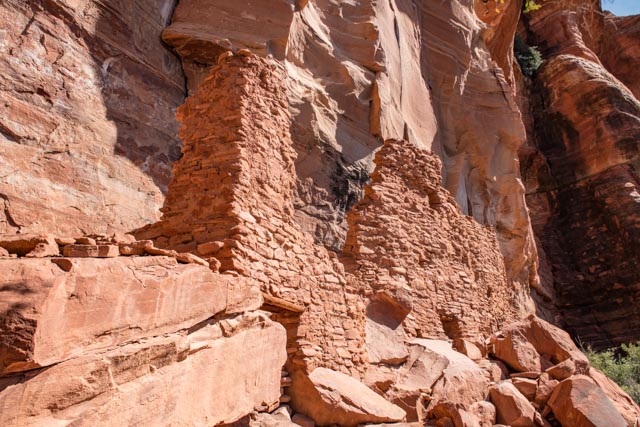
This is what is left of the smaller, single story structure to the left of the main buildings, the unit on the right was very similar.
It was a short hike to the rock art (you can almost see the cliff strtuctures in the background). This is an area known at the “Grotto”. Cathy is about to look at the centuries-old artwork. What we would see are pictographs (designs painted or drawn on the rock surface) unlike the petroglyphs (which are pecked, carved, pounded, scratched or ground into the rock) which we have seen in other areas.
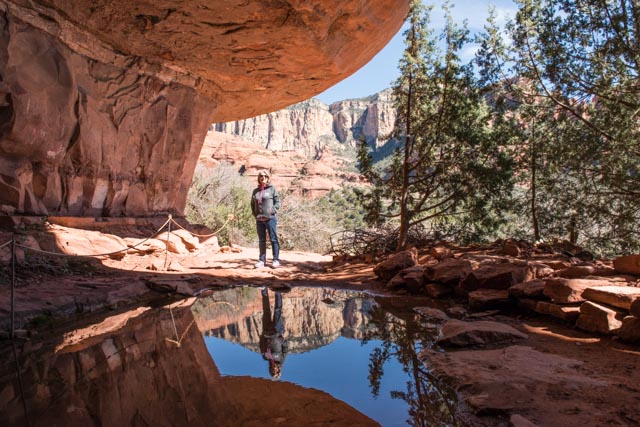
This is the natural concave cut in the rock where the pictograph art has been found. It is protected from the elements by the overhanging rock.

Cathy found my image on the wall . . .see next picture

The guy on the left is me doing my weightlifting training with huge rocks, in my earlier years (ha ha).
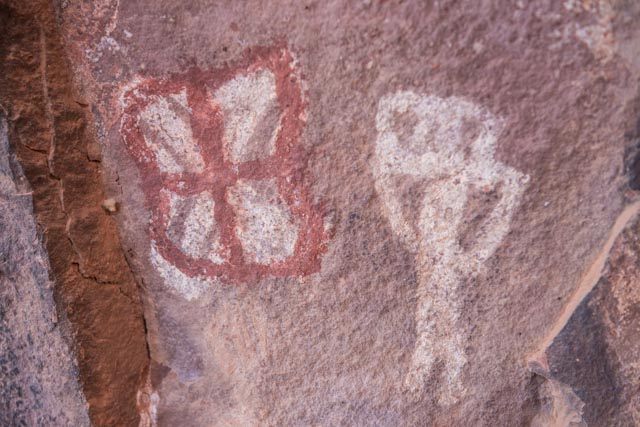
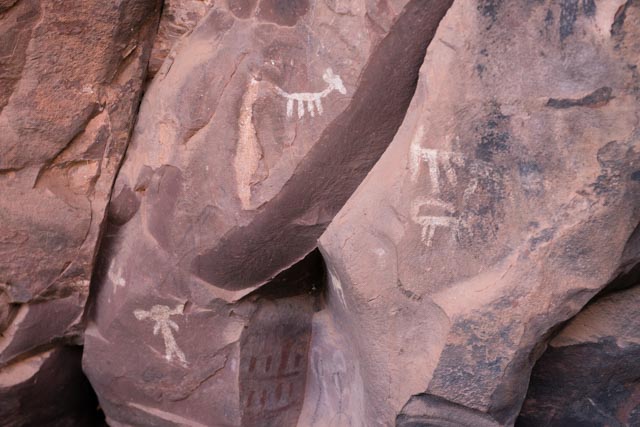
This depicts “mother earth giving birth to the animals”
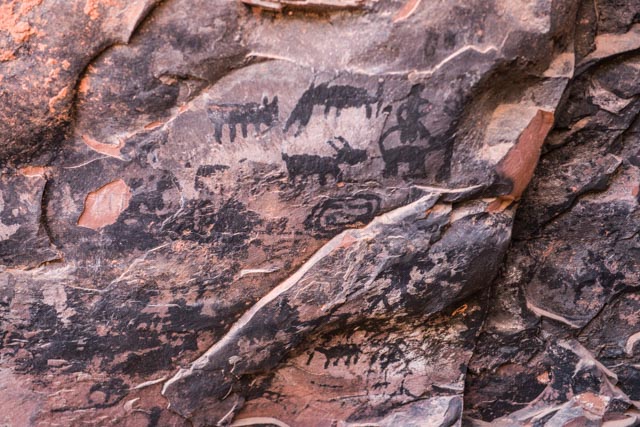
Notice the centuries-old scratching on the pictures on the right. Apaches spent a lot of energy trying to reverse or negate the power of the paintings. They felt that defacing it would accomplish this.
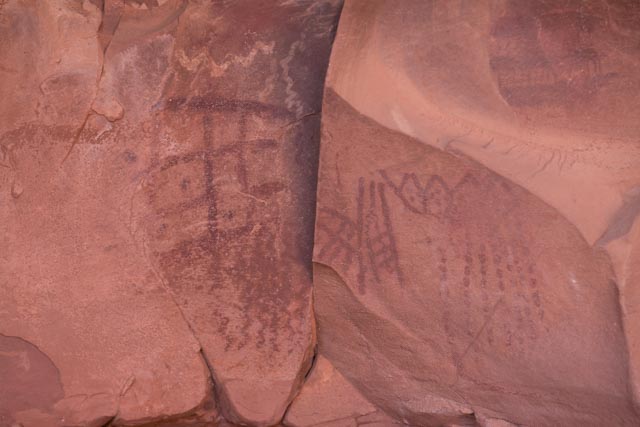
I don’t really know what these lines mean. I guess I will have to brush up on the pictograph language. Yes, there are books available that go through the language, figure by figure.

Some other paintings on the wall
This is some century-old tagging. These were two of the original ranchers/explorers in this area, done in the early 1800s.


 Travelling with the Schinglers