JEROME
We visited Jerome first, to avoid the expected afternoon crowds. Jerome was built on Cleopatra Hill, on top of the largest copper mine in Arizona, producing three million pounds of copper per month and was named in 1882 by its first postmaster, after the family of financier Eugene Jerome. The original claim was staked in 1876 and United Verde mining operations began in 1883.
In 1918 and underground fire erupted in one of the tunnels and burned for over 20 years, forcing the move of its smelters to nearby Clarkdale. In the 1930’s a large charge of dynamite (260,000 lbs) was set off and the earth began to shift. Tunnels under the town began to crack, some as deep as 4,800 feet. The shifting, combined with the incline of the hill caused multiple buildings to slide down the slope. Today, there are still 88 miles of tunnels under the town.
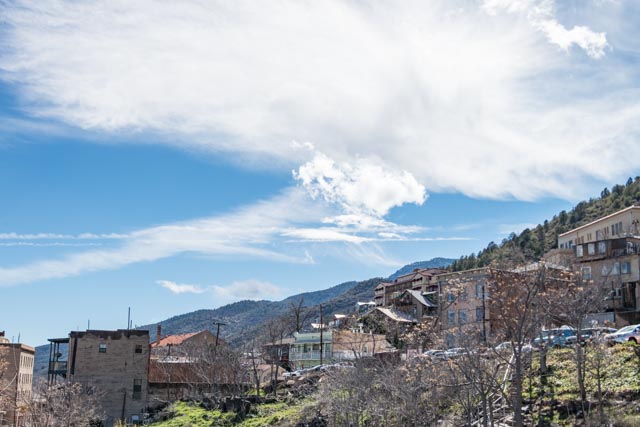
This is a view of the second level street. Each side street leads down one level. We parked on the first street (of three) and were basically by ourselves. The town was considered a ghost town as late and the 1960’s but has staged a comeback with multiple artist galleries, wineries and various shops and eating venues. Many of the building have been restored and more are planned for restoration. We talked with one shopkeeper who waited over two years to get a place to live in town. She moved from Chicago and enjoys the area immensely.

Cathy trying her hand at cinematography.

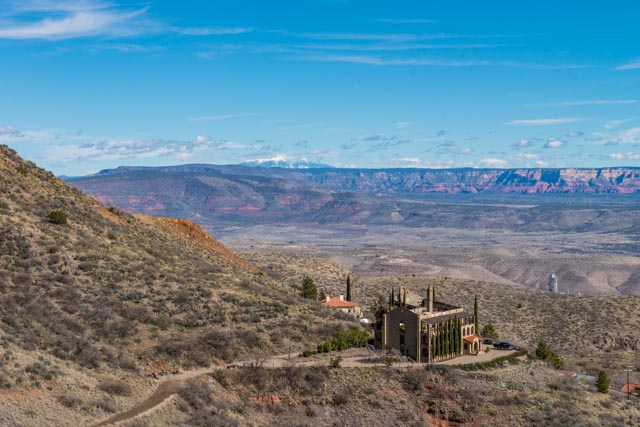
A view from above. The mountain with snow on it (in the distance) is near Flagstaff. Since the town was built on the side of a very steep hill, everywhere you turn you enjoy views like this. The building was an original mine office building, near the main shafts of the mine. It is now used by the Jerome State Park.
This is the view looking up at the town from our parking site on the first level street, about 500 feet above the valley floor.
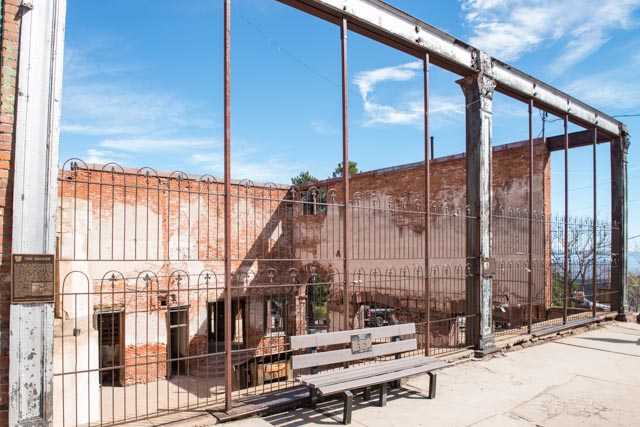
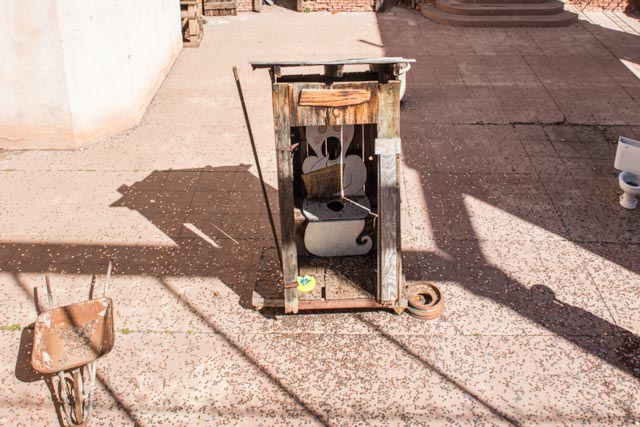
This was original the Grandview Hotel, constructed in 1895, the first multi story building in town. It was destroyed by fire, was rebuilt in brick and became the Bartlett Hotel. The building was abandoned in 1940 and the mining company salvaged most of the parts of the building in the 1950s. The second photo shows the mass of coins that have been tossed into the structure, with the object apparently to hit the hole in the outhouse placed on the floor below. Lots and lots of pennies, nickles, dimes, quarters and more down there . . .
Cathy and Barbara descending the stairs between streets
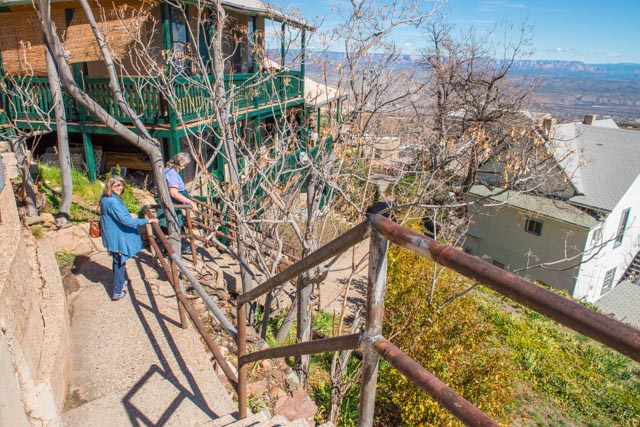
This is “the” hotel in town. We did not go up to it but I could imagine the view from the rooms at this place!

This is the original blast furnace from 1882. It was capable of producing 8,000 lbs. of copper on a daily basis. Later, smelting capacity was increased, with the addition of bigger, better furnaces, to 457,525 lbs per day. In 1929 (peak year), this mining operation produced 142,290,460 lbs. of copper.
The fuel for these furnaces originated in Wales, was shipped around the horn of South America by boat to San Francisco, then by train to Ashfork, AZ, then by mule team 60 miles over the mountains to Jerome.

Being an “artist” town, there has to be artsy types . . .

When we pulled out of town, it was packed with tourists. The parking lot where we parked was full, with more cars waiting. It pays to get up early. We travelled up the canyon above town (towards Prescott) and stopped to take in the view. You cannot see Jerome from this angle but that is the Verdi Valley below.
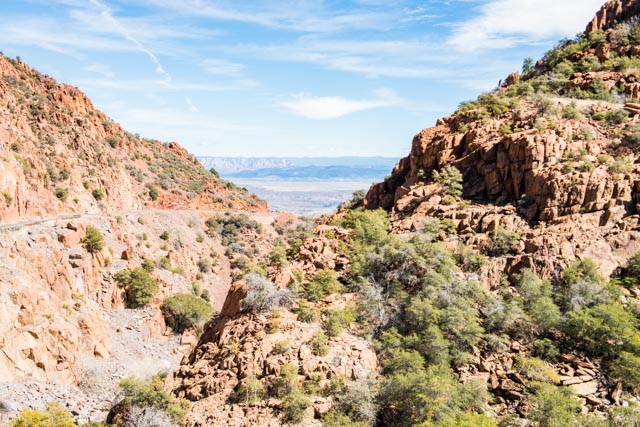
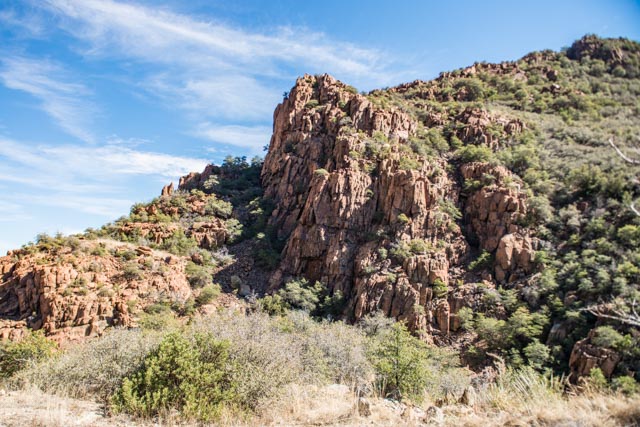
This is one of the abandoned copper mines above Jerome. The hillsides are studded with these.
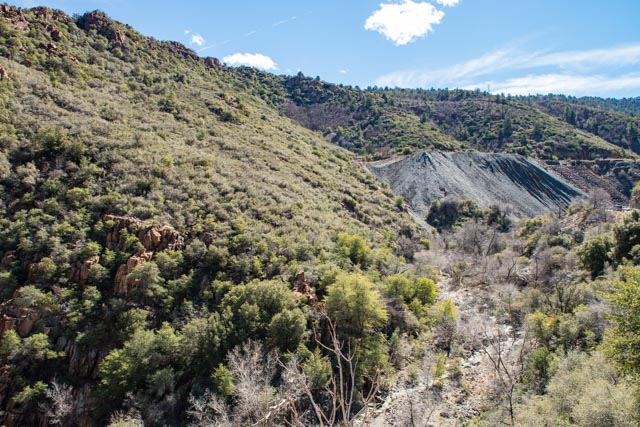
Tuzigoot ruins . . .
Tuzigoot is Apache for “crooked water” and is the remnant of a Southern Sinagua village built between 1000 and 1400 AD. The original structure was two stories tall with 87 ground floor rooms and was home to hundreds of Sinagua. This is the largest structure, a tower that rises above the entire complex.
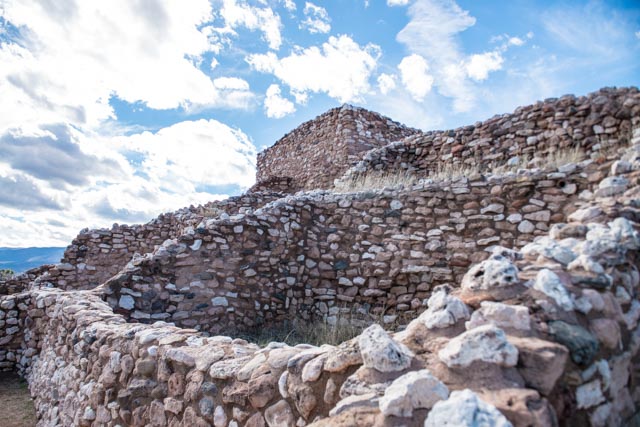
These are some of the grade level living quarters
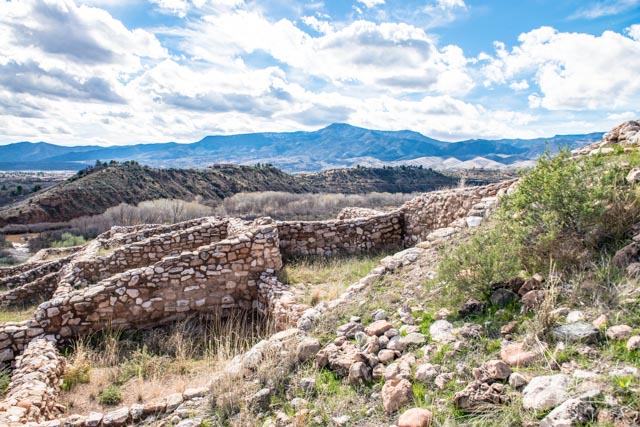
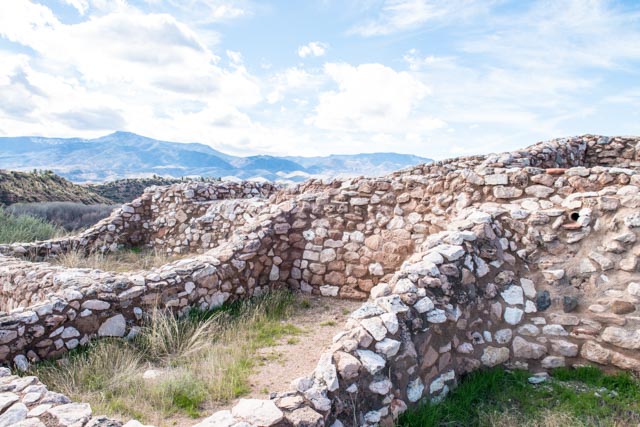
In this unit, you can see the corn grinding stone in the middle of the foundation.
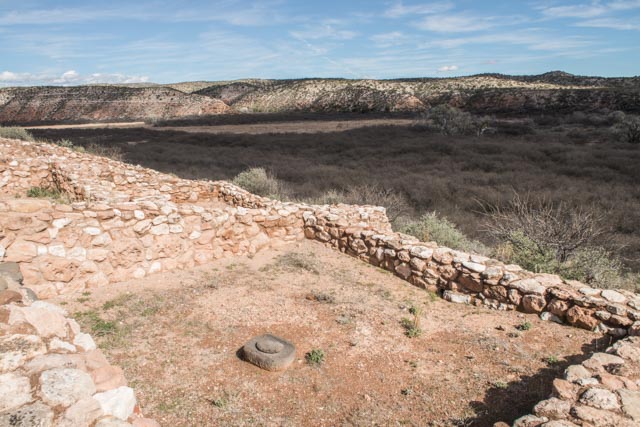
Some more of the grade level structures (foundations) further down the hill.

Cathy and Barbara at one of the structures near the tower at the top of the hill.

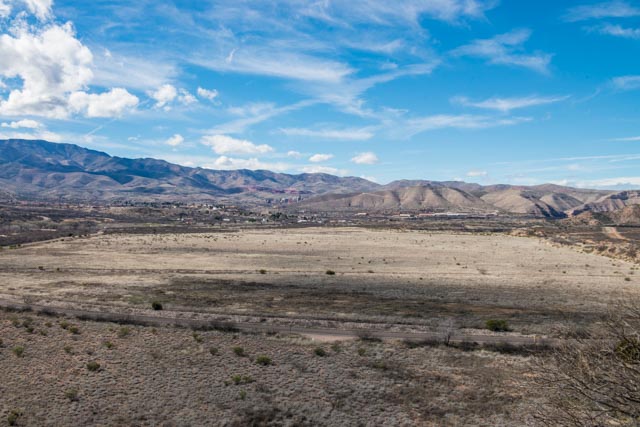
This is the reclamation field that endangered the entire Sinagua complex during the late 19th and early 20th century. It is runoff from the large copper mining operations in Jerome that can barely be seen at the very top of the valley. This copper mine began operations in 1882 and was shut down in 1953. Due to extensive efforts, the fields are starting to come back

 Travelling with the Schinglers